
Biological Transport and Networks: Other Projects
Placental Morphogenesis
Transport in Jellyfish
Bringing people and ideas together to fund, conduct, and share transformative science.
Our grants advance knowledge and strengthen connections between science and society.
Discover the latest news, research, and updates.
We convene scientists, mathematicians, and thinkers to share ideas and explore new questions.
Founded by Jim and Marilyn Simons, we’re a private philanthropy advancing mathematics and basic science.
Work with us on the frontier of basic science research.
The Flatiron Institute is a research center that uses computational science to advance fields like physics, biology, and astronomy.
Search
Placental Morphogenesis
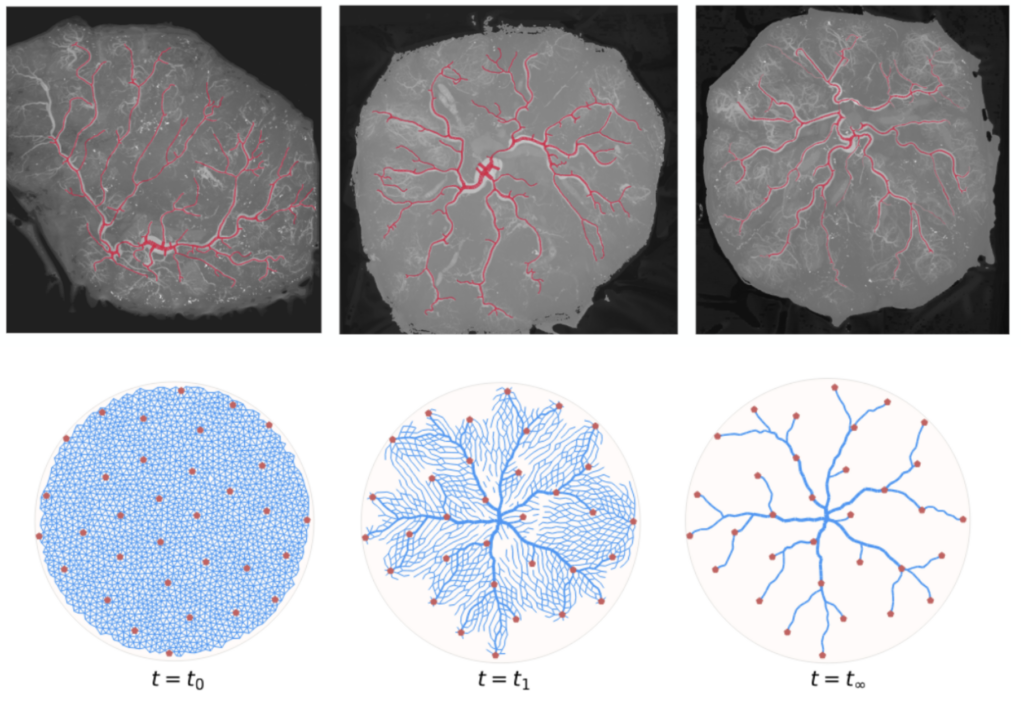
The placenta is a transient organ, yet an indispensable one, as it is the primary interface between a mother and a developing fetus.
Abnormal placental chorionic vasculature correlates with a variety of complications for both mother and child, including preeclampsia, gestational diabetes, and predisposition to autism spectrum disorders in the developing child. Thus far, placental chorionic vascular development has been studied mainly observationally, preventing researchers from revealing the mechanisms behind correlations to disease.
We frame the development of the placental chorionic plate vasculature in terms of a reduced-order parameter mechanistic model, which depends primarily on the ratio of the placenta growth rate and the vessel growth rate. We use microCT scans of healthy full-term placentas to constrain the model parameters and discuss what this mechanistic model means for disease conditions such as fetal growth restriction.
Transport in Jellyfish
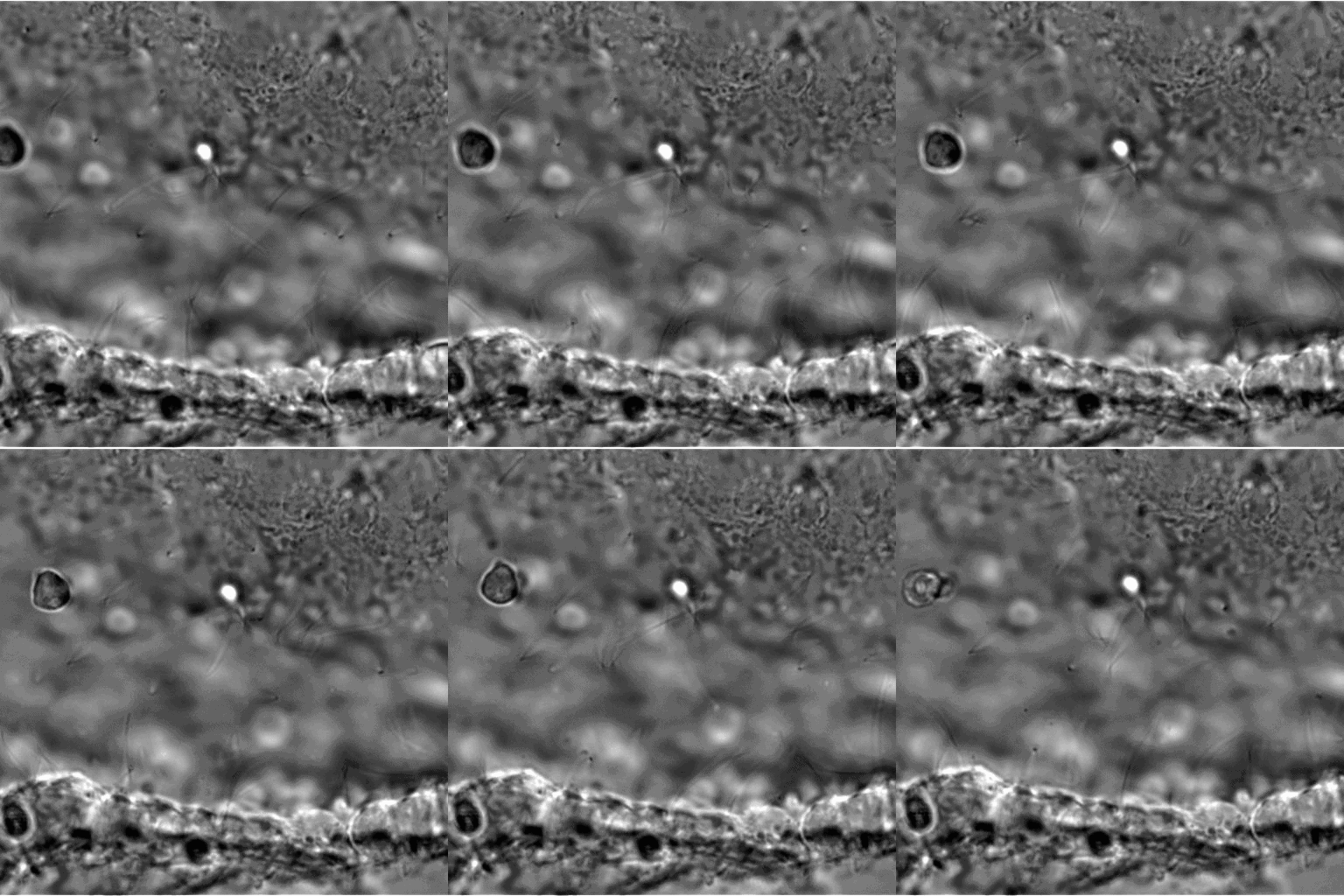
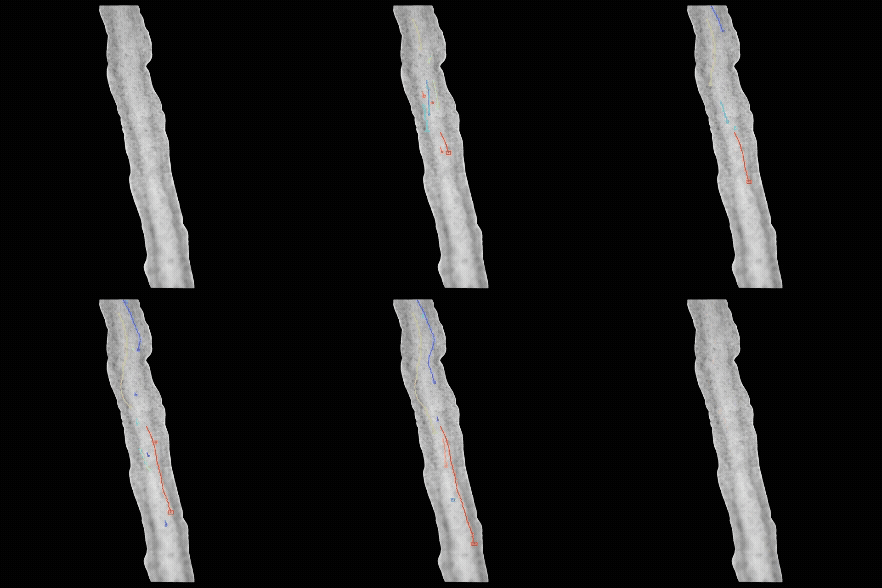
How do jellyfish circulate nutrients without a heart? We investigate how microscopic cilia lining the gastrovascular canals and large-scale contractions of the swimming body work together to drive transport in the moon jellyfish Aurelia aurita. Combining fluid dynamics, models of deforming tubes, and network simulations, we study how canal geometry, coordinated changes in length and radius, and the shear-thinning properties of the mucus-rich fluid determine circulation. Guided by experimental measurements of flow and body deformation, our theory seeks to explain how these distributed pumping mechanisms combine to sustain transport across the organism.