At the Simons Science Summit, Leaders Explore How AI Is Transforming Scientific Discovery
From writing code and accelerating simulations to uncovering hidden patterns in massive datasets, artificial intelligence is changing how science is done. At the 2026 Simons Science Summit, leaders from science, government, industry and philanthropy discussed how AI is transforming research across disciplines. Throughout the day, speakers explored not only AI’s enormous potential but also how scientists can use it responsibly.
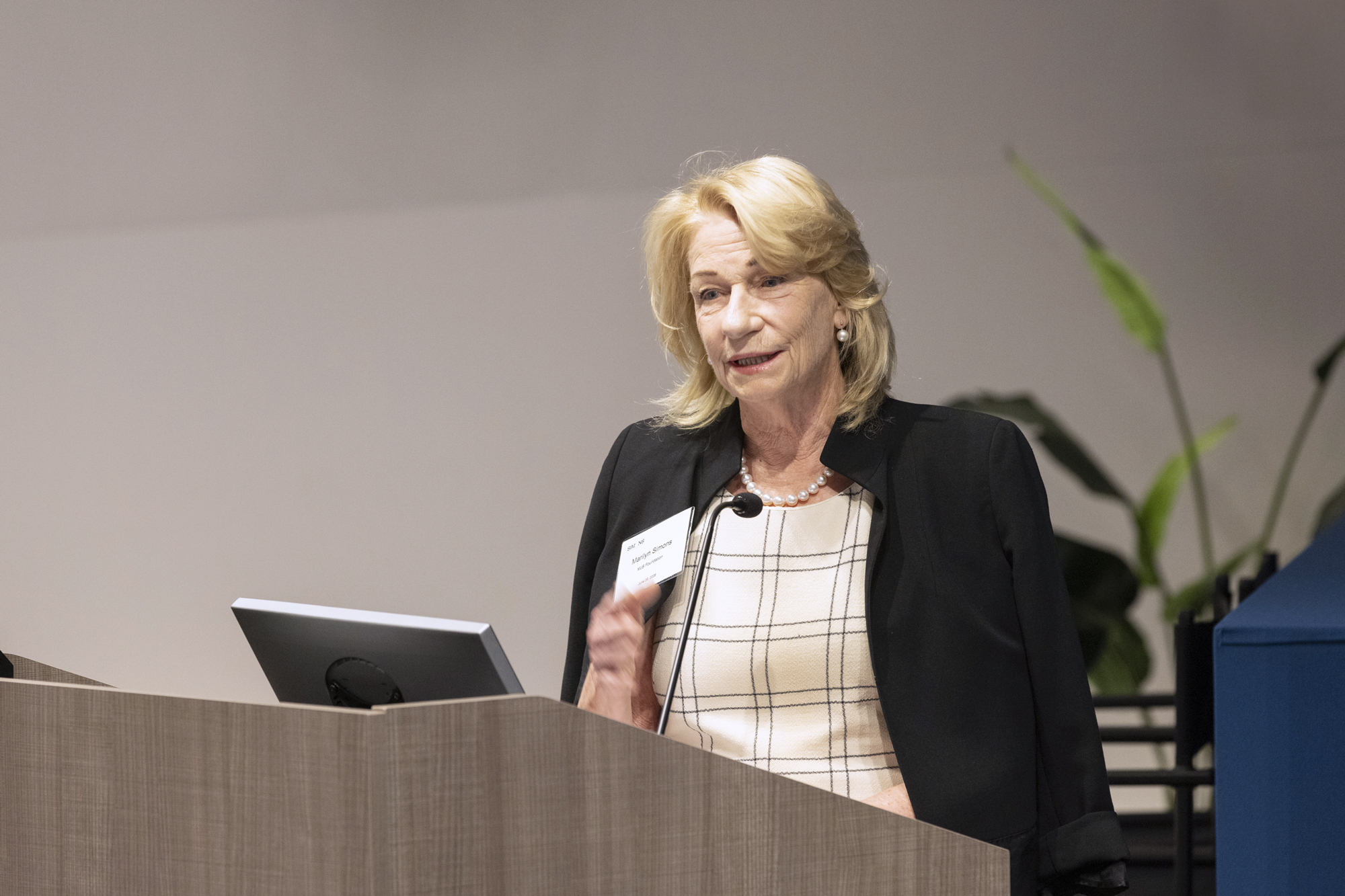
“At heart, AI is a new technology, and much like new technologies of the past, it holds the promise of solving seemingly intractable problems,” said Marilyn Simons, Simons Foundation chair and co-founder. “We can now hope to achieve discoveries in our lifetime that we once thought were out of reach. Today, we will discuss how we can maximize its usefulness and minimize its risks.”
Simons Foundation President David Spergel said that the organization’s late co-founder, Jim Simons, would have welcomed the summit’s focus on AI as he was constantly looking for new, transformative tools to tackle big data.
“Jim had really broad interests,” said Spergel. “He was eager to watch developments. He had a deep appreciation for clean data, new techniques and smart people approaching problems. That’s really what enabled his multiple successes, first as a mathematician, then as a ‘quant king’ and then as a philanthropist.”
How AI Is Advancing Discovery
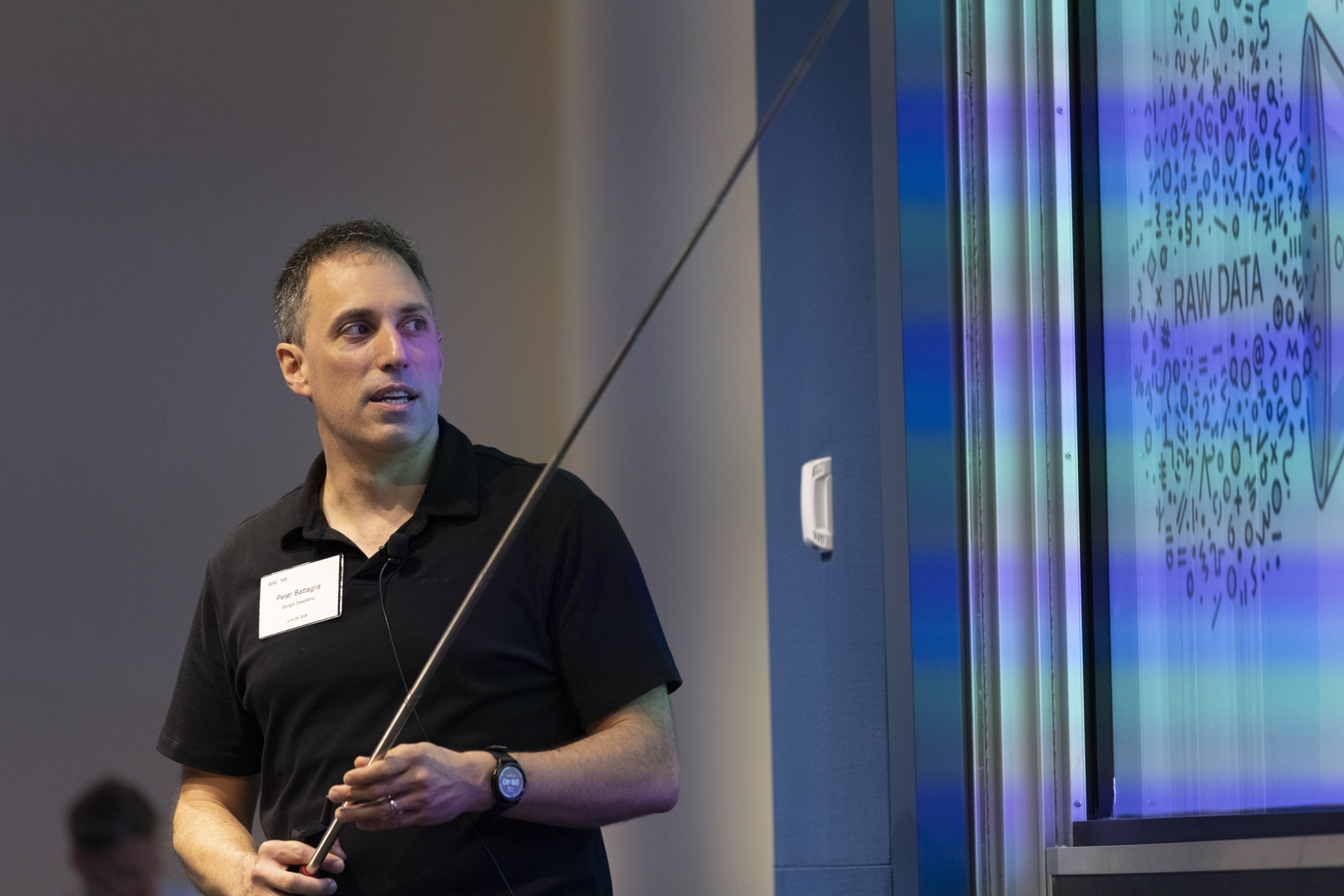
The event began with a keynote from Peter Battaglia of Google DeepMind. Battaglia develops AI models that forecast the weather faster and more accurately than traditional methods. His WeatherNext family of models includes specialized cyclone trackers that can predict a storm’s path and intensity days in advance, improving emergency preparedness and response. For example, in October 2025, WeatherNext identified about a week in advance that a small tropical disturbance would intensify into a Category 5 hurricane bound for Jamaica. “The National Hurricane Center said it had never forecast a Category 5 from that low of an intensity before,” Battaglia said.
Olga Troyanskaya of the Simons Foundation’s Flatiron Institute and Princeton University spoke about how her lab uses AI to untangle the mysteries of the genome. She argued that in biology, AI must be highly specialized and purpose-built.
“The progress of AI in biology and biomedicine is enormous,” she said. “But it’s also critical for us to understand how challenging this field is. We really need these purpose-built AI models that can identify and decode the unknown.”
For example, AI is uncovering important biology hidden in the 98 percent of the genome that does not code for proteins. Troyanskaya’s team has developed AI models that analyze both coding and noncoding DNA to predict disease susceptibility and identify the biological mechanisms behind it. In a recent autism study, her models identified four biologically distinct subgroups, a finding that could ultimately guide more targeted interventions.
AI’s ability to analyze massive datasets is also accelerating the search for new materials. As Stefano Martiniani of New York University explained, identifying promising materials for manufacturing is typically slow and arduous, but AI can significantly speed up the process.
Martiniani’s team built an AI system trained on a vast database of crystalline structures, enabling it to suggest new crystal structures that could be stable and even superconducting. To test the model, his collaborators synthesized 18 of the materials they considered least likely to be superconducting. To their surprise, half of them turned out to be superconductors — a “very high hit rate,” Martiniani said.
AI Tackles Complex Challenges in Climate and Fusion Research
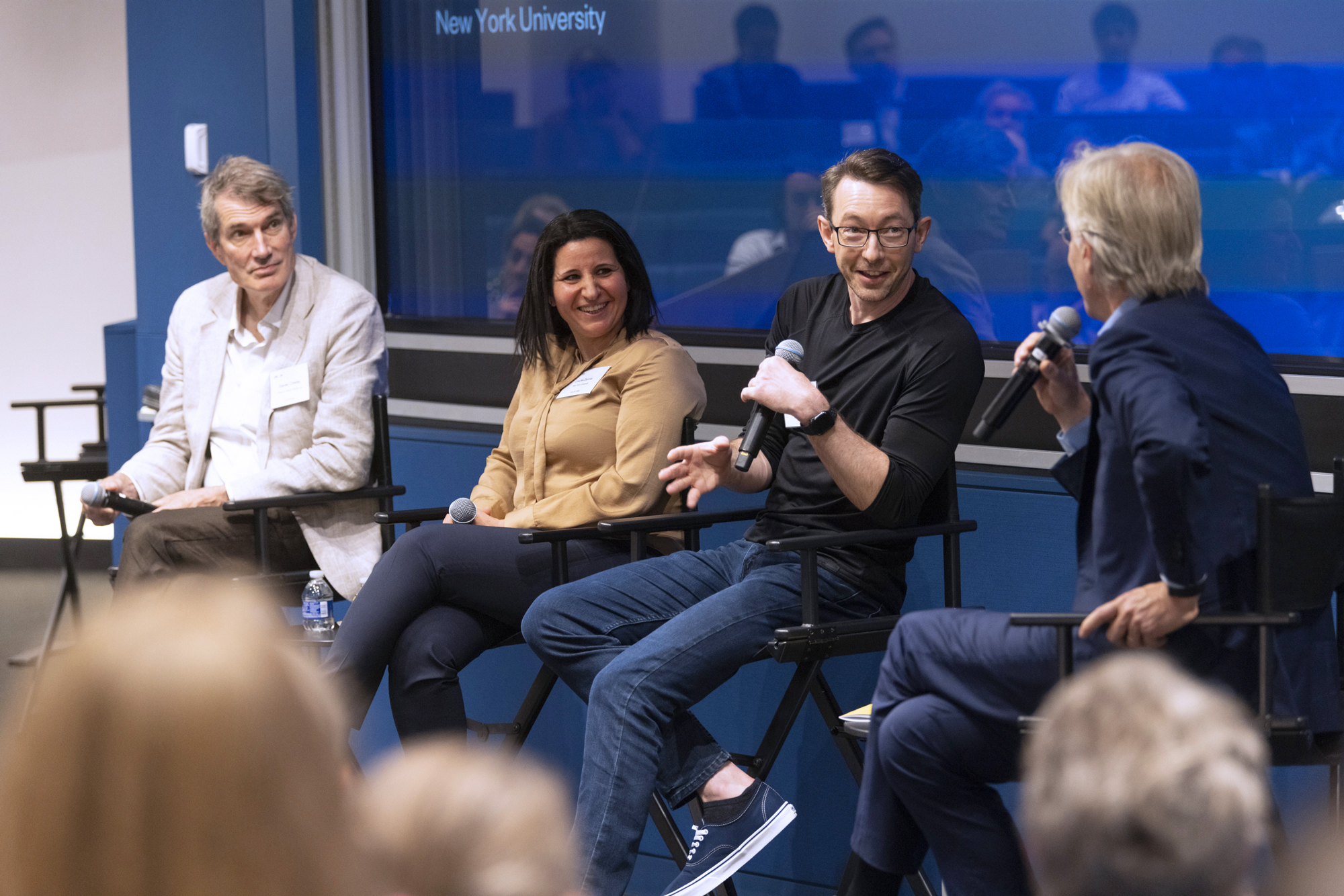
A panel moderated by Robbert Dijkgraaf, the president-elect of the International Science Council, explored how AI is helping scientists understand complex systems from climate and fusion to aerospace. Rather than replacing traditional physics-based models, AI is helping researchers uncover relationships across scales and dramatically reduce the time required for simulations.
“We have a very large scale that we need to capture to understand how the ocean works,” said Laure Zanna, a professor of mathematics and data science at New York University. “We’ve been using AI to understand how the small scale influences the large scale and how the large scale influences the small scale.”
“We actually have much better predictions the last five years than we’ve ever had through the 75 years of trying to do fusion,” said Steven Crowley, director of the U.S. Department of Energy’s Princeton Plasma Physics Laboratory. “But the problem is that one configuration might take us three months on an exascale computer, so what we’re really trying to do now is to use AI to reduce the timescale.”
AI As a Research Partner, Not a Replacement
Despite the rapid pace of AI advances, speakers agreed that today’s models work best as collaborators rather than replacements for scientists.
“I need my engineers to still do their analysis and validate that this is going to work,” said Steven Brunton, the Boeing Professor of AI and Data-Driven Engineering at the University of Washington. “They can’t just trust the numbers that they’re getting.”
Looking ahead, speakers expect AI to become an even more powerful tool for scientific discovery. Battaglia believes AI will transform science much as it transformed weather forecasting — by complementing first-principles reasoning with learned, data-driven models that are highly effective, even if they are not perfectly interpretable.
“I think in many ways it can democratize science,” he said. “It can give people tools that they don’t need a huge amount of training to use, help them make discoveries and hopefully get rid of some of the tedious work so we can focus on the enjoyment of science.”
Martiniani said the field is at a turning point. “AI computing capacity is doubling every seven months because the demand is so large, but it’s still not enough.”
How far — and how fast — AI will advance remains an open question.
“I don’t think any of us would be shocked if, in five or 10 years, [AI] is far beyond the capabilities that it is now, far beyond any of ours,” Brunton said. “But I also don’t think any of us would be shocked if it levels off and just becomes a very solid collaborator. It’ll be interesting to see.”