CCQ Distinguished Research Scientist Angel Rubio Awarded Max Born Medal and Prize
Featuring
-
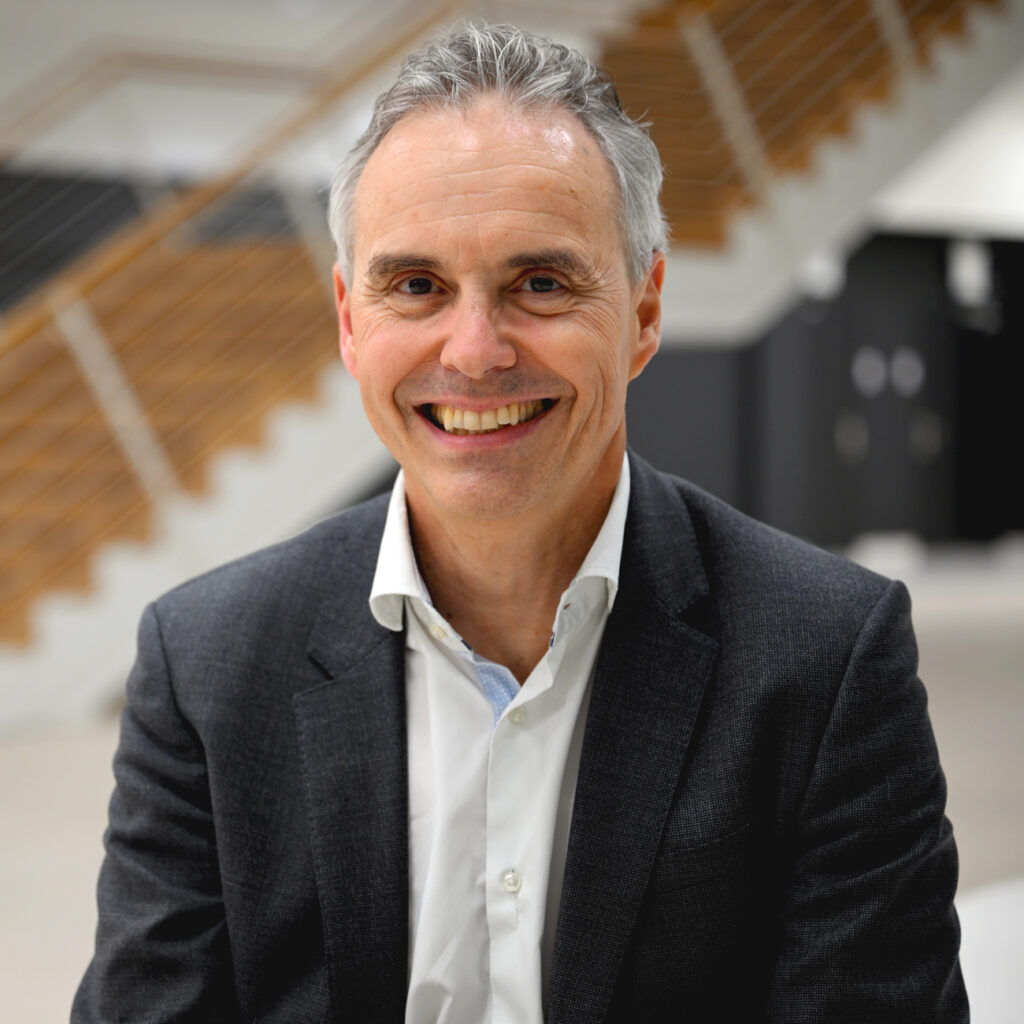
Angel Rubio
Co-Director, Initiative for Computational Catalysis
Bringing people and ideas together to fund, conduct, and share transformative science.
Our grants advance knowledge and strengthen connections between science and society.
Discover the latest news, research, and updates.
We convene scientists, mathematicians, and thinkers to share ideas and explore new questions.
Founded by Jim and Marilyn Simons, we’re a private philanthropy advancing mathematics and basic science.
Work with us on the frontier of basic science research.
The Flatiron Institute is a research center that uses computational science to advance fields like physics, biology, and astronomy.
Search
Co-Director, Initiative for Computational Catalysis
The Institute of Physics and the German Physical Society have awarded the 2018 Max Born Medal and Prize to theoretical physicist Angel Rubio.
Rubio is a distinguished research scientist at the Center for Computational Quantum Physics (CCQ) at the Flatiron Institute in New York City and a director of the Max Planck Institute for the Structure and Dynamics of Matter in Hamburg.
The award recognizes Rubio for “his sustained leadership in computational solid-state physics and for his predictions of materials properties at nanometer lengthscales and in low dimensions.”
“We are delighted that Angel got this prize,” says CCQ director Antoine Georges. “He joins an outstanding group of previous awardees, including Volker Heine, one of the founding fathers of electronic structure. The award of the Born prize to Angel continues this great tradition. All of us at CCQ are delighted to have Angel on board to engage in research and advise on scientific directions for the center.”
Rubio previously received the 2016 medal of the Spanish Royal Physical Society, the 2014 Premio Rey Jaime I for basic research, the 2006 DuPont Prize in nanotechnology, the 2005 Friedrich Wilhelm Bessel Research Award of the Humboldt Foundation and two European Research Council advanced grants in 2011 and 2016.
The Institute of Physics and the German Physical Society established the Max Born Medal and Prize in 1972 to commemorate the life and work of physicist Max Born, whose career spanned the United Kingdom and Germany. The award is presented annually to an outstanding physicist based in one of the two countries.

