Award Year
2024
Award Type
Pilot
Awardees
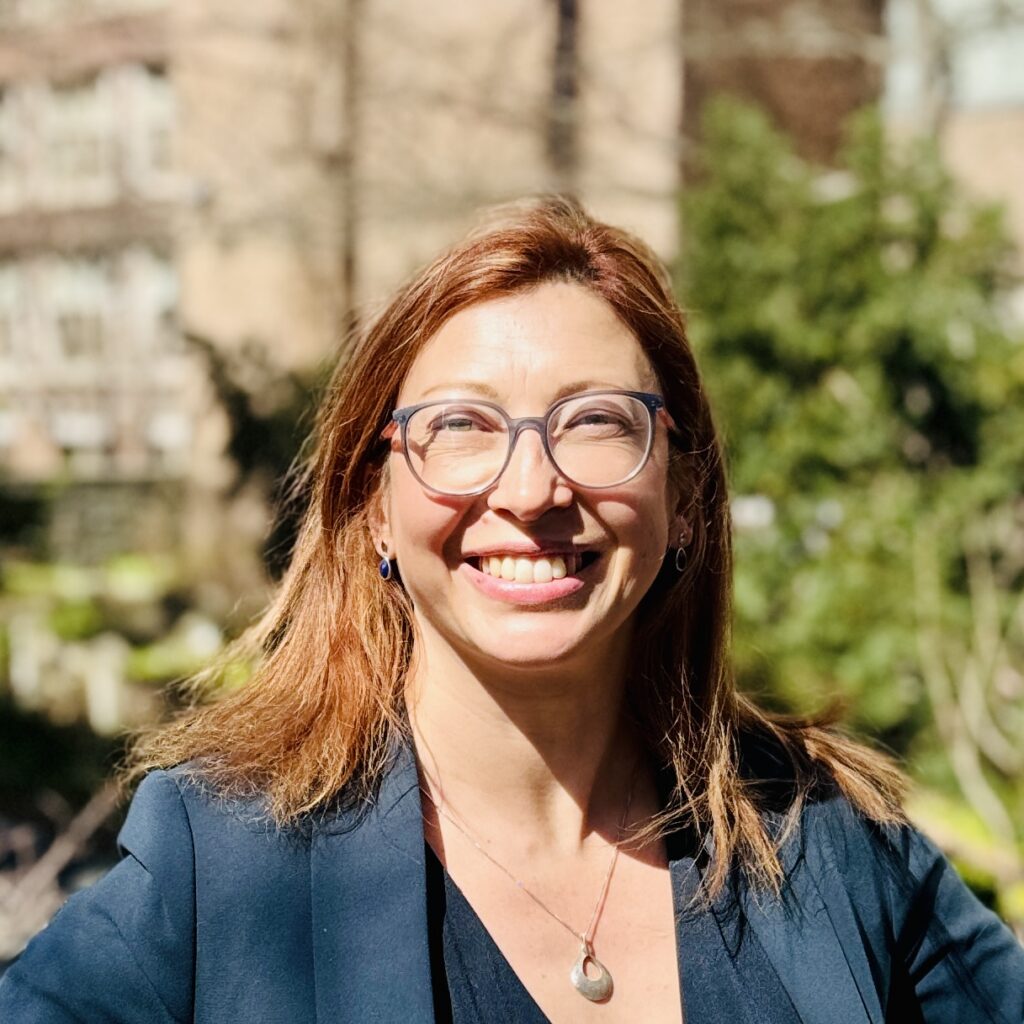
Maria Geffen
SFARI Investigator
Bringing people and ideas together to fund, conduct, and share transformative science.
Our grants advance knowledge and strengthen connections between science and society.
Discover the latest news, research, and updates.
We convene scientists, mathematicians, and thinkers to share ideas and explore new questions.
Founded by Jim and Marilyn Simons, we’re a private philanthropy advancing mathematics and basic science.
Work with us on the frontier of basic science research.
The Flatiron Institute is a research center that uses computational science to advance fields like physics, biology, and astronomy.
Search
Funded Work
2024
Pilot
SFARI Investigator
Autism spectrum disorder (ASD) is associated with auditory hypersensitivity and auditory processing disorders. In particular, children with ASD exhibit deficits in identifying stimulus regularity and detecting novel sounds, as evidenced by reduction in mismatch negativity. Anatomically, brains of ASD individuals and mouse models of autism exhibit differences in the relative number of different types of inhibitory neurons in the cortex. Inhibitory neurons play a central role in sensory perception by controlling the flow of sensory information through the brain, depending on behavioral and environmental demands. Recent work from the Maria Geffen lab has linked the function of specific inhibitory neurons to impairments in stimulus-specific adaptation (SSA) and adaptation to repeated sounds1,2. In this project, Geffen and colleagues aim to test the hypothesis that selective deficits in inhibitory neurons in the auditory cortex of autism mouse models may support a reduction in SSA. They will use electrophysiological recordings coupled with optogenetic perturbations to test whether neurons in the auditory cortex of Neurexin-1del/+, 16q11.2del/+ and Shank3 KO mice exhibit weakened stimulus-specific adaptation, as well as differences in inhibitory neuronal distribution. Because auditory adaptation is central to distinguishing a sound source and parsing an auditory scene, identifying the specific mechanism for its disruption is critical to developing therapeutic targets for improving auditory scene segregation and speech processing for individuals with ASD.