Award Year
2025
Award Type
Director
Awardees
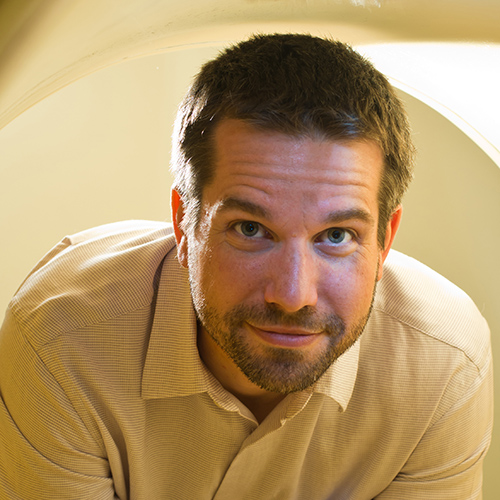
Ilan Dinstein
SFARI Investigator
Bringing people and ideas together to fund, conduct, and share transformative science.
Our grants advance knowledge and strengthen connections between science and society.
Discover the latest news, research, and updates.
We convene scientists, mathematicians, and thinkers to share ideas and explore new questions.
Founded by Jim and Marilyn Simons, we’re a private philanthropy advancing mathematics and basic science.
Work with us on the frontier of basic science research.
The Flatiron Institute is a research center that uses computational science to advance fields like physics, biology, and astronomy.
Search
Funded Work
2025
Director
SFARI Investigator
Sleep disturbances are apparent in greater than 50 percent of autistic individuals. They are detrimental to the quality of life of autistic individuals and exacerbate core autism symptoms, challenging behaviors and sensory problems. Difficulty initiating sleep, apparent in sleep onset latencies (SOL) less than 30 minutes, is the most common type of sleep disturbance in autism and is a general diagnostic feature of insomnia. According to the hyperarousal model of insomnia, heightened physiological, cortical and emotional arousal at bedtime, potentially due to excessive sympathetic system drive, interfere with sleep initiation. Prior work with insomnia patients has identified elevated heart rate, reduced heart rate variability, increased electrodermal activity, higher evening cortisol, increased beta-band EEG power and flattened EEG spectral slopes as markers of hyperarousal that are larger in insomnia patients. However, few studies have systematically examined these mechanisms in autistic children.
In this project, Ilan Dinstein and colleagues propose to study arousal mechanisms at bedtime in data available as part of the Simons Sleep Project (SSP). In preliminary analyses of the SSP, Dinstein’s team has already demonstrated that autistic children exhibit significantly longer SOL times relative to their non-autistic siblings. The group now wants to use the multi-device, multi-night SSP data to examine multiple objective measures of physiological arousal and determine whether they are associated with prolonged SOL. The Dinstein lab will also use parent-reported arousal at bedtime as subjective measures of cognitive and emotional arousal. Note that these measures are available for more than 3,600 individual nights in the SSP, enabling an unprecedented depth of analysis.
By characterizing arousal dynamics during sleep initiation in autistic children and their siblings, this project will determine whether specific arousal mechanisms may account for prolonged SOL in individual children. Dinstein and colleagues hope to identify objective physiological targets for future basic, preclinical and clinical sleep research that will enable the development of new effective sleep interventions for autistic children with downstream benefits for daytime functioning, behavior and quality of life.