When Supermassive Black Holes Get Hungry

Lecture

Speaker

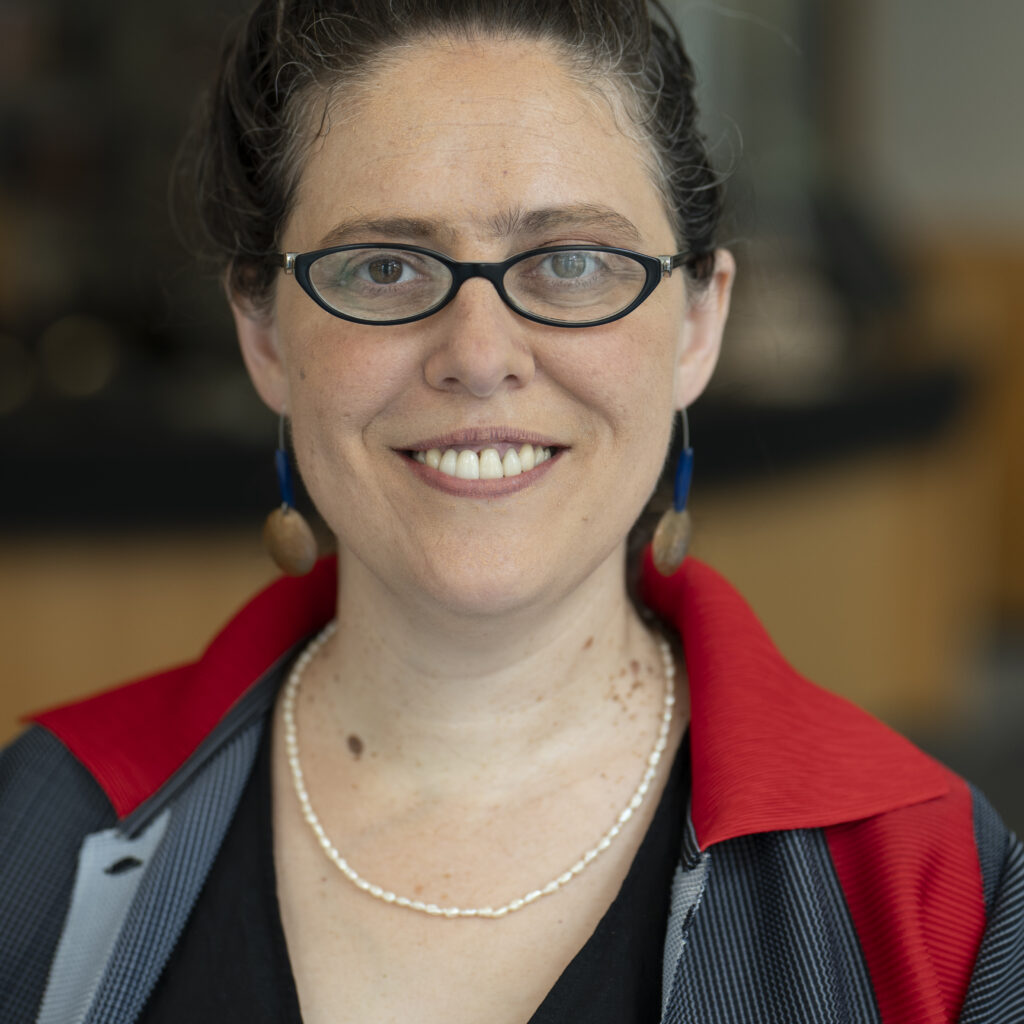
  • A woman with glasses and curly hair in a bun smiles at the camera. She wears a pearl necklace, blue and red jacket, and dangly earrings. The background is blurred.
    K.E. Saavik Ford Professor, CUNY Borough of Manhattan Community College and the CUNY Graduate Center

When

  • – ET

  • Doors Open

    5:30 p.m. (No entrance before 5:30 p.m.)

  • Lecture

    6:00 p.m. – 7:00 p.m. (Admittance closes at 6:20 p.m.)

Where

Gerald D. Fischbach Auditorium

160 5th Avenue

New York, NY 10010, United States

Open Map for Gerald D. Fischbach Auditorium

At the center of nearly every galaxy lives a black hole with a mass millions to billions of times that of our sun. Most are quiet, not consuming much matter. But a fraction are active galactic nuclei (AGNs), consuming the mass of many suns per year. Why? And why does it matter?

In this Presidential Lecture, Saavik Ford will explain how we learned about these AGNs and how they affect the rest of the universe we live in. She will also share some of the new astrophysical insights we are gaining about AGNs from gravitational waves and exciting new time-domain surveys. The lecture will go into detail on how AGNs interact with their environments, especially the stars in galactic nuclei. Finally, she will address some of the open questions around AGNs, including how they are born, how they die and what we can learn from the nucleus of our own Milky Way Galaxy.

About the Speaker

Ford earned her Ph.D. at Johns Hopkins University. She is a Professor at CUNY Borough of Manhattan Community College and the CUNY Graduate Center. As a co-originator of the Active Galactic Nucleus (AGN) channel for producing merging stellar mass binary black holes, she uses a combination of theory, gravitational wave (GW) and electromagnetic observations to address the consequences of having “things” in AGN disks. Such “things” include stellar-mass black holes, neutron stars, white dwarfs and main sequence stars. She is a member of the LISA Consortium and works on various problems related to lower-frequency GW. Ford is dedicated to continuously improving the environment in the profession of astronomy, supporting the excellence of the whole persons who choose to become astronomers and encouraging other astronomers to do the same.

Three overlapping wavy lines—dark blue, light blue, and yellow—are shown against a light background, each representing different waveforms or data trends.

Event Series

Presidential Lectures 2026

A weekly series of free colloquia spotlighting groundbreaking research.

Presidential Lectures span four themes: neuroscience and autism science, physics, biology, and mathematics and computer science. These curated, high-level scientific talks feature leading scientists and mathematicians and are designed to foster discussion and drive discovery within the New York City research community.

See events

More Events

October 12–14, 2026

Speaker

Shep Doeleman

A man in a checked shirt and dark blazer faces the camera, wearing a pin on his jacket and a pen in his pocket, against a plain background.

Speaker

Sonya Hanson

A portrait photo of Sonya Hanson.