Former SFARI Investigator Karl Deisseroth Wins 2026 Nobel Prize
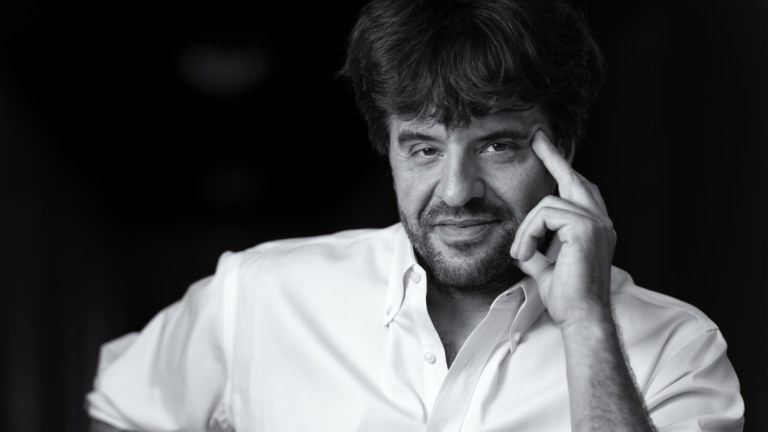
Featuring
-
Karl Deisseroth
SFARI Investigator
Bringing people and ideas together to fund, conduct, and share transformative science.
Our grants advance knowledge and strengthen connections between science and society.
Discover the latest news, research, and updates.
We convene scientists, mathematicians, and thinkers to share ideas and explore new questions.
Founded by Jim and Marilyn Simons, we’re a private philanthropy advancing mathematics and basic science.
Work with us on the frontier of basic science research.
The Flatiron Institute is a research center that uses computational science to advance fields like physics, biology, and astronomy.
Search
Deisseroth wins the award, along with Peter Hegemann and Georg Nagel, for discoveries leading to the development of optogenetics — a technique that uses light to control cellular signals.
SFARI Investigator
Optogenetics, a tool that enables scientists to turn brain cells “on” or “off” using light, has led to countless advancements in our understanding of brain circuitry and neurological and psychiatric disorders. Today, the scientists behind the groundbreaking technology — Karl Deisseroth of Stanford University, Peter Hegemann of the Humboldt University of Berlin and Georg Nagel of the University of Würzburg, Germany — received the 2026 Nobel Prize in Physiology or Medicine. Deisseroth is a former Simons Foundation Autism Research Initiative (SFARI) Investigator.
Hegemann and Nagel received the prize for the discovery of channelrhodopsin, a protein found in algae that opens up an ion channel when exposed to blue light, allowing charged ions to flow through a cell. They also found that channelrhodopsin remains light-sensitive even when introduced into other cell types. The Nobel committee recognized Deisseroth for his work applying channelrhodopsin to nerve cells in rats and, later, to living mice. His studies demonstrated that doing so could control the signaling of nerve cells, enabling scientists to stimulate or inhibit certain neurons in a living organism.
As a SFARI Investigator, Deisseroth received support for his work applying another technique his lab developed, called CLARITY, to samples of donated postmortem brain tissue from individuals with autism. CLARITY transforms biological tissue into an optically transparent sample by replacing fat in the brain with a hydrogel, enabling easier and more accurate studies of the brain’s circuitry. In addition to his SFARI-funded work, he has also applied optogenetics to studies of autism, illuminating potential neural mechanisms that contribute to the disorder and affect processes such as social behavior.
Deisseroth is the D.H. Chen Professor of Bioengineering and of Psychiatry and Behavioral Sciences at Stanford University and a Howard Hughes Medical Institute (HHMI) Investigator. He received his undergraduate degree from Harvard University and his Ph.D. and M.D. from Stanford. He also completed postdoctoral training, medical internship and adult psychiatry residency at Stanford. He is a practicing psychiatrist with a specialization in affective disorders and autism. He won the 2021 Lasker Award for his work on optogenetics.