Making Waves: How the Wave Turbulence Collaboration Revolutionized Its Field
Written by Mara Johnson-Groh
All News 
An animation of wave turbulence. Researchers have recently made great strides in mathematically capturing the physics of waves. Quardia

The Simons Collaboration on Wave Turbulence set out in 2019 to formulate a mathematically rigorous foundation for a fundamental equation describing the physics of waves. They ultimately accomplished so much more than anyone expected, including cracking one of the field’s biggest problems.

Featuring

Whether we realize it or not, we’re constantly surrounded by waves. They show up in the oceans, the atmosphere, and disturbances in the fabric of space-time. They appear on all scales, from the quantum to the cosmic.

Despite their ubiquity, scientists have never been able to establish a mathematically rigorous foundation for their physics, which is described by the wave kinetic equation. In 2019, a group of researchers formed the Simons Collaboration on Wave Turbulence with the aim of solving this long-standing open problem.

“Understanding waves is useful for water sports, it’s useful for tourism, it’s useful for commercial shipping,” says Miguel Onorato, a physicist at the University of Turin and a collaboration member. “Anytime someone goes out on a boat, they probably want to have a forecast that will tell them where the waves come from and how big they are. And these forecasts are all based on the wave kinetic equation.”

The collaboration, which is in its final year, has had a tremendous run. Collaboration members have made great strides in mathematically capturing the physics of waves. Their work includes a Fields Medal–winning breakthrough regarding one of math’s most famous problems and incredible new insights into the Navier-Stokes equations, advancing a nearly century-old problem describing fluids.

“Over the years, we’ve made the mathematical foundation of the wave kinetic equation much more rigorous,” says collaboration director Jalal Shatah, a mathematician at New York University. “We now have a kinetic theory for nonlinear waves and dispersive waves, and we’ve made tremendous advancements on the study of gravity waves and small waves on the surface of the ocean.”
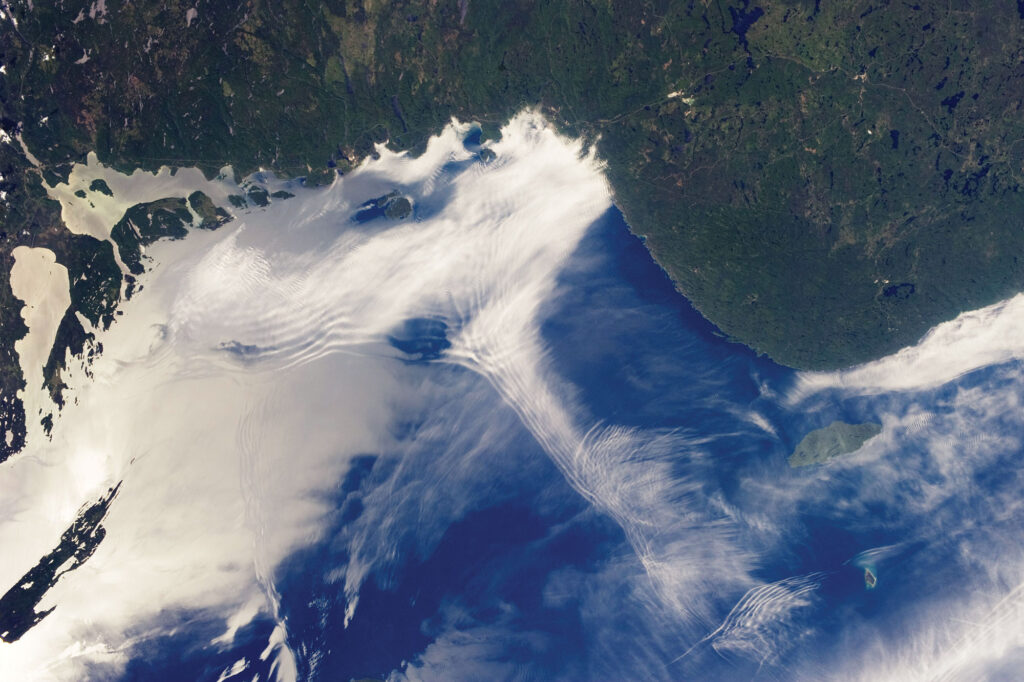
Satellite view of waves in the clouds off a forested coastline.
A satellite view of waves in the atmosphere near the coast of Lake Superior. The orientation of the cloud bands, parallel to the coastline, suggests that air flowing off the land to the north is interacting with moist, stable air over the lake surface, creating what are known as gravity waves. NASA/ISS

Solving a 100-Year-Old Physics Mystery

The collaboration is part of the Simons Foundation’s efforts to boost research into fundamental problems in mathematics, theoretical physics and theoretical computer science. Its breakthroughs enabled collaboration principal investigator Zaher Hani of the University of Michigan, collaboration member Yu Deng of the University of Chicago, and Xiao Ma of the University of Michigan to put together the pieces of a puzzle that had long stumped physicists and mathematicians — deriving fluid equations, such as the Boltzmann equation, described by Hilbert’s sixth problem.

Hilbert’s sixth problem was first formulated in 1900 by mathematician David Hilbert as part of his set of 23 unsolved problems for the 20th century. The problem, since refined, focuses on unifying three equations that describe the motion of fluids across different scales.

“Think of fluids like gas — it’s a continuum quantity described by a bunch of equations,” said Deng during a press conference at the 2026 International Congress of Mathematicians in Philadelphia. “But if you really zoom in microscopically, these things are made up from tiny particles, and these particles follow a separate law of interaction. A long-standing question is: How do you derive these macroscopic behaviors from the microscopic interactions of these particles?”

A short film about Fields Medalist Yu Deng. Simons Foundation

Previous work had unified the microscopic and macroscopic equations under specific conditions, like on short timescales or in a vacuum. But by leveraging mathematical techniques enabled by the collaboration’s advances on the wave kinetic equation, and by extending its derivation to longer time intervals, Deng, Hani and Ma cracked the case, unifying the equations.

“This question of deriving the Boltzmann and subsequently fluid equations from Newtonian physics, as described in Hilbert’s sixth problem, is a bit outside of the scope of wave turbulence,” Hani says. “However, my work with Yu Deng under the wave turbulence collaboration produced the exact ideas needed to resolve this long-standing question posed by Hilbert.”

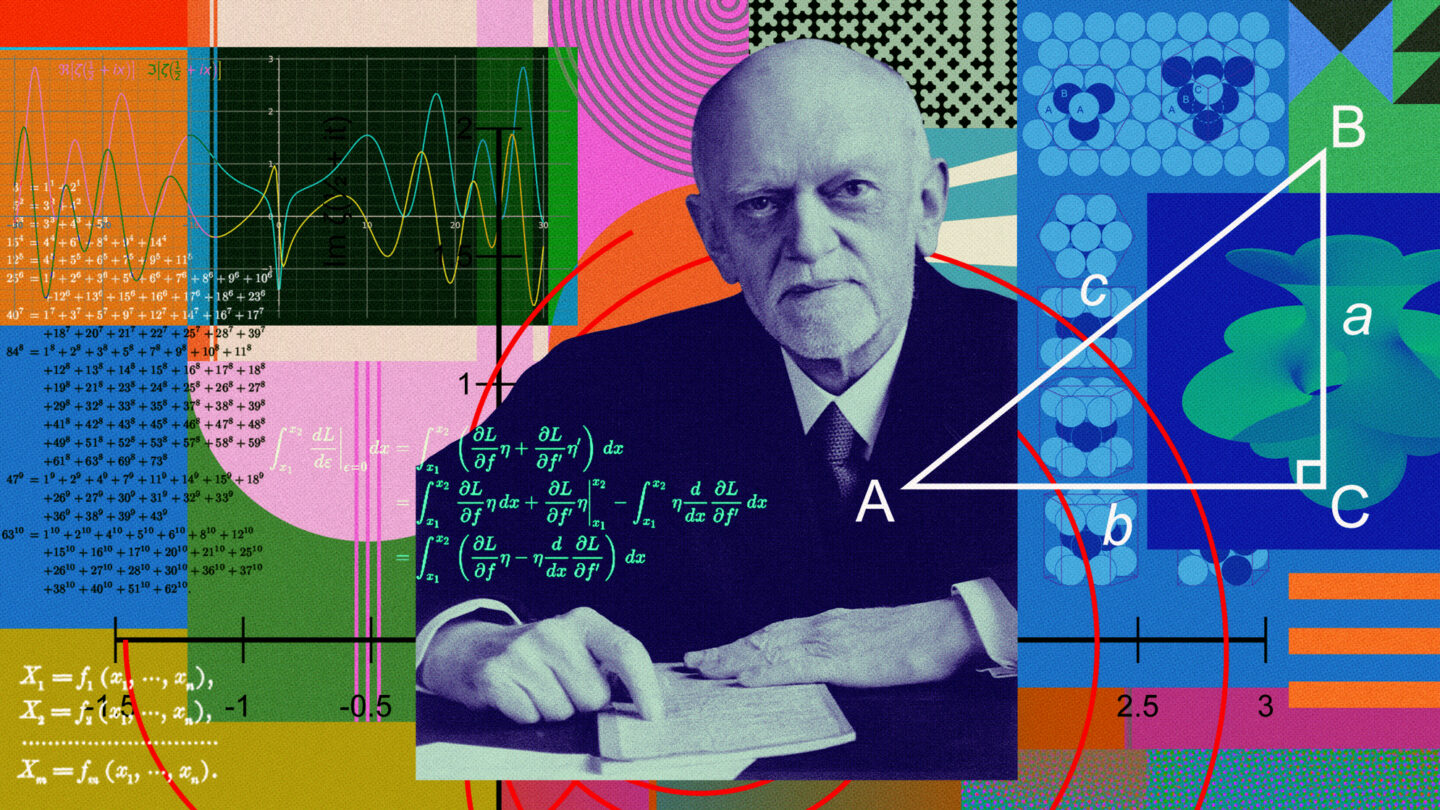
In July 2026, Deng received math’s most prestigious prize, the Fields Medal, with the citation applauding his work on “the derivation of wave kinetic equations from nonlinear dispersive systems.”

Waves in Action

Beyond mathematics, a subset of the collaboration worked to test the wave theories experimentally. Onorato led an experiment measuring wave heights from a platform off the coast of Venice. Using two cameras, his group collected data on a 50-square-meter section of the ocean to see whether the wave kinetic equation accurately describes how ocean waves of different lengths transfer energy, a process known as resonance.

“The derivation of the kinetic equation requires a lot of assumptions, so it’s not guaranteed that real ocean waves behave according to the kinetic equation, but we were able to verify that the kinetic equation really does do a good job,” says Onorato, who is now working to extend the findings to other areas of the ocean that might have different conditions.

Collaborators also made significant progress in understanding more localized wave phenomena, such as rogue waves. These waves, which are at least twice the height of the waves around them, pose significant threats to seafarers. Between 1969 and 1994, rogue waves claimed more than 500 lives.

“For a long time, rogue waves were thought to be imaginary things that sailors made up to make their journeys sound interesting,” says collaborator Gigliola Staffilani, a mathematician at the Massachusetts Institute of Technology. “But these phenomena are real, and we’re finding they are not necessarily due to bad weather.”

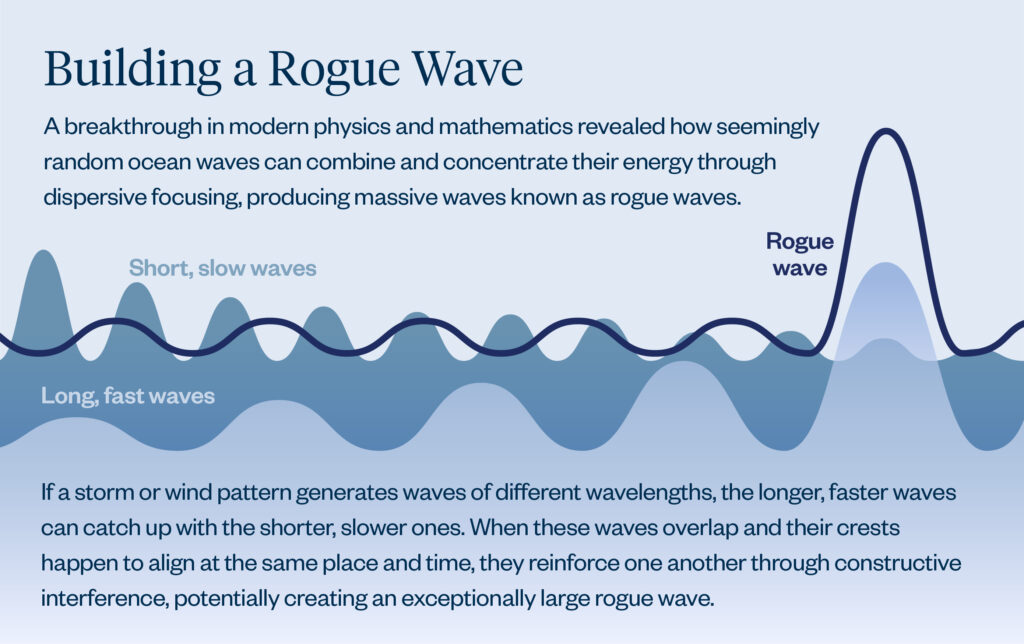
Diagram showing how Rogue waves occur.
Lucy Reading-Ikkanda/Simons Foundation

Staffilani and her colleagues mathematically quantified rogue waves more accurately than ever before, finding that they arise from a phenomenon known as dispersive focusing, in which normal waves come together to form an amplified super-wave. These findings could help modelers better predict the conditions under which these dangerous waves form, enabling more accurate ocean wave forecasts for seafarers.

From ocean waves to quantum oscillations, the collaboration’s work spans a wide range of scales. That includes the work of collaborator Tristan Buckmaster, a mathematician at New York University. Buckmaster’s early work with the collaboration focused on how energy is transferred between interacting waves. More recently, he’s studied how energy is transferred on progressively smaller scales, leading to a phenomenon known as a blowup. This work, done with Levent Alpöge, paved the way for a proof of the Navier-Stokes equations, which govern fluid motion. The proof resolves one of the six Millennial Prize Problems, each of which carries a $1 million prize.
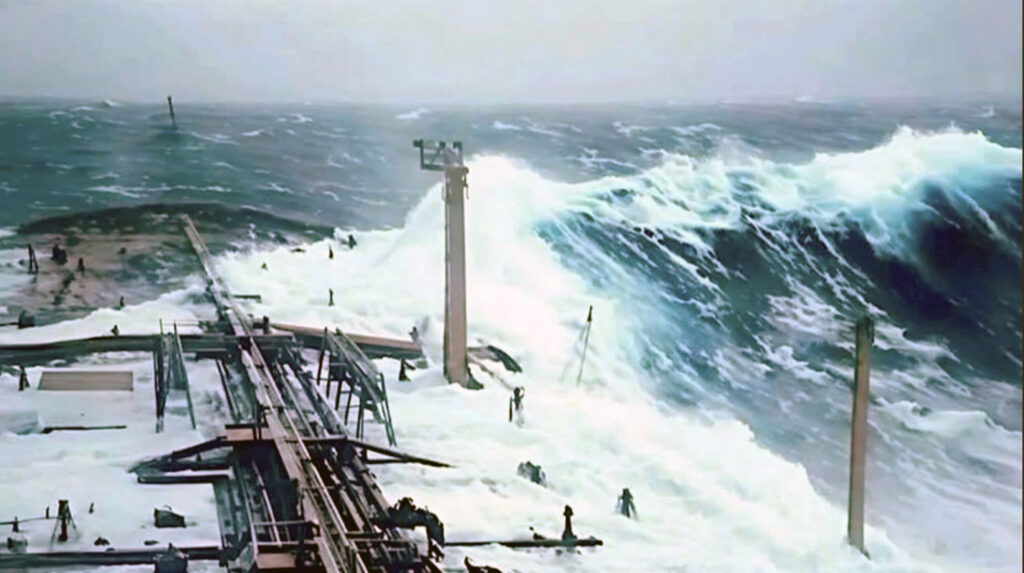
A large wave crashes over a supertanker
A rogue wave floods the deck of a supertanker off the coast of South Africa in 1980. Philippe Lijour/ESA

Many in the collaboration attribute these breakthroughs to having the dedicated time to work with scientists from other disciplines with whom they might not normally collaborate.

“Before the collaboration, I had been to a few physics conferences and exchanged some ideas, but it was always a short discussion. I wasn’t able to truly understand their difficulties in what they could measure,” says Hani, a mathematician. “But with the collaboration, we’re truly bridging the two fields in a very unique venue.”

The collaboration’s work has kick-started a revolution in wave research and has seen the field rapidly grow. The work has also launched the careers of collaborators who started as graduate students and postdoctoral fellows. Onorato’s former postdoctoral fellow, Giovanni Dematteis, received a €1.5 million European Research Council Starting Grant and a faculty position at the University of Turin partially because of his work on the ocean waves experiment.

“I now have a network of collaborators, young and old, all over the world who can sit down and talk and argue and banter, which is fantastic,” Shatah says. “And make no mistake, the end of the collaboration does not mean our work is ending. We all intend to continue working together on these projects and making new discoveries.”

Making Waves: How the Wave Turbulence Collaboration Revolutionized Its Field
0:00 / 0:00