Mathematics in AI, Sports and Beyond
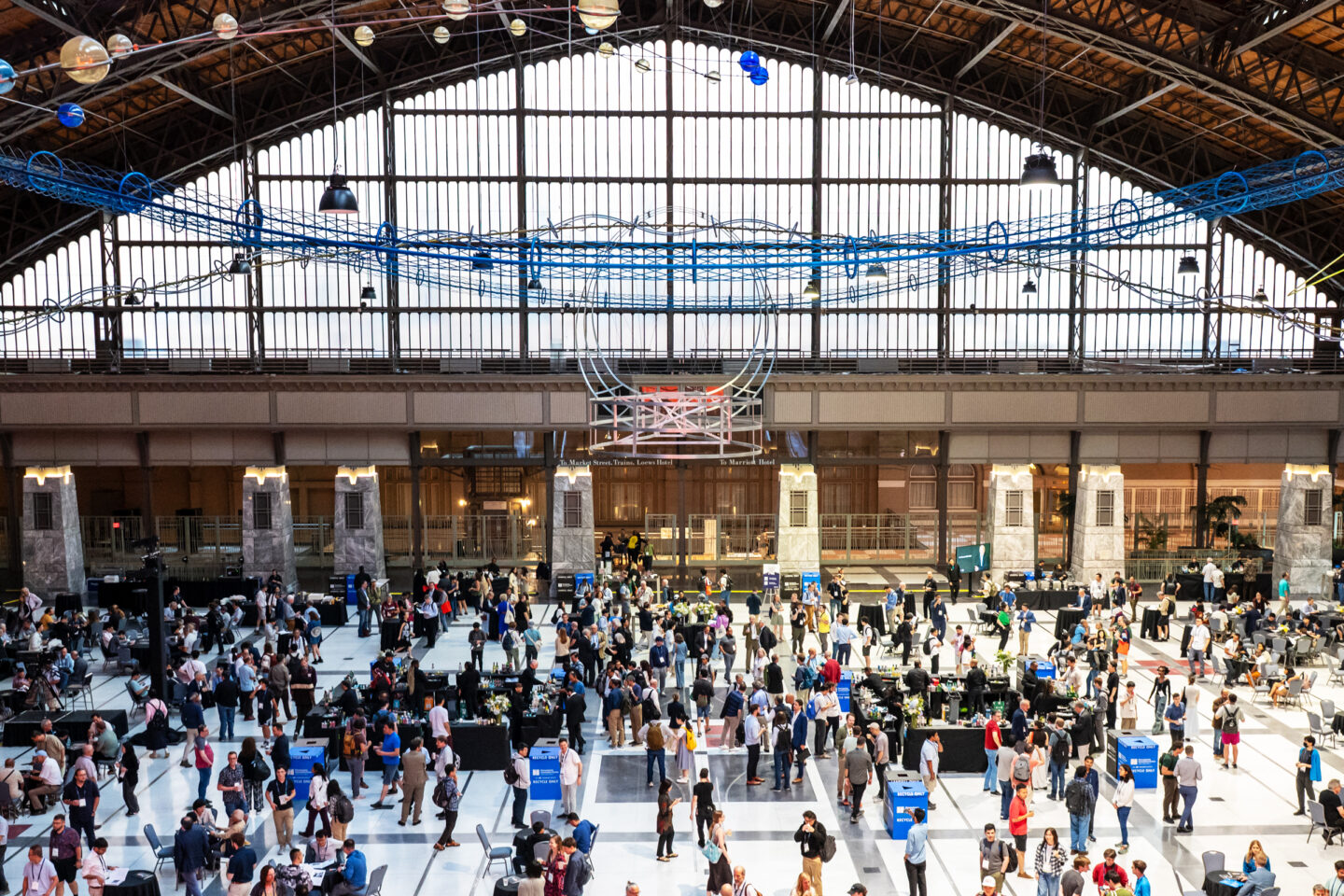
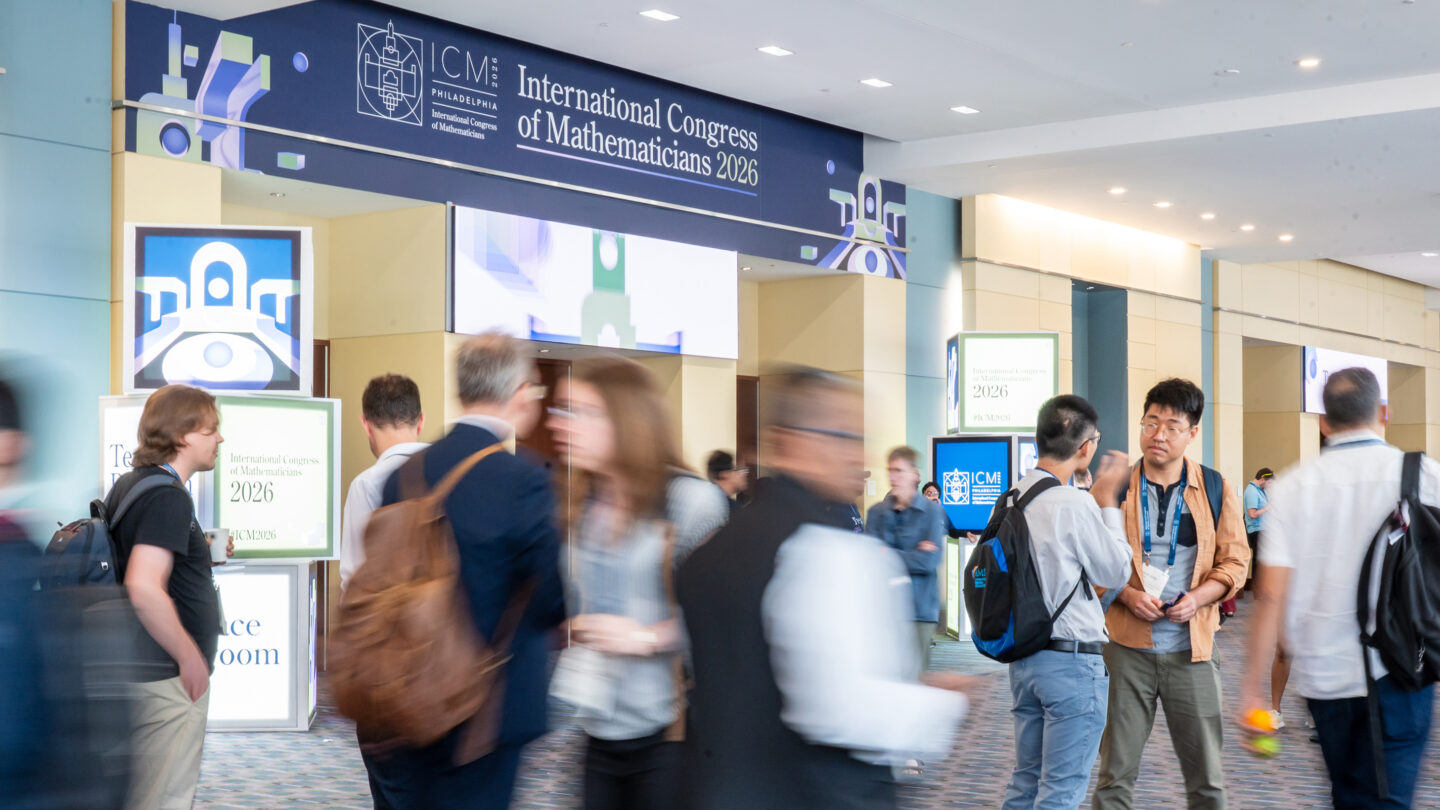
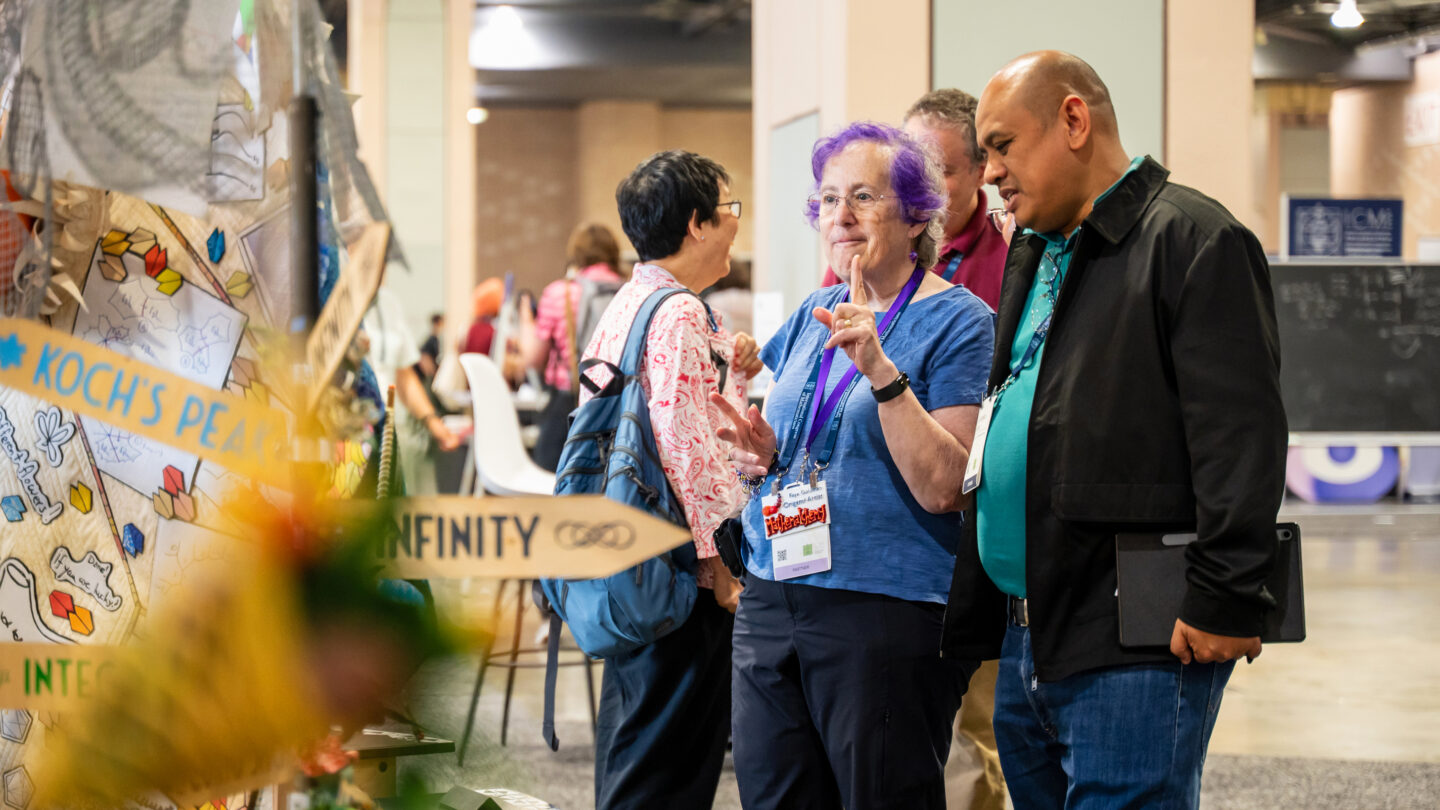
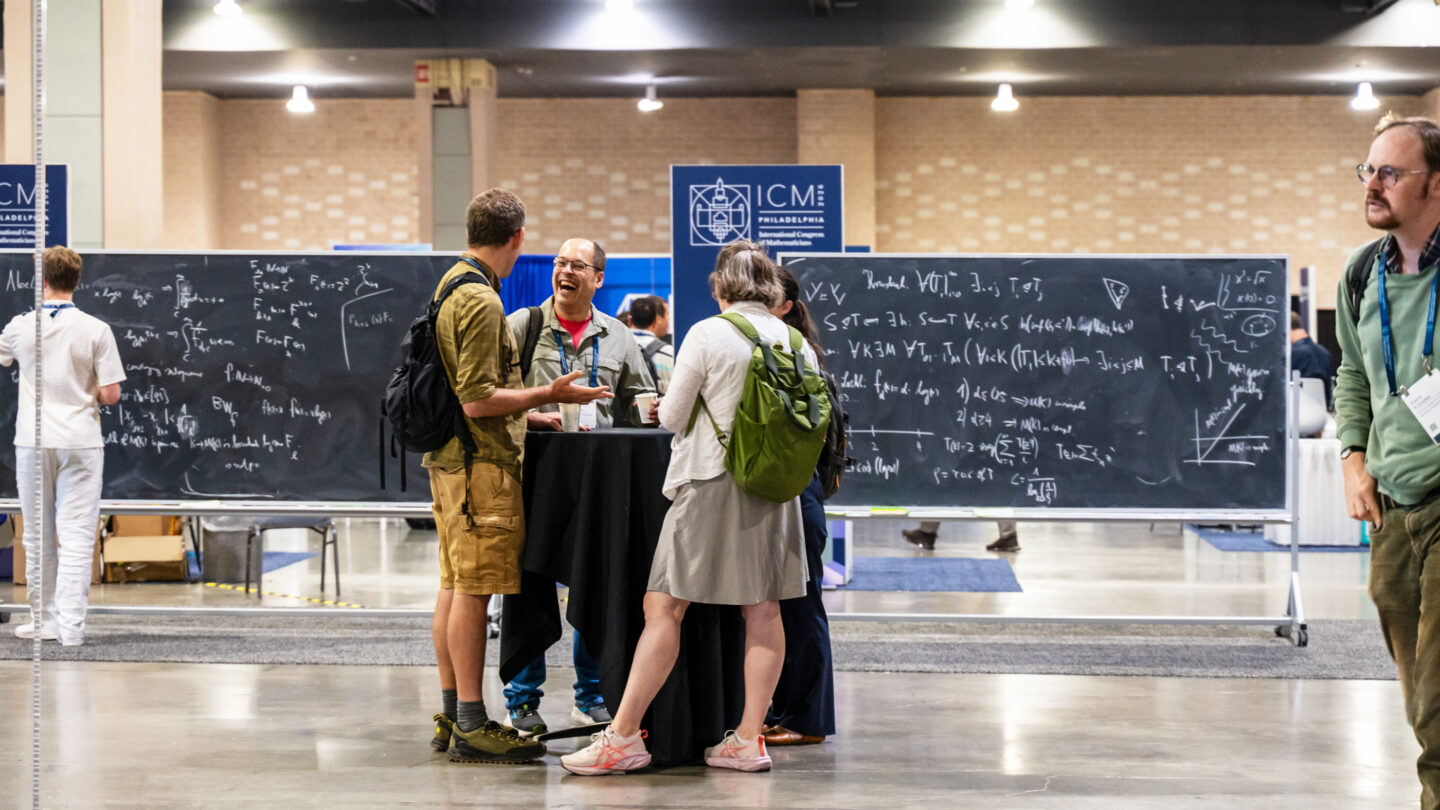
From auditorium-filling marquee talks to hallway conversations over coffee, the ICM serves as a crucial venue for mathematicians to discuss and debate the most important topics shaping the field. AI, for example, was a hot topic of discussion as mathematicians navigate its revolutionary impact on the field.
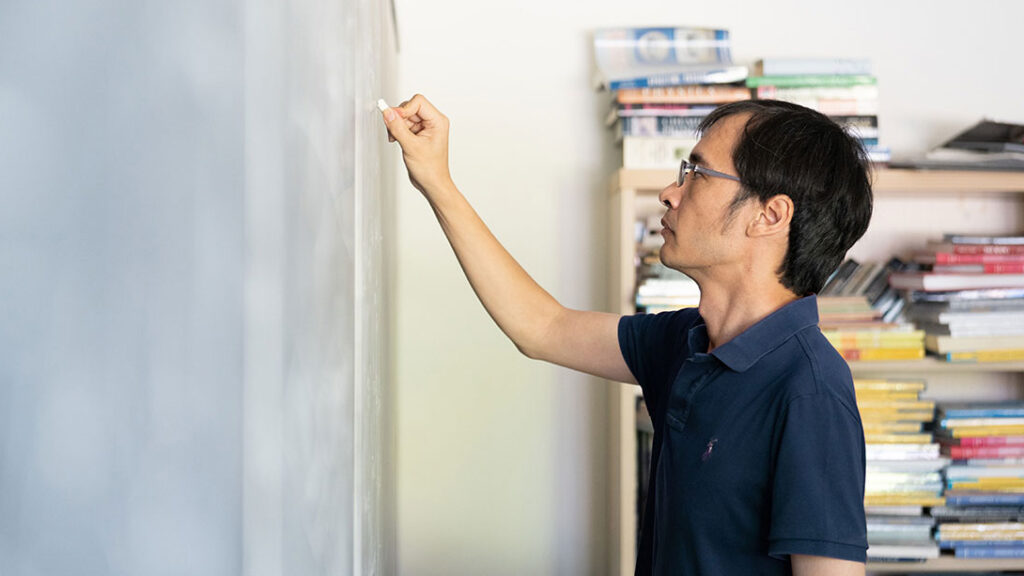
University of California, Los Angeles mathematician Terry Tao, a 2006 Fields Medalist, shared his thoughts in a public lecture in which he asked attendees to consider why they do mathematics and what counts as successful mathematics. Grappling with these questions, he argues, will be imperative for understanding AI’s place in the field.
“Let’s assume that soon, AI will be able to perform a reasonable fraction of mathematical tasks successfully,” he said. “If you condition for that, it becomes clear that we now have to think about our goals and our values.”
Another session centered on Lean, a proof assistant that has evolved into a “truth oracle” capable of verifying or refuting any mathematical or logical assertion. At ICM 2026, mathematics writer Kevin Hartnett spoke about his book The Proof in the Code. Published by the Simons Foundation’s Quanta Books, the book explores Lean’s development and what it could mean for how human mathematicians collaborate with AI.
“The utility of AI is that it can generate a lot of possibilities. It can explore a big space quickly, but it’s not reliable, and it’s hard to review all its suggestions,” he said. “Lean can quickly check them and tell you if they’re correct or not. That’s a virtue of it. We need systems for verification, using theorem provers, in a way we maybe didn’t feel as urgently before.”
AI isn’t the only field that mathematics touches. The ICM showcased several unexpected disciplines where mathematics plays a big role, including in sports analytics. In a panel discussion, analysts from Philadelphia’s major sports teams (the Phillies, Eagles, Union, Flyers and 76ers) described how they’ve gone from tiny one-person departments to large teams swimming in tracking data, biomechanics and even mental-performance information. The big challenge for sports analytics now, they say, is making the best use of the data rather than figuring out how to collect it.
“The data is blowing up faster than we can keep up,” said Fan-Hal Koung, the Sixers’ assistant general manager, during the panel. “In 2014, it was almost an advantage that we had limited data, because it forced us to focus research on very specific things. Now, with tracking and everything else, the hardest work isn’t technical — it’s deciding where to spend our time.”
Awarding Mathematics’ Highest Honors
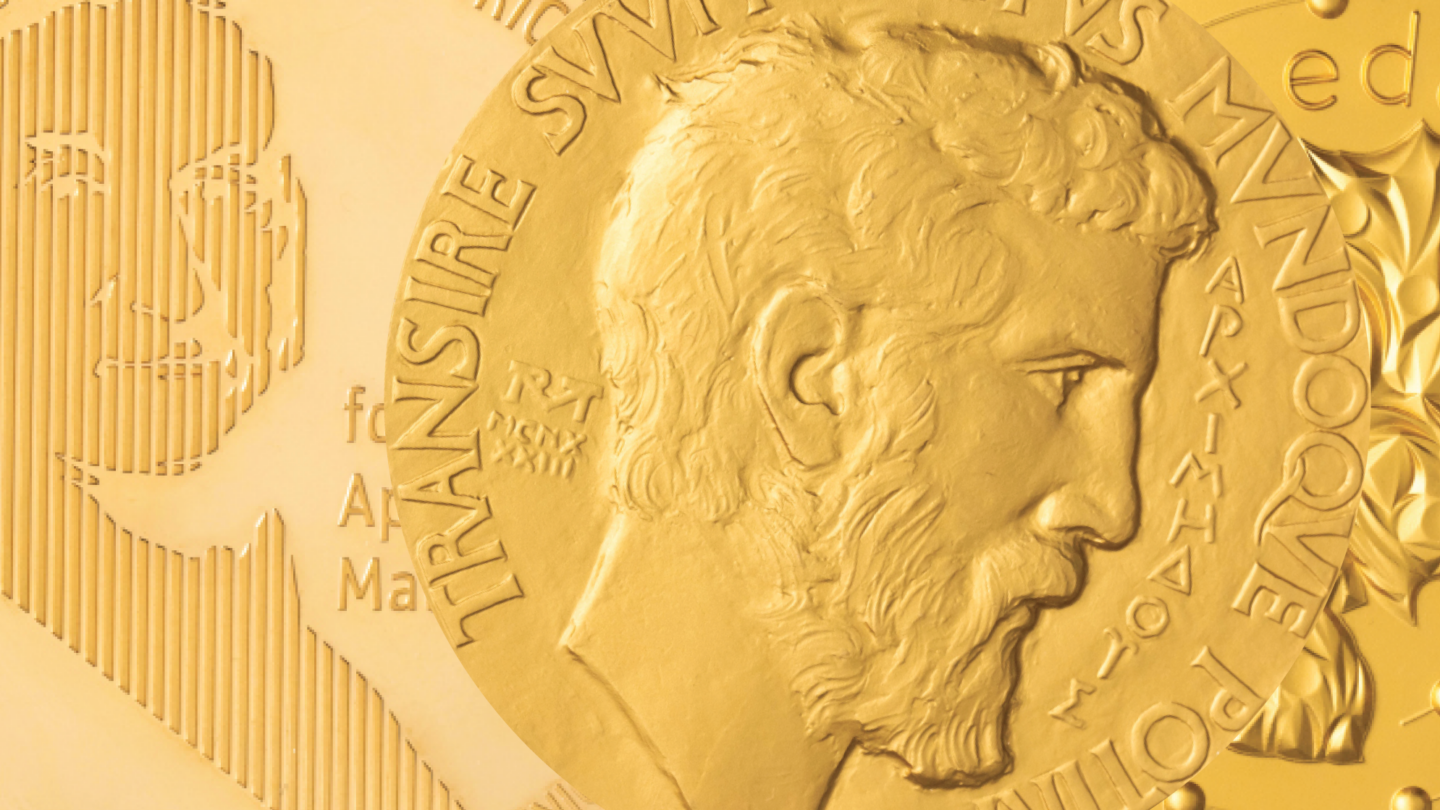
A highlight of each ICM is the announcement of the Fields Medals winners. The Fields Medals are among the highest honors in mathematics, awarded every four years by the IMU to outstanding mathematicians under age 40. The 2026 medals went to Yu Deng of the University of Chicago, John Pardon of Princeton University and Stony Brook University, Jacob Tsimerman of the University of Toronto and Hong Wang of New York University and the Institut des Hautes Études Scientifiques in France.
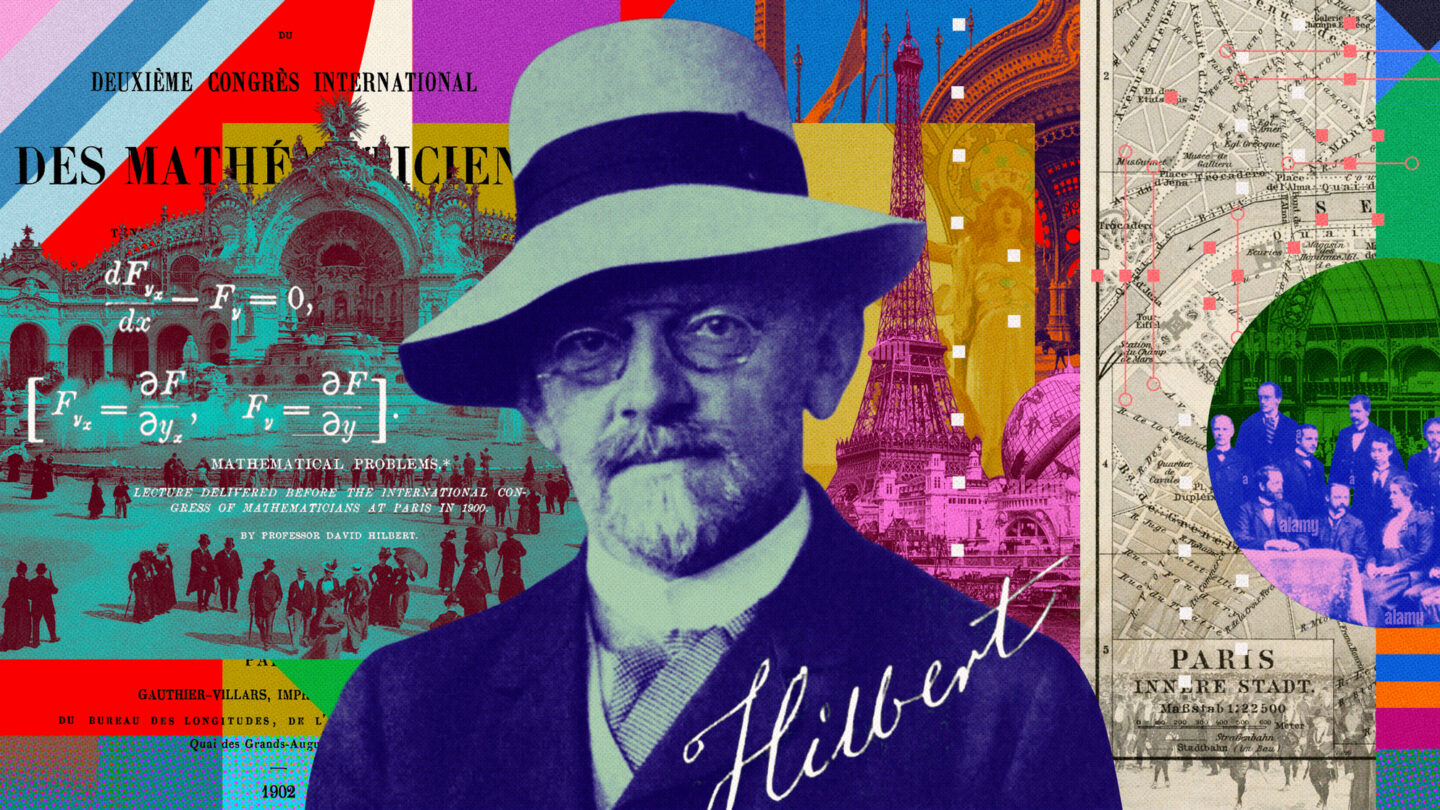
Deng received the award for his groundbreaking work developing new mathematical methods to better understand how waves and other physical phenomena behave. “Roughly speaking, what I do is connect the microscopic to the macroscopic in the universe,” he says. Deng and colleagues leveraged this approach to solve a version of Hilbert’s sixth problem, a 124-year-old challenge, with a 200-page proof.
Pardon was chosen for his work creating new mathematical tools that help mathematicians better understand the shapes and structures that arise in geometry and topology. His work helped prove the 20-year-old MNOP conjecture, showing that two seemingly unrelated methods for counting curves on certain six-dimensional shapes are actually equivalent. “A resistant problem is like climbing a mountain,” he says. “It might be painful, but you have a sense of accomplishment at the top.”
Tsimerman is recognized for developing powerful new ways to use o-minimality (a concept from mathematical logic) to solve major problems in number theory and algebraic geometry. “When doing number theory, you try to understand statistically what you expect to happen, and then whenever something unexpected happens, you look for geometric explanations for it,” he explains.
Wang won the medal in part for her breakthrough work on the Kakeya conjecture, a century-old problem in geometry about how much space is needed to rotate a line segment so that it points in every possible direction. “One lesson I’ve learned through mathematics is that as long as you get something in the end, it doesn’t matter how much time it takes for you. It’s OK to take your time,” she says.
Several other prestigious awards were also announced at the ICM.
The 2026 Abacus Medal went to Shayan Oveis Gharan of the University of Washington for his work improving the efficiency of computers in solving difficult problems, including the traveling salesperson problem.
The Chern Medal went to Graeme Segal of the University of Oxford for his visionary mathematical insights, which have influenced topology, mathematical physics, representation theory and category theory.
The Carl Friedrich Gauss Prize was awarded to Yurii Nesterov of Université Catholique de Louvain in Belgium for his groundbreaking work in mathematical optimization, which has provided the theoretical foundation and algorithmic backbone for many numerical and data-driven fields.
Hannah Fry won the 2026 Leelavati Prize for bringing mathematics to millions of people through books, television and other media, making mathematical ideas engaging and relevant to everyday life.