Award Year
2025
Award Type
Data Analysis
Awardees
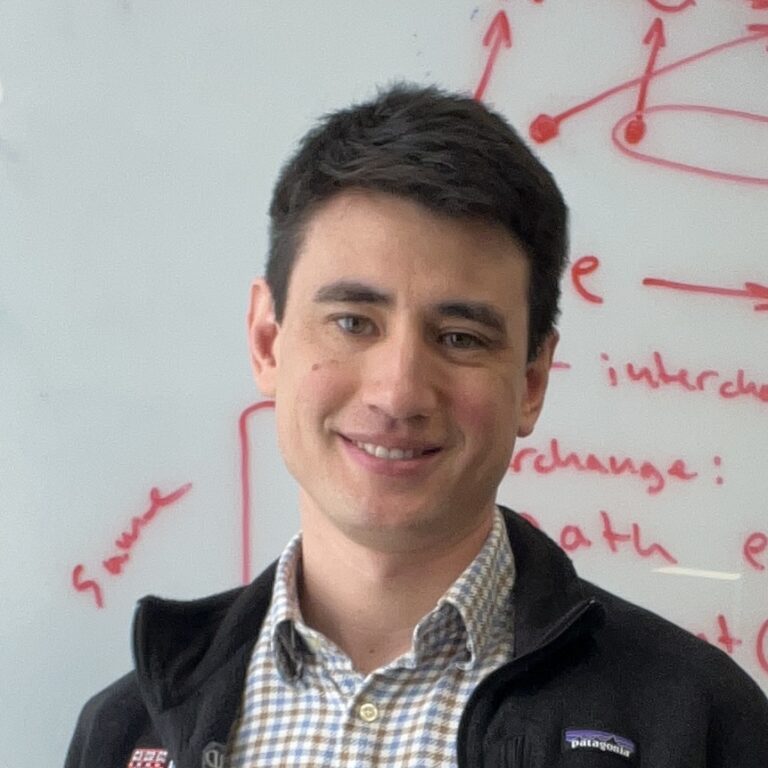
Luke O'Connor
SFARI Investigator
Bringing people and ideas together to fund, conduct, and share transformative science.
Our grants advance knowledge and strengthen connections between science and society.
Discover the latest news, research, and updates.
We convene scientists, mathematicians, and thinkers to share ideas and explore new questions.
Founded by Jim and Marilyn Simons, we’re a private philanthropy advancing mathematics and basic science.
Work with us on the frontier of basic science research.
The Flatiron Institute is a research center that uses computational science to advance fields like physics, biology, and astronomy.
Search
Funded Work
2025
Data Analysis
SFARI Investigator
De novo protein coding mutations are a major contributor to autism, and the characterization of these mutations is a major goal of SPARK and other large-scale genetic datasets. However, a challenge is that protein coding mutations have heterogenous functional effects. Especially for missense mutations, functional heterogeneity causes the loss of statistical power, because functionally important mutations are grouped together with those that have no effect. Even within known autism-associated genes, functional heterogeneity causes diagnostic uncertainty and downward bias in penetrance estimates.
Luke O’Connor and his colleagues at Harvard Medical School plan to leverage protein coding functional annotations, including machine learning-derived features, to model functional heterogeneity, improve association power and characterize functional architecture. Their method, the functionally informed model for mutational effects (FMM), jointly estimates variant-level functional weights and gene-level effect sizes. It incorporates any number of annotations and learns to prioritize those that are specifically relevant to autism. They will use FMM to enhance gene discovery by disaggregating functional and non-functional mutations. Within individual autism genes, they plan to identify the functional features that distinguish autism-associated mutations, shedding light on the biological role of those genes in autism.
The result of this effort will be a clearer picture of the ways in which protein-coding variants lead to autism: a functional description of the types of mutations involved; a more complete list of autism genes; and within those genes, a better understanding of the ways in which mutations alter their function in affected individuals.