Award Year
2025
Award Type
Sex Differences Collaborations
Awardees
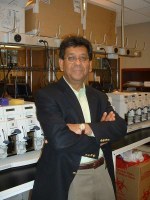
Aravinda Chakravarti
SFARI Investigator

Evan E. Eichler
SFARI Investigator

Tomasz Nowakowski
SFARI Investigator
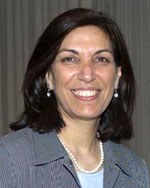
Huda Zoghbi
SFARI Investigator
Bringing people and ideas together to fund, conduct, and share transformative science.
Our grants advance knowledge and strengthen connections between science and society.
Discover the latest news, research, and updates.
We convene scientists, mathematicians, and thinkers to share ideas and explore new questions.
Founded by Jim and Marilyn Simons, we’re a private philanthropy advancing mathematics and basic science.
Work with us on the frontier of basic science research.
The Flatiron Institute is a research center that uses computational science to advance fields like physics, biology, and astronomy.
Search
Funded Work
2025
Sex Differences Collaborations
SFARI Investigator
SFARI Investigator
SFARI Investigator
SFARI Investigator
Autism genetics research faces two major challenges: understanding the higher male:female ratio in non-syndromic autism and finding the genetic basis for the 70% of non-syndromic cases that are clinically similar to those with known genetic mutations. This project addresses both questions by focusing on the X chromosome as the major source of male bias in autism. In the first phase of their collaboration, the team identified a number of key findings in support of this “damaged” X chromosome hypothesis. They identified 10 X-linked genes (MECP2, DDX3X, NAA10, HDAC8, WDR45, PDHA1, USP9X, KIAA2022, BCOR and SMC1A) enriched for loss-of-function de novo mutations in female NDD probands, as well as X-linked genes with higher female expression during prenatal development of the cortex. The scientists also characterized the cortical regulome and its sex bias, and validated variants in MECP2 enhancers with impaired regulatory activity in autism males.
The next phase of research proposes that hypomorphic coding and regulatory genetic and epigenetic variants on the X chromosome is the major cause of autism male-bias. Project 1 will analyze genomes from more than 14,000 autism families, focusing on genes and cis-regulatory elements (CREs) (revealed by Projects 2-4), perform long-read WGS on >40 autism males, and assess methylation of X-linked genes in autism brain tissue. Project 2 will assess the regulomes of X-linked genes in human neonatal control and autism brains. Project 3 will construct cell- and sample-specific CRE maps for the genome to guide Projects 1 and 4. Finally, Project 4 will experimentally validate CREs using iNeurons, test effects of autism-linked variants, pinpoint miRNA-binding sites of brain-expressed X-linked genes, and, together with Project 2, test candidate CREs in human brain tissue.
This work will define the common and rare mutational burden on sex chromosomes contributing to male bias, improve discovery of variants and their effects in autism, generate comprehensive pre- and post-natal regulatory maps, identify X-linked CREs and miRNA binding sites, and functionally assess noncoding regions to resolve unsolved autism cases.