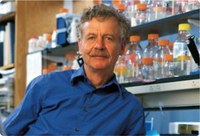
Rudolf Jaenisch and his colleagues sought to create a novel platform for studying autism spectrum disorders in human cells. Using cutting-edge gene-editing technology, they introduced mutations into genes that are known to cause disorders on the autism spectrum, such as Rett syndrome and fragile X syndrome. This allowed them, for the first time, to investigate the effects of pathogenic mutations on the morphology, electrophysiology and intracellular signaling of human neurons in culture.
In addition, precise gene editing allowed Jaenisch and his colleagues to look for disease-relevant phenotypes in an isogenic setting, which greatly reduced the influence of genetic background variation. By studying the neurons and glia differentiated from human pluripotent stem cells carrying a mutation in MeCP2, which causes Rett syndrome, the researchers found that the mutant neurons display key features of Rett syndrome. They also observed that global gene expression is surprisingly down-regulated in MeCP2 mutant neurons compared with wild-type neurons, and such an effect is even more pronounced as the neurons mature.
Treatments with brain-derived neurotrophic factor (BDNF) and insulin-like growth factor 1 (IGF-1) were effective in partially reversing the disease-relevant phenotypes of MeCP2 mutant neurons. Together, these findings provide novel insights into the function of autism genes such as MeCP2, and establish a framework for the functional studies of genetic mutations linked to autism in human cells.