Alumni Spotlight: Melanie Habouzit
Featuring
-
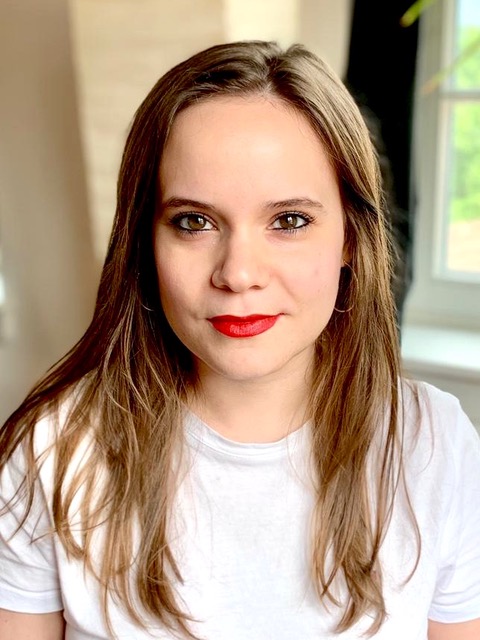
Melanie Habouzit
Past, Flatiron Research Fellow, Center for Computational Astrophysics
Bringing people and ideas together to fund, conduct, and share transformative science.
Our grants advance knowledge and strengthen connections between science and society.
Discover the latest news, research, and updates.
We convene scientists, mathematicians, and thinkers to share ideas and explore new questions.
Founded by Jim and Marilyn Simons, we’re a private philanthropy advancing mathematics and basic science.
Work with us on the frontier of basic science research.
The Flatiron Institute is a research center that uses computational science to advance fields like physics, biology, and astronomy.
Search
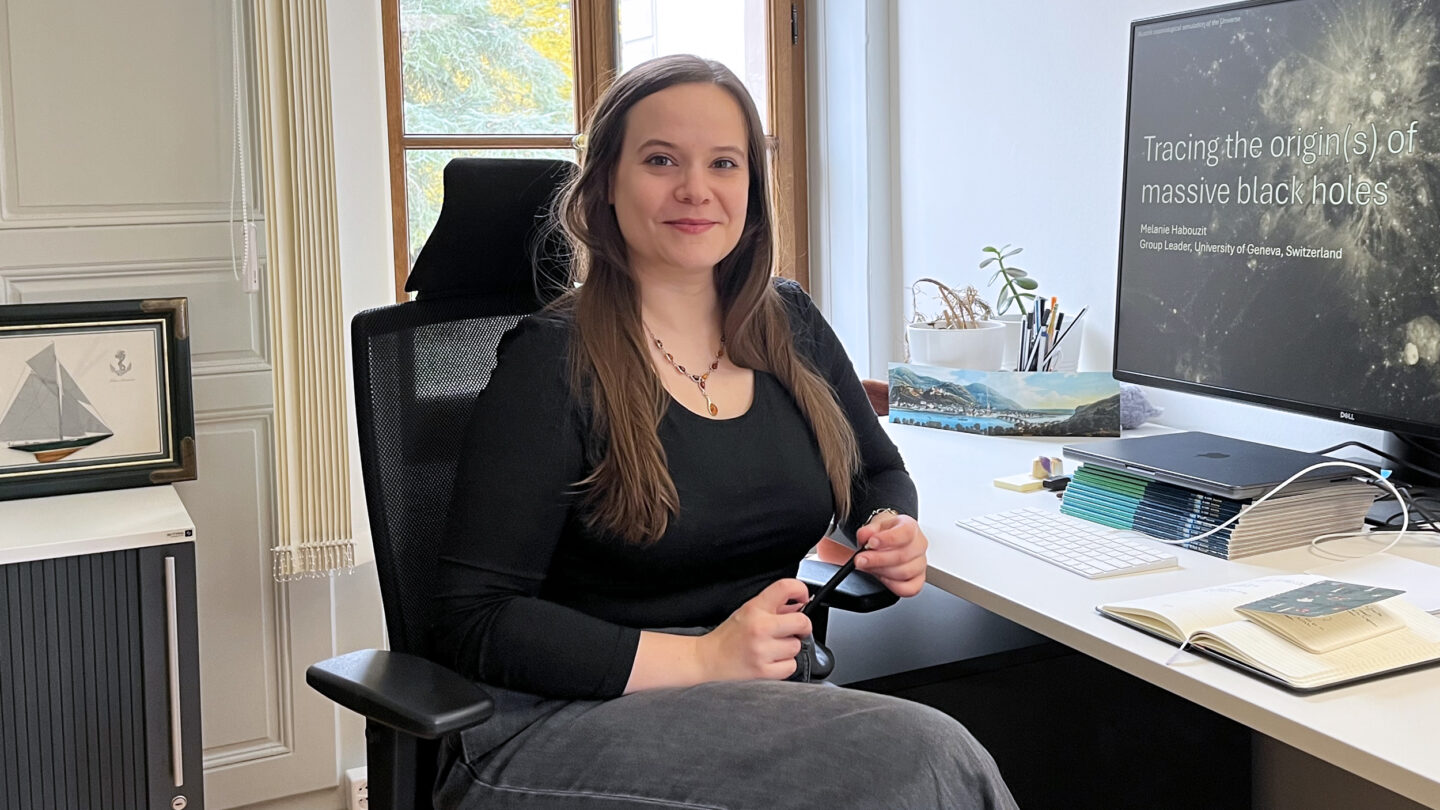
Habouzit, one of the first astrophysics research fellows at the Simons Foundation’s Flatiron Institute, is now an assistant professor at the University of Geneva. She is the head of a research team studying the origins and evolution of massive black holes and galaxies in the early universe.
Past, Flatiron Research Fellow, Center for Computational Astrophysics
Melanie Habouzit was among the first cohort of research fellows at the Center for Computational Astrophysics (CCA) at the Simons Foundation’s Flatiron Institute. From 2016 to 2019, she conducted research on galaxy formation and evolution, work that she continues today. Before joining the CCA, Habouzit received her Ph.D. from the Institut d’astrophysique de Paris (IAP).
We recently caught up with Habouzit to ask her what she’s been up to as she’s continued her career.
The Flatiron Institute works to develop the next generation of computational scientists. Flatiron Institute alumni can also keep in touch by joining our Alumni Network.
I am an assistant professor at the University of Geneva in Switzerland, ideally located in between Lake Geneva and the Jura and Alps mountains.
I hold a Swiss National Science Foundation Starting Grant, which has allowed me to build my own research team. My group currently consists of a postdoctoral researcher, two Ph.D. candidates and a few bachelor’s/master’s students. Together, we investigate the origins and evolution of massive black holes and galaxies in the early universe.
The Simons Foundation was an incredibly dynamic environment for science and for triggering new ideas. As a fellow, I really enjoyed joining the weekly meeting and hearing about the exciting science happening across the New York research community. It was an inspiring place to think and discuss and develop new ideas.
One of the most important things I took away from that experience is the value of thinking big and being willing to tackle ambitious scientific challenges. Making real progress often means taking on difficult questions and developing complex tools to address them — cosmological simulations, in my case — without being afraid of the challenges along the way. That mindset continues to shape how I approach my research and build my own group today.
Since leaving the Simons Foundation, I spent several years in Heidelberg, a small but lively city that is one of Germany’s major hubs for astrophysics. It was quite a change of scenery from New York, but a wonderful experience in its own way. My next adventure was moving to Switzerland to start my own research group at the University of Geneva. Building a team and developing my own research direction have certainly come with plenty of challenges, but they have also been an incredibly rewarding adventure, both scientifically and on a human level. Creating a group, bringing people together around shared scientific questions and seeing new ideas take shape has been a really exciting part of this journey.
I’m not sure this entirely counts as nonwork, but one of my favorite memories is sharing the space with the other fellows. When we arrived, CCA had just opened, and we were the first cohort of fellows. There was a real excitement about being part of something new and watching the center grow and take shape.
I also really enjoyed going to dinners with fellow researchers and the invited speakers of the week. It was a great way to get to know people outside the usual academic setting and exchange ideas in a more relaxed atmosphere. And I loved having the opportunity to attend seminars from the foundation’s different research areas, such as autism research. I found it incredibly enriching to be exposed to such a diversity of scientific perspectives.