CCM Distinguished Research Scientist Stéphane Mallat Awarded CNRS Gold Medal

Featuring
-
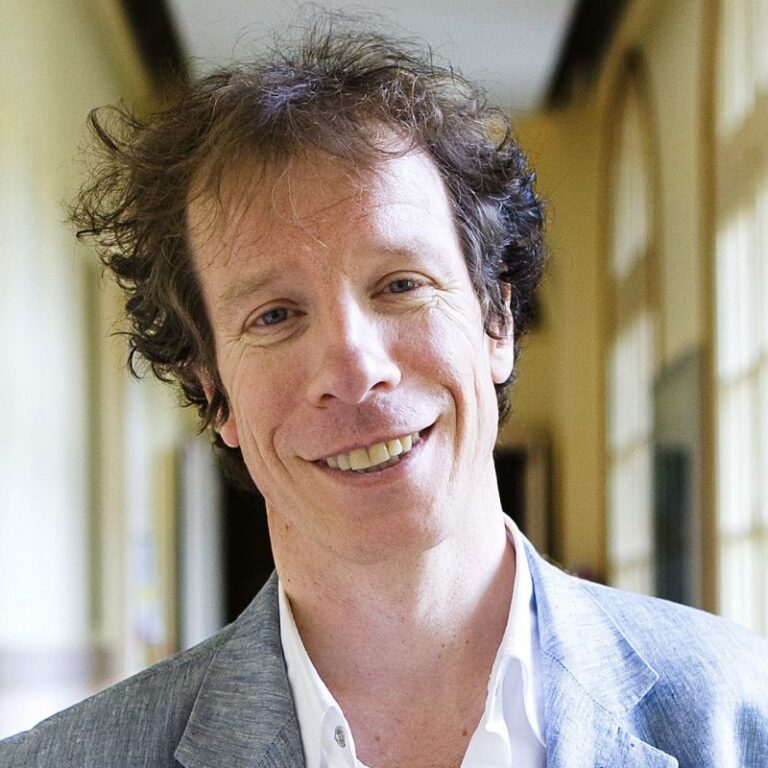
Stéphane Mallat
Distinguished Research Scientist, Center for Computational Mathematics
Bringing people and ideas together to fund, conduct, and share transformative science.
Our grants advance knowledge and strengthen connections between science and society.
Discover the latest news, research, and updates.
We convene scientists, mathematicians, and thinkers to share ideas and explore new questions.
Founded by Jim and Marilyn Simons, we’re a private philanthropy advancing mathematics and basic science.
Work with us on the frontier of basic science research.
The Flatiron Institute is a research center that uses computational science to advance fields like physics, biology, and astronomy.
Search
The medal recognizes Mallat’s scientific contributions, including his research into wavelets and the geometry of data.
Distinguished Research Scientist, Center for Computational Mathematics
The French National Centre for Scientific Research (CNRS) has awarded mathematician Stéphane Mallat the 2025 CNRS Gold Medal for his “exceptional contributions to the dynamism and influence of French research.” The award announcement highlights Mallat’s influential research on wavelets and the impact of his contributions to the fields of signal processing and artificial intelligence.
Mallat is a distinguished research scientist at the Flatiron Institute’s Center for Computational Mathematics (CCM) and the chair of data science at the Collège de France.
Created in 1954, the CNRS Gold Medal recognizes French scientists who have made exceptional contributions to the “dynamism and influence of French research.”
“In awarding him the 2025 Gold Medal, the CNRS recognizes [Mallat’s] exceptional career at the intersection of mathematics and computer science, that of a visionary scientist of international renown,” wrote CNRS Chairman and CEO Antoine Petit in the award announcement. “This distinction is a reminder that all of today’s developments in artificial intelligence stem from basic research. It highlights the young discipline of data science, which relies on algorithms and is based on the French tradition of mathematical excellence.”
Mallat received his Ph.D. from the University of Pennsylvania in 1988, after which he became a professor at New York University’s Courant Institute of Mathematical Sciences. In 1995, he became a professor of applied mathematics at France’s École Polytechnique and department chair in 2001. From 2001 to 2007, he was co-founder and CEO of Let It Wave, a company that pioneered algorithmic data compression techniques based on wavelets. From 2012 to 2017, he was a professor in the Computer Science Department of École normale supérieure in Paris. Since 2017, he has held the data science chair at the Collège de France.
Mallat’s research interests include machine learning, signal processing and harmonic analysis. He is a member of the French Academy of Sciences, a foreign member of the U.S. National Academy of Engineering, an IEEE Fellow and a EUSIPCO Fellow. In 1997, he received the Outstanding Achievement Award from the SPIE Society and was a plenary lecturer at the 1998 International Congress of Mathematicians. He also received the 2004 European IST Grand Prize, the 2004 INIST-CNRS Prize for most cited French researcher in engineering and computer science, the 2007 EADS Grand Prize from the French Academy of Sciences, the CNRS’s 2013 Innovation Medal, and the 2015 IEEE Signal Processing Magazine Sustained Impact Paper Award.

