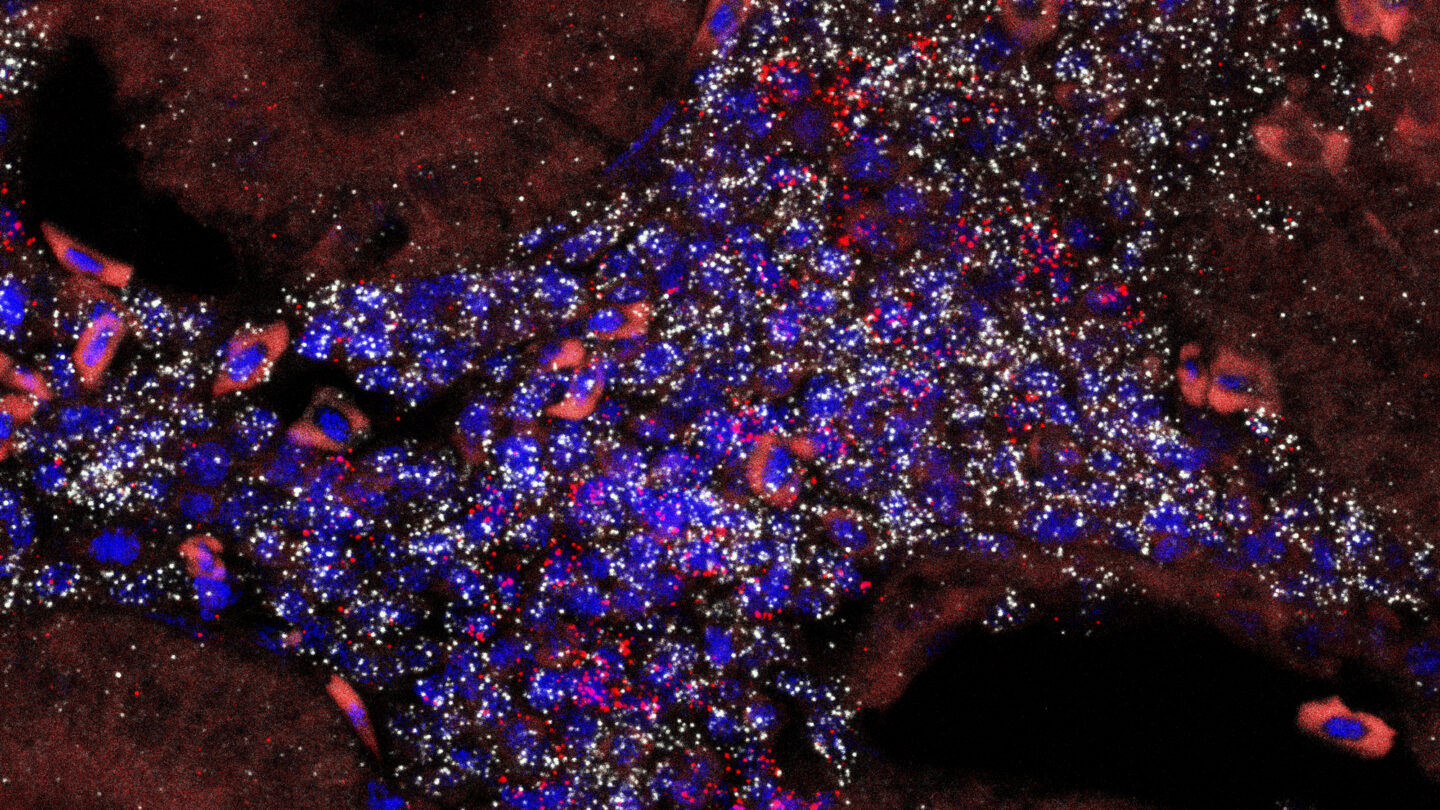
While pathways in certain tissues changed in opposite ways in males versus females, little difference between the sexes showed up in the brain, according to Chen, a postdoc in Brunet’s lab. But because protein production from RNA is disrupted in old killifish brains, as it is in humans, it’s possible that male and female brains may differ at the protein level, she notes.
Tipping the Balance in the Body
The immunological changes weren’t limited to the brain. The atlas documented a fundamental shift in the body’s system for defense.
In humans, immune cells are produced in the bone marrow. In fish, that role falls to the front portion of the kidney. By examining gene activity in this organ, the researchers found a pattern reminiscent of what has been observed in aging mammals, including humans. Markers associated with B and T cells, the immune system’s precision defenders, declined with age. Meanwhile, evidence of immune cells that participate in broader inflammatory responses increased.
Interestingly, this shift was much more pronounced in females than in males.
“This and other sex-specific aging features may help explain why male and female killifish often respond differently to treatments known to affect lifespan,” Chen says. Previously, for example, she and others on the Stanford team found that restricting the diet of killifish significantly lengthened the lives of males but not those of females.
Predicting Biological Age
Drawing on the atlas’s data, the team built a set of artificial intelligence–based tools called aging clocks. These AI models learn gene activity patterns from specific tissues and then predict the biological age of samples based on their molecular data. The researchers tested their clocks by giving them data from prior experiments, including the diet restriction study. Focusing on the fish livers, the clocks determined that the males appeared younger, while the females did not — predictions that aligned with the longer lifespans seen only in males.
By giving researchers a rapid new way to evaluate the effects of experiments, these clocks could be powerful tools for studying aging, according to the researchers.
“We want to use our data to embolden and enable others who are studying killifish,” Costa says.