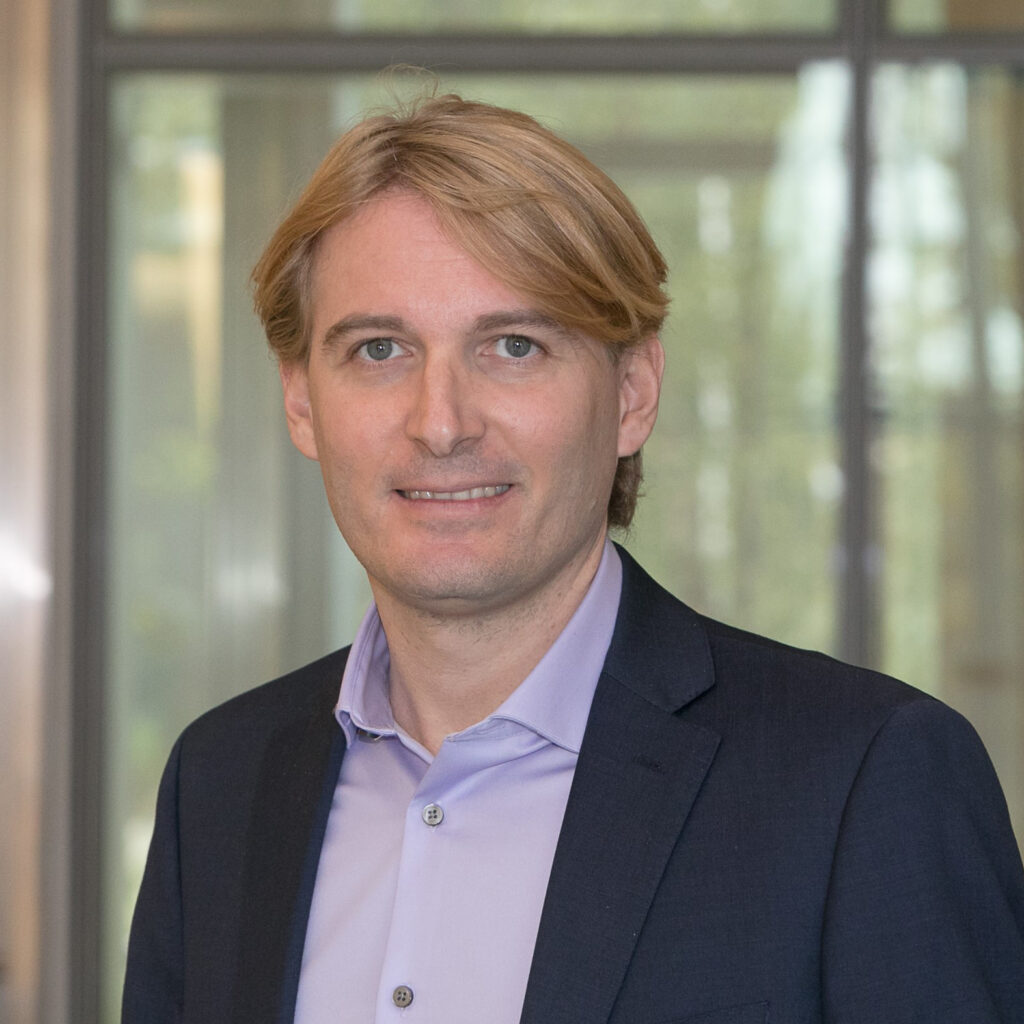
Neil M. Donahue, Ph.D.

Affiliations
  • Carnegie Mellon University

Neil M. Donahue is the Thomas Lord University Professor of Chemistry in the departments of Chemical Engineering, Chemistry, and Engineering & Public Policy at Carnegie Mellon University. He received his Ph.D. in meteorology from MIT. His research addresses the kinetics and mechanisms of atmospheric oxidation, including the effect of product volatility on the formation and growth of atmospheric particles. He developed the volatility basis set to treat the thermodynamic partitioning of complex organic mixtures in atmospheric particles as well as the dynamics of particle formation and growth. He is a fellow of the American Geophysical Union and the American Association for Aerosol Research.

Related People

A man with blond hair wearing a navy blazer and light purple shirt stands indoors in front of large windows, smiling at the camera.

Andrea Alù

Director, Simons Collaboration on Extreme Wave Phenomena Based on Symmetries

A man with glasses and a beard, wearing a navy blazer and white shirt, smiles in a bright, modern office with blurred lights in the background.

B. Andrei Bernevig

Director, Simons Collaboration on New Frontiers in Superconductivity

A middle-aged man with light hair smiles outdoors, wearing a light blue checkered shirt. The background is blurred greenery.

Lars Bildsten

Trustee, Simons Foundation
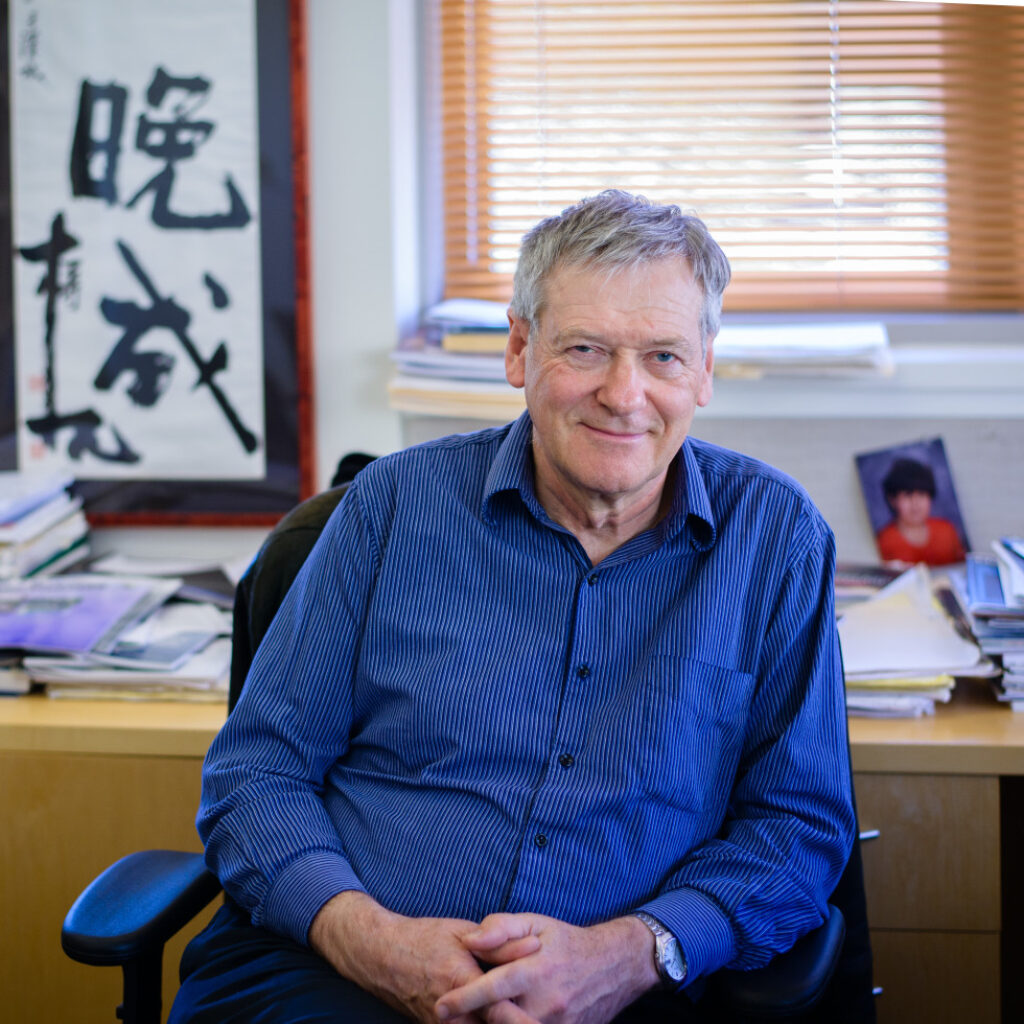
An older man in a blue shirt sits smiling in an office with stacks of papers, a framed calligraphy piece, and a photo of a child on the desk behind him.

Roger Blandford

Director, Simons Collaboration on Extreme Electrodynamics of Compact Sources

A middle-aged man with short gray hair, wearing a dark blue button-up shirt, is looking at the camera with a neutral expression. The background is blurred indoors with hints of greenery.

Greg Bryan

Director, Simons Collaboration on Learning the Universe

Portrait photo of Paul Chaikin

Paul Chaikin

Senior Fellow, Simons Society of Fellows

Mathematics & Physical Sciences

The Mathematics and Physical Sciences division supports research aimed at advancing our understanding of fundamental questions in mathematics, physics and computer science. Through grants and collaborations, the division brings together researchers to pursue ambitious ideas, develop new approaches and foster scientific exchange.

Learn more
Abstract 3D shape with smooth, overlapping blue and light green surfaces, forming a dynamic, swirling pattern on a white background.