Skip to content
Simons Foundation
Simons Foundation
Simons Foundation
Search
  • Bringing people and ideas together to fund, conduct, and share transformative science.

    In-House Research

    • Computational Astrophysics
    • Computational Biology
    • Computational Mathematics
    • Computational Neuroscience
    • Computational Quantum Physics
    • Computational Catalysis
    All Publications

    Research We Fund

    • Autism
    • Neuroscience
    • Mathematics & Physical Sciences
    • Ecology & Evolution
    • Plant Biology

    Public Engagement

    • Grantmaking
    • Media Initiatives
    • Public Events
    • Researcher Engagement
    • National Initiatives

    Resources

    • Computational Software
    • Computational Datasets
    • SFARI Base
    All Resources

    Simons Collaborations

    • Simons Collaboration on New Frontiers in Superconductivity
    • Simons Collaboration on Ecological Neuroscience
    • Simons Collaboration on Principles of Microbial Ecosystems
    All Collaborations
  • Our grants advance knowledge and strengthen connections between science and society.

    All Funding Opportunities

    Autism & Neuroscience

    • Fellows-to-Faculty
    • New Ideas
    • SFARI Conferences & Courses Awards
    • Shenoy Undergraduate Research Fellowship in Neuroscience

    Life Sciences

    • Simons Graduate Fellowships in Ecology & Evolution
    • Simons Postdoctoral Fellowships in Plant Biology
    • Synthetic Plant Biology
    • Simons Collaborations in Ecology & Evolution

    Science, Society & Culture

    • Science in Culture
    • Science in Community
    • STEM Pathways

    Mathematics & Physical Sciences

    • Scientific Software Research Faculty Award
    • Simons Collaborations in MPS
    • Simons Dissertation Fellowship
    • Simons Fellows in Mathematics
    • Targeted Grants to Institutes
    • Targeted Grants in MPS
    • Travel Support for Mathematicians

    Shared Programs

    • Pivot Fellowship
    • Simons Society of Fellows

    Resources for Applying

    • Open Funding Opportunities
    • Policies & Procedures
    • SAM FAQ and Instructional Videos
    • Past Funded Work
  • Discover the latest news, research, and updates.

    All News

    The Latest

    • Research News
    • Funding Announcements
    • Newsletter Sign Up

    For the Media

    • Press Releases
    • Media Relations
  • We convene scientists, mathematicians, and thinkers to share ideas and explore new questions.

    All Events

    Public Events

    • Presidential Lectures
    • Presents
    Attend an Event

    Flatiron Events Our in-house research institute hosts events for scientists and researchers.

    See All

    Past Events Find videos, presentations, and resources from our past events.

    See All
  • Founded by Jim and Marilyn Simons, we’re a private philanthropy advancing mathematics and basic science.

    About Us

    About

    • Our History
    • Annual Reports
    • Brand Guidelines
    • Visitor Information
    • Media Relations
    • Contact
    About Us

    People

    • Leadership
    • Board of Trustees
    • Research Staff
    All People

    Careers

    • Working Here
    • Internship Opportunities
    • Undergraduate Students
    • Graduate Students
    • Postdoctoral Opportunities
    • Research Scientists
    Open Jobs
  • Flatiron Institute
  • Careers
    Search all
  • Funding
    Search all
  • Explore opportunities for...
    • Undergraduate students
    • Graduate students
    • Postdoctoral researchers
    • Research scientists
Simons Foundation

Filters

Type

Section

Person

Show 97 more Show less
Simons Foundation
  • Find a Person

Bringing people and ideas together to fund, conduct, and share transformative science.

Our grants advance knowledge and strengthen connections between science and society.

Discover the latest news, research, and updates.

  • All News
  • Research News
  • Funding Announcements
  • Newsletter Sign Up
  • Press Releases
  • Media Relations

We convene scientists, mathematicians, and thinkers to share ideas and explore new questions.

  • Events Calendar
  • Public Events
  • Presidential Lectures
  • Presents
  • Flatiron Events
  • Past Events

Founded by Jim and Marilyn Simons, we’re a private philanthropy advancing mathematics and basic science.

Work with us on the frontier of basic science research.

  • All Open Positions
  • Undergraduate Students
  • Graduate Students
  • Postdocs
  • Research Scientists

The Flatiron Institute is a research center that uses computational science to advance fields like physics, biology, and astronomy.

  • Explore Flatiron Institute
  • People
  • Careers
  • Publications
  • Software & Data
  • Computational Astrophysics
  • Computational Biology
  • Computational Mathematics
  • Computational Neuroscience
  • Computational Quantum Physics
  • Computational Catalysis
Flatiron Institute
  • Autism
  • Neuroscience
  • Mathematics
  • Ecology & Evolution
  • Plant Biology
  • Grantmaking
  • Media Initiatives
  • Public Events
  • Researcher Engagement
  • National Initiatives
  • Computational Software
  • Computational Datasets
  • SFARI Base
  • Publications
  • Simons Collaboration on New Frontiers in Superconductivity
  • Simons Collaboration on Ecological Neuroscience
  • Simons Collaboration on Principles of Microbial Ecosystems
All Collaborations
  • Policies & Procedures
  • Instructional Videos
  • Past Funded Work
  • Undergraduate Students
  • Graduate Students
  • Postdocs
  • Research Scientists
All Funding Opportunities
  • Fellows-to-Faculty
  • New Ideas
  • SFARI Conferences & Courses Awards
  • Shenoy Undergraduate Research Fellowship in Neuroscience
Autism & Neuroscience
  • Simons Graduate Fellowships in Ecology & Evolution
  • Simons Postdoctoral Fellowships in Plant Biology
  • Synthetic Plant Biology
  • Simons Collaborations in Ecology & Evolution
Life Sciences
  • Science in Culture
  • Science in Community
  • STEM Pathways
Science, Society & Culture
  • Scientific Software Research Faculty Award
  • Simons Collaborations in MPS
  • Simons Dissertation Fellowship in Mathematics
  • Simons Fellows in Mathematics
  • Targeted Grants to Institutes
  • Targeted Grants in Mathematics & Physical Sciences
  • Travel Support for Mathematicians
Mathematics & Physical Sciences
  • Pivot Fellowship
  • Simons Society of Fellows
  • Our History
  • Annual Reports
  • Visitor Information
  • Media Relations
  • Contact Us
About Us
  • Leadership
  • Board of Trustees
  • Research Staff
Search All People
  • Working Here
  • Internship Opportunities
  • Undergraduate Students
  • Graduate Students
  • Postdoctoral Students
  • Research Scientists
All Open Positions

Centers

  • Computational Astrophysics
  • Computational Biology
  • Computational Mathematics
  • Computational Neuroscience
  • Computational Quantum Physics
  • Scientific Computing Core
  • Initiative for Computational Catalysis

Collaborative Projects

  • Foundation Models of Science
  • Simons Observatory
Flatiron Institute

Search

What are you looking for?

Filter Results

Search

What are you looking for?

Results update as you type and when you change filters.

Skip to results

Filters

Type

Section

Person

Show 97 more Show less

Filters

Featured

Dissecting mechanisms of hyperarousal in autism and related disorders using the Simons Sleep Project

Funded Work

Gravity Follows Newton’s and Einstein’s Rules, Even at Cosmic Scales

April 15, 2026

Scientists Capture Superconductivity’s ‘Dancing Pairs’ for First Time, Filling Gap in Decades-Old Theory

April 15, 2026

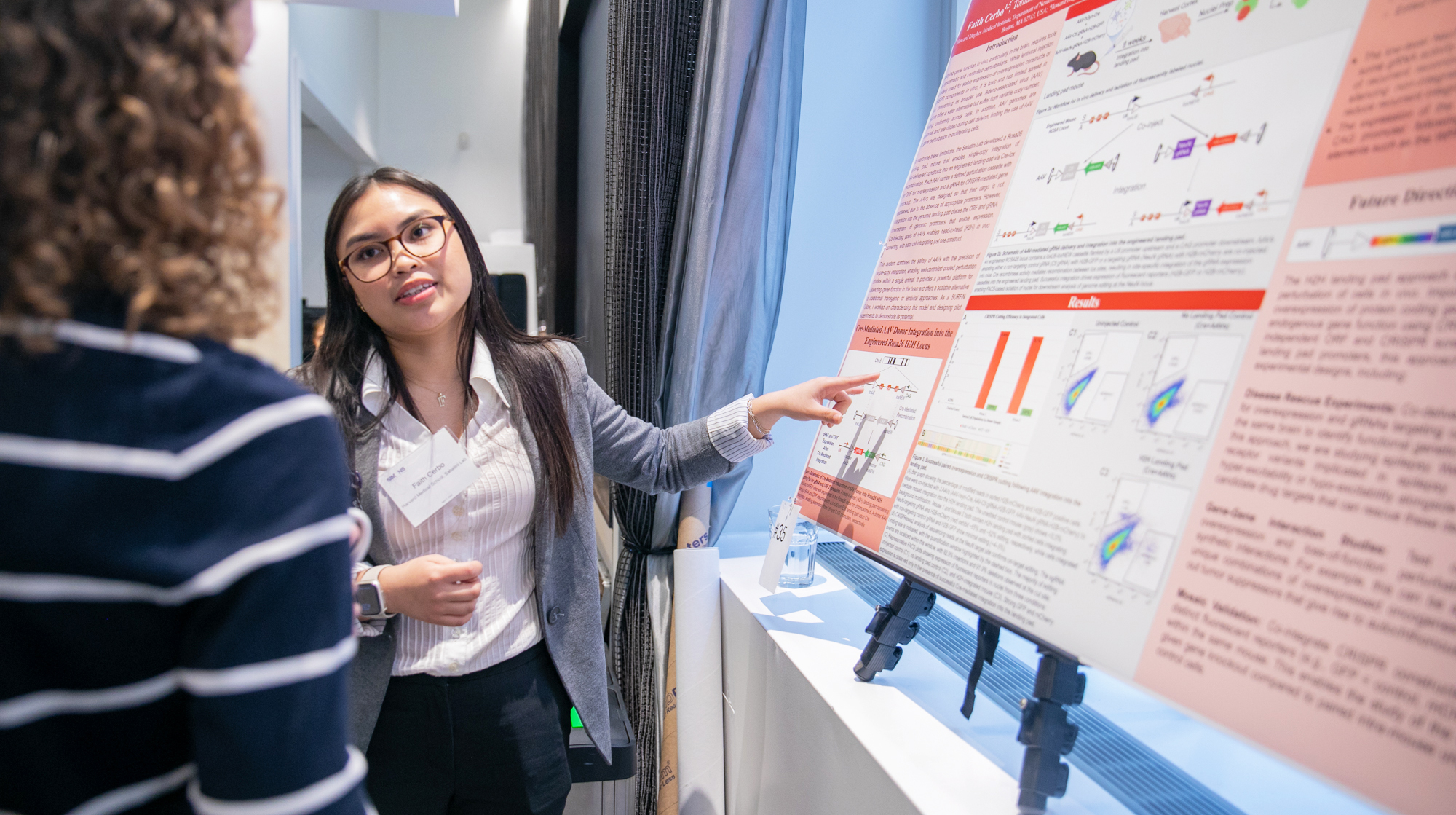
How SURFiN Fellowships Jump-Started These 3 Neuroscience Students’ STEM Careers

March 18, 2026

Topology and Complexity

November 19, 2014

Results

  1. MESA Isochrones and Stellar Tracks (MIST). II. Models with \(\alpha\)-enhanced Chemical Composition

    Publication
    We update and expand the MESA Isochrones and Stellar Tracks (MIST) database to include variations in the alpha-capture elements, specifically [alpha/Fe]=-0.2, 0, +0.2 …
  2. Pulsational Instability of Quasi-stars: Interpreting the Variability of Little Red Dots

    Publication
    The JWST discovery of "Little Red Dots" (LRDs) has revealed a population of compact, red sources at \(z \sim 5-10\) that likely host supermassive black holes (SMBHs …
  3. Type IIb Supernova Progenitors in 3D: Variability and Episodic Mass Loss Revealed by Radiation Hydrodynamics Simulations

    Publication
    We present the first 3D Radiation-Hydrodynamics simulations of partially-stripped (\(M_\mathrm{core}\sim10M_\odot\), \(M_\mathrm{env}\sim0.1-1M_\odot\)) Yellow Supergiant ( …
  4. The Growth of the Central Black Holes in Quasi-stars

    Publication
    Observations by JWST have confirmed the presence of supermassive black holes (BHs) at redshifts \(z\gtrsim10\), lending support to scenarios in which BHs experience rapid growth through intense …
  5. Predicting Stellar Parameters of Massive Stars from Light Curves with Machine Learning

    Publication
    High-resolution spectroscopic measurements of OB stars are important for understanding processes like stellar evolution, but require labor-intensive observations. In contrast, photometric missions like the Transiting Exoplanet …
  6. An extremely luminous flare recorded from a supermassive black hole

    Publication
    Since their discovery more than 60 years ago, accreting supermassive black holes in active galactic nuclei (AGN) have been recognized as highly variable sources, requiring an extremely compact …
  7. Spectral Evolution of Rotating Population III Stars

    Publication
    Population III (Pop III) stars, the first generation of stars formed from primordial gas, played a fundamental role in shaping the early Universe through their influence on cosmic …
  8. Rossby Number Regime, Convection Suppression, and Dynamo-generated Magnetism in Inflated Hot Jupiters

    Publication
    Hot Jupiters (HJs) are commonly thought to host the strongest dynamo-generated magnetic fields among exoplanets, up to 1 order of magnitude larger than Jupiter. Thus, they have …
  9. Planetary dynamos in evolving cold gas giants

    Publication
    … Conclusions. Our method captures the long-term evolution of the internal dynamo phases of magnetic fields by considering snapshots at different ages. We find a slow decay …
  10. Mapping the Outcomes of Stellar Evolution in the Disks of Active Galactic Nuclei

    Publication
    The disks of active galactic nuclei (AGNs) are expected to be populated by numerous stars, either formed in the outer regions of the disk via gravitational instability or …
  11. Hot Jupiter engulfment by an early red giant in 3D hydrodynamics

    Publication
    Hot Jupiters are gas giant planets with orbital periods of a few days and are found in 0.1-1% of Sun-like stars. They are expected to …
  12. A Semi-analytical Model for Stellar Evolution in AGN Disks

    Publication
    Disks of gas accreting onto supermassive black holes may host numerous stellar-mass objects, formed within the disk or captured from a nuclear star cluster. We present a …
  13. She's Got Her Mother's Hair: Unveiling the Origin of Black Hole Magnetic Fields through Stellar to Collapsar Simulations

    Publication
    Relativistic jets from a Kerr black hole (BH) following the core collapse of a massive star ("collapsar") is a leading model for gamma-ray bursts (GRBs). However, the …
  14. A Model for Eruptive Mass Loss in Massive Stars

    Publication
    Eruptive mass loss in massive stars is known to occur, but the mechanism(s) are not yet well-understood. One proposed physical explanation appeals to opacity-driven super …
  15. Fragmentation in Gravitationally Unstable Collapsar Disks and Subsolar Neutron Star Mergers

    Publication
    Although stable neutron stars (NS) can in principle exist down to masses Mns ~ 0.1Msun, standard models of stellar core-collapse predict a robust lower limit Mns >~ 1 …
  16. Tidal Disruption Encores

    Publication
    Nuclear star clusters (NSCs), made up of a dense concentrations of stars and the compact objects they leave behind, are ubiquitous in the central regions of galaxies, surrounding …
  17. Modelling Time-dependent Convective Penetration in 1D Stellar Evolution

    Publication
    One-dimensional stellar evolution calculations produce uncertain predictions for quantities like the age, core mass, core compactness, and nucleosynthetic yields; a key source of uncertainty is the modeling …
  18. Many Roads Lead to Lithium: Formation Pathways For Lithium-rich Red Giants

    Publication
    Stellar models predict that lithium (Li) inside a star is destroyed during the first dredge-up phase, yet 1.2% of red giant stars are Li-rich. We …
  19. In-plane tidal disruption of stars in discs of active galactic nuclei

    Publication
    Stars embedded in active galactic nucleus (AGN) discs or captured by them may scatter onto the supermassive black hole (SMBH), leading to a tidal disruption event (TDE). Using …
  20. Characterizing Observed Extra Mixing Trends in Red Giants using the Reduced Density Ratio from Thermohaline Models

    Publication
    Observations show an almost ubiquitous presence of extra mixing in low-mass upper giant branch stars. The most commonly invoked explanation for this is thermohaline mixing. One-dimensional …
  21. A closer look at supernovae as seeds for galactic magnetization

    Publication
    Explaining the currently observed magnetic fields in galaxies requires relatively strong seeding in the early Universe. One theory proposes that magnetic fields of the order of μG were …
  22. An Atlas of Convection in Main-sequence Stars

    Publication
    Convection is ubiquitous in stars and occurs under many different conditions. Here we explore convection in main-sequence stars through two lenses: dimensionless parameters arising from stellar structure …
  23. Modules for Experiments in Stellar Astrophysics (MESA): Time-Dependent Convection, Energy Conservation, Automatic Differentiation, and Infrastructure

    Publication
    We update the capabilities of the open-knowledge software instrument Modules for Experiments in Stellar Astrophysics (MESA). The new auto_diff module implements automatic differentiation in MESA, an …
  24. A Measurement of Stellar Surface Gravity Hidden in Radial Velocity Differences of Co-moving Stars

    Publication
    The gravitational redshift induced by stellar surface gravity is notoriously difficult to measure for non-degenerate stars, since its amplitude is small in comparison with the typical Doppler …
  25. A Transparent Window into Early-type Stellar Variability

    Publication
    Subsurface convection zones are ubiquitous in early-type stars. Driven by narrow opacity peaks, these thin convective regions transport little heat but play an important role in setting …
  26. Lithium Enrichment Signatures of Planetary Engulfment Events in Evolved Stars

    Publication
    Planetary engulfment events have long been proposed as a lithium (Li) enrichment mechanism contributing to the population of Li-rich giants (A(Li) ≥ 1.5 dex). Using MESA …
  27. Accretion onto Stars in the Disks of Active Galactic Nuclei

    Publication
    Disks of gas accreting onto supermassive black holes are thought to power active galactic nuclei (AGN). Stars may form in gravitationally unstable regions of these disks, or may …
  28. On the Origin of Stochastic, Low-Frequency Photometric Variability in Massive Stars

    Publication
    High-precision photometric observations have revealed ubiquitous stochastic low-frequency photometric variability in early-type stars. It has been suggested that this variability arises due to either subsurface …
  29. Stellar Evolution in AGN Disks

    Publication
    Active galactic nuclei (AGNs) are powered by geometrically thin accretion disks surrounding a central supermassive black hole. Here we explore the evolution of stars embedded in these extreme …
  30. The Stellar Merger Scenario for Black Holes in the Pair-instability Gap

    Publication
    The recent detection of GW190521 stimulated ideas on how to populate the predicted black hole (BH) pair-instability (PI) mass gap. One proposal is the dynamical merger of …
  31. Astro2020 Science White Paper: Stellar Physics and Galactic Archeology using Asteroseismology in the 2020's

    Publication
    Asteroseismology is the only observational tool in astronomy that can probe the interiors of stars, and is a benchmark method for deriving fundamental properties of stars and exoplanets …
  32. Modules for Experiments in Stellar Astrophysics (MESA): Pulsating Variable Stars, Rotation, Convective Boundaries, and Energy Conservation

    Publication
    We update the capabilities of the open-knowledge software instrument Modules for Experiments in Stellar Astrophysics (MESA). RSP is a new functionality in MESAstar that models the non …
  33. On the Apparent Dichotomy Between the Masses of Black Holes Inferred via X-rays and via Gravitational Waves

    Publication
    Prior to the detection of black holes (BHs) via the gravitational waves (GWs) they generate at merger, the presence of BHs was inferred in X-ray binaries, mostly …
  34. Inference of Stellar Parameters from Brightness Variations

    Publication
    It has been demonstrated that the time variability of a star's brightness at different frequencies can be used to infer its surface gravity, radius, mass, and age …
  35. Outbursts of luminous blue variable stars from variations in the helium opacity

    Publication
    Luminous blue variables are massive, evolved stars that exhibit large variations in luminosity and size on timescales from months to years, with high associated rates of mass loss1 …
  36. Late Time Afterglow Observations Reveal a Collimated Relativistic Jet in the Ejecta of the Binary Neutron Star Merger GW170817

    Publication
    For decades, astronomers have debated the origin of short gamma-ray bursts (GRBs) coming from distant galaxies. The mystery appeared to be solved when researchers saw gamma rays …
  37. Ultra-long Gamma-Ray Bursts from the Collapse of Blue Supergiant Stars: An End-to-end Simulation

    Publication
    Ultra-long gamma-ray bursts (ULGRBs) are a distinct class of GRBs characterized by durations of several thousands of seconds, about two orders of magnitude longer than those …
  38. Inference of stellar parameters from brightness variations

    Publication
  39. Planetary Engulfment in the Hertzsprung-Russell Diagram

    Publication
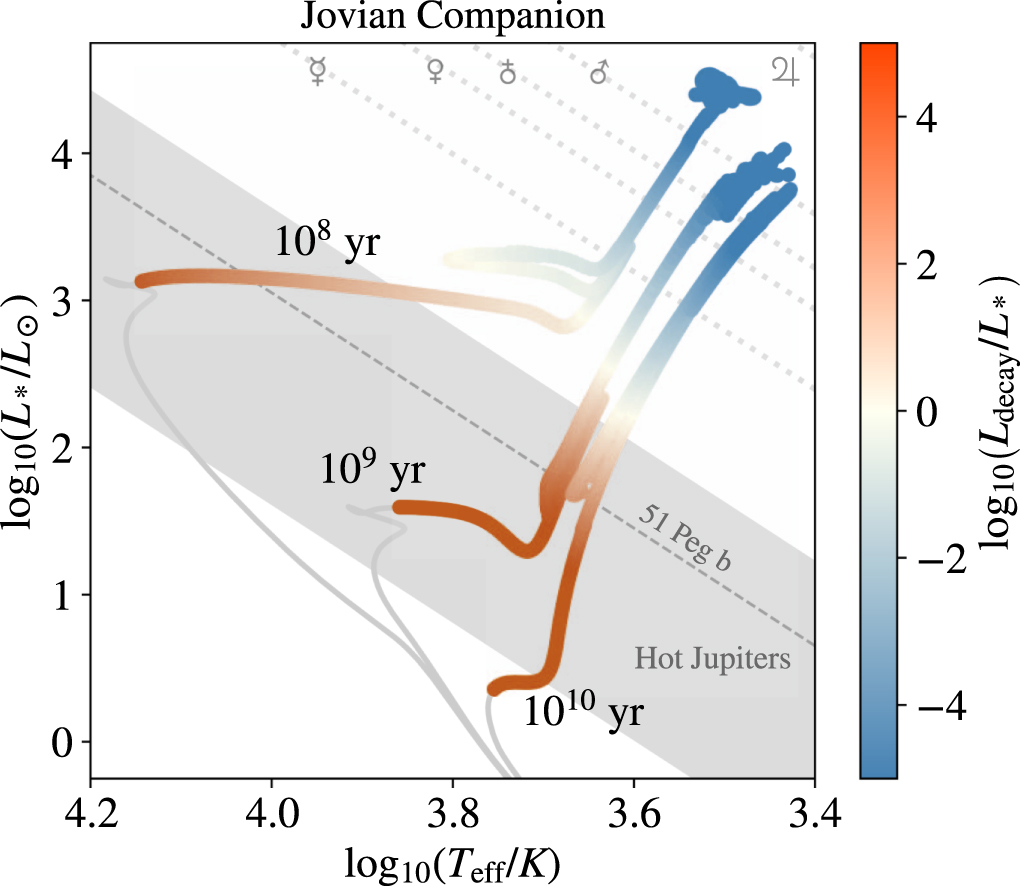
    Planets accompany most sun-like stars. The orbits of many are sufficiently close that they will be engulfed when their host stars ascend the giant branch. This Letter …

About

  • About Us
  • History
  • Annual Reports
  • People
  • Visitor Information
  • Careers

Funding

  • Funding Opportunities
  • Funded Work
  • Simons Award Manager
  • Simons Foundation International
  • Policies & Procedures

Program Areas

  • Life Sciences
  • Autism & Neuroscience
  • Mathematics & Physical Sciences
  • Science, Society & Culture

Connect

  • Newsletters
  • Events
  • Contact us
  • Media Relations
  • Terms & Conditions
  • Privacy Policy
Simons Foundation
Bluesky Facebook Instagram YouTube X RSS Feed

Advancing Research in Basic 
Science and Mathematics

Customize your preferences

Your preferences have been saved.

Confirm your subscription by clicking the link in the email we sent.