Skip to content
Simons Foundation
Simons Foundation
Simons Foundation
Search
  • Bringing people and ideas together to fund, conduct, and share transformative science.

    In-House Research

    • Computational Astrophysics
    • Computational Biology
    • Computational Mathematics
    • Computational Neuroscience
    • Computational Quantum Physics
    • Computational Catalysis
    All Publications

    Research We Fund

    • Autism
    • Neuroscience
    • Mathematics & Physical Sciences
    • Ecology & Evolution
    • Plant Biology

    Public Engagement

    • Grantmaking
    • Media Initiatives
    • Public Events
    • Researcher Engagement
    • National Initiatives

    Resources

    • Computational Software
    • Computational Datasets
    • SFARI Base
    All Resources

    Simons Collaborations

    • Simons Collaboration on New Frontiers in Superconductivity
    • Simons Collaboration on Ecological Neuroscience
    • Simons Collaboration on Principles of Microbial Ecosystems
    All Collaborations
  • Our grants advance knowledge and strengthen connections between science and society.

    All Funding Opportunities

    Autism & Neuroscience

    • Fellows-to-Faculty
    • New Ideas
    • SFARI Conferences & Courses Awards
    • Shenoy Undergraduate Research Fellowship in Neuroscience

    Life Sciences

    • Simons Graduate Fellowships in Ecology & Evolution
    • Simons Postdoctoral Fellowships in Plant Biology
    • Synthetic Plant Biology
    • Simons Collaborations in Ecology & Evolution

    Science, Society & Culture

    • Science in Culture
    • Science in Community
    • STEM Pathways

    Mathematics & Physical Sciences

    • Scientific Software Research Faculty Award
    • Simons Collaborations in MPS
    • Simons Dissertation Fellowship
    • Simons Fellows in Mathematics
    • Targeted Grants to Institutes
    • Targeted Grants in MPS
    • Travel Support for Mathematicians

    Shared Programs

    • Pivot Fellowship
    • Simons Society of Fellows

    Resources for Applying

    • Open Funding Opportunities
    • Policies & Procedures
    • SAM FAQ and Instructional Videos
    • Past Funded Work
  • Discover the latest news, research, and updates.

    All News

    The Latest

    • Research News
    • Funding Announcements
    • Newsletter Sign Up

    For the Media

    • Press Releases
    • Media Relations
  • We convene scientists, mathematicians, and thinkers to share ideas and explore new questions.

    All Events

    Public Events

    • Presidential Lectures
    • Presents
    Attend an Event

    Flatiron Events Our in-house research institute hosts events for scientists and researchers.

    See All

    Past Events Find videos, presentations, and resources from our past events.

    See All
  • Founded by Jim and Marilyn Simons, we’re a private philanthropy advancing mathematics and basic science.

    About Us

    About

    • Our History
    • Annual Reports
    • Brand Guidelines
    • Visitor Information
    • Media Relations
    • Contact
    About Us

    People

    • Leadership
    • Board of Trustees
    • Research Staff
    All People

    Careers

    • Working Here
    • Internship Opportunities
    • Undergraduate Students
    • Graduate Students
    • Postdoctoral Opportunities
    • Research Scientists
    Open Jobs
  • Flatiron Institute
  • Careers
    Search all
  • Funding
    Search all
  • Explore opportunities for...
    • Undergraduate students
    • Graduate students
    • Postdoctoral researchers
    • Research scientists
Simons Foundation

Filters

Type

Section

Person

Show 97 more Show less
Simons Foundation
  • Find a Person

Bringing people and ideas together to fund, conduct, and share transformative science.

Our grants advance knowledge and strengthen connections between science and society.

Discover the latest news, research, and updates.

  • All News
  • Research News
  • Funding Announcements
  • Newsletter Sign Up
  • Press Releases
  • Media Relations

We convene scientists, mathematicians, and thinkers to share ideas and explore new questions.

  • Events Calendar
  • Public Events
  • Presidential Lectures
  • Presents
  • Flatiron Events
  • Past Events

Founded by Jim and Marilyn Simons, we’re a private philanthropy advancing mathematics and basic science.

Work with us on the frontier of basic science research.

  • All Open Positions
  • Undergraduate Students
  • Graduate Students
  • Postdocs
  • Research Scientists

The Flatiron Institute is a research center that uses computational science to advance fields like physics, biology, and astronomy.

  • Explore Flatiron Institute
  • People
  • Careers
  • Publications
  • Software & Data
  • Computational Astrophysics
  • Computational Biology
  • Computational Mathematics
  • Computational Neuroscience
  • Computational Quantum Physics
  • Computational Catalysis
Flatiron Institute
  • Autism
  • Neuroscience
  • Mathematics
  • Ecology & Evolution
  • Plant Biology
  • Grantmaking
  • Media Initiatives
  • Public Events
  • Researcher Engagement
  • National Initiatives
  • Computational Software
  • Computational Datasets
  • SFARI Base
  • Publications
  • Simons Collaboration on New Frontiers in Superconductivity
  • Simons Collaboration on Ecological Neuroscience
  • Simons Collaboration on Principles of Microbial Ecosystems
All Collaborations
  • Policies & Procedures
  • Instructional Videos
  • Past Funded Work
  • Undergraduate Students
  • Graduate Students
  • Postdocs
  • Research Scientists
All Funding Opportunities
  • Fellows-to-Faculty
  • New Ideas
  • SFARI Conferences & Courses Awards
  • Shenoy Undergraduate Research Fellowship in Neuroscience
Autism & Neuroscience
  • Simons Graduate Fellowships in Ecology & Evolution
  • Simons Postdoctoral Fellowships in Plant Biology
  • Synthetic Plant Biology
  • Simons Collaborations in Ecology & Evolution
Life Sciences
  • Science in Culture
  • Science in Community
  • STEM Pathways
Science, Society & Culture
  • Scientific Software Research Faculty Award
  • Simons Collaborations in MPS
  • Simons Dissertation Fellowship in Mathematics
  • Simons Fellows in Mathematics
  • Targeted Grants to Institutes
  • Targeted Grants in Mathematics & Physical Sciences
  • Travel Support for Mathematicians
Mathematics & Physical Sciences
  • Pivot Fellowship
  • Simons Society of Fellows
  • Our History
  • Annual Reports
  • Visitor Information
  • Media Relations
  • Contact Us
About Us
  • Leadership
  • Board of Trustees
  • Research Staff
Search All People
  • Working Here
  • Internship Opportunities
  • Undergraduate Students
  • Graduate Students
  • Postdoctoral Students
  • Research Scientists
All Open Positions

Centers

  • Computational Astrophysics
  • Computational Biology
  • Computational Mathematics
  • Computational Neuroscience
  • Computational Quantum Physics
  • Scientific Computing Core
  • Initiative for Computational Catalysis

Collaborative Projects

  • Foundation Models of Science
  • Simons Observatory
Flatiron Institute

Search

What are you looking for?

Filter Results

Search

What are you looking for?

Results update as you type and when you change filters.

Skip to results

Filters

Type

Section

Person

Show 97 more Show less

Filters

Featured

Dissecting mechanisms of hyperarousal in autism and related disorders using the Simons Sleep Project

Funded Work

Gravity Follows Newton’s and Einstein’s Rules, Even at Cosmic Scales

April 15, 2026

Scientists Capture Superconductivity’s ‘Dancing Pairs’ for First Time, Filling Gap in Decades-Old Theory

April 15, 2026

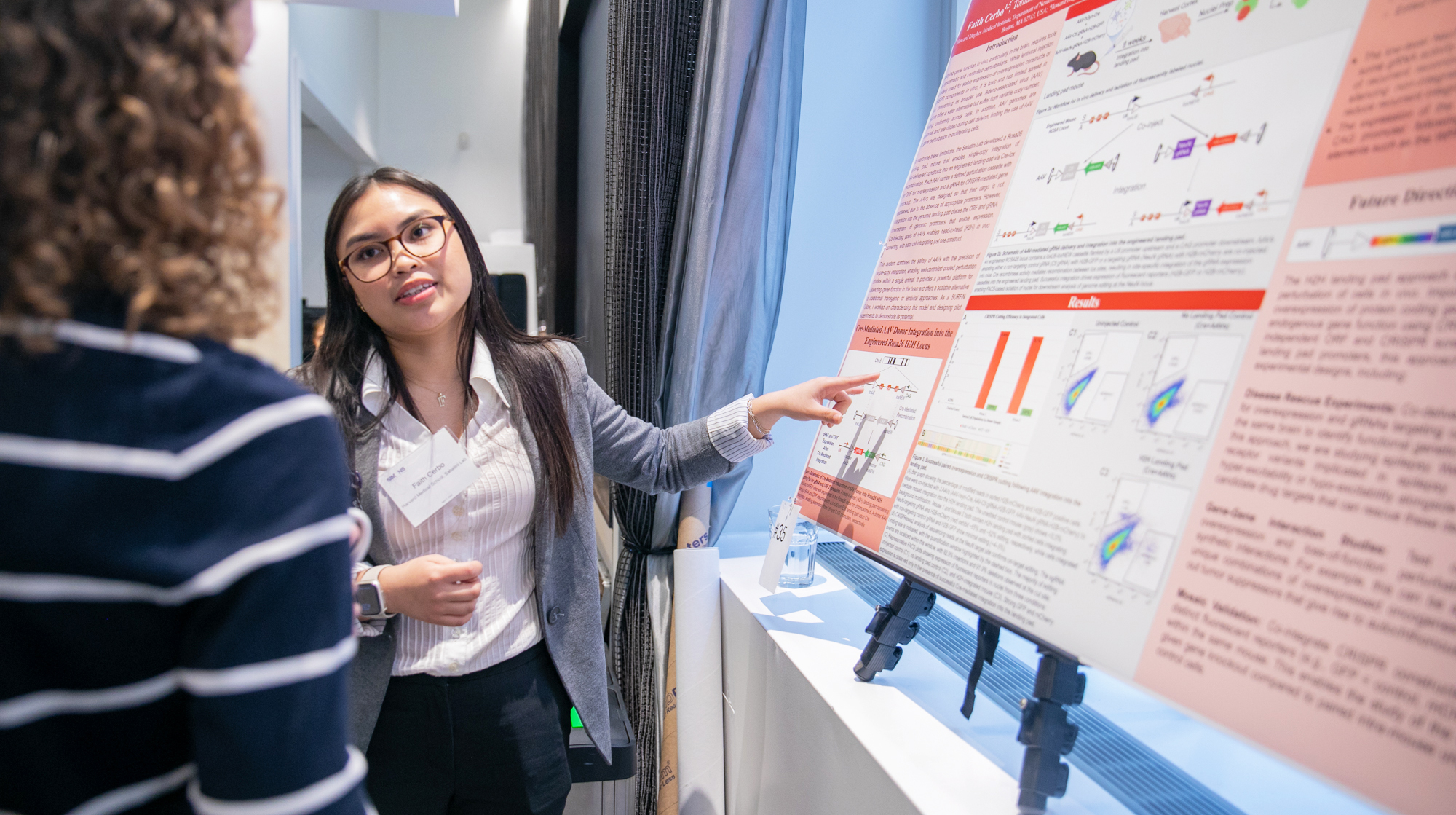
How SURFiN Fellowships Jump-Started These 3 Neuroscience Students’ STEM Careers

March 18, 2026

Topology and Complexity

November 19, 2014

Results

  1. Evolution of galaxy attenuation curves driven by evolving dust mass and grain size distributions

    Publication
    We investigate the impacts of the evolution of dust mass and grain size distribution within a Milky Way-like (MW-like) galaxy simulation on global attenuation curves, focusing …
  2. Picture an Astronomer: Best Practices for Retaining Talent in Astrophysics

    Publication
    Women are consistently underrepresented in astrophysics yet are simultaneously subject to disproportionate attrition at every career stage. This disparity between demonstrated efficacy in job performance and ultimate career …
  3. Picture an Astronomer: Best Practices for Retaining Talent in Astrophysics

    Publication
    Women are consistently underrepresented in astrophysics yet are simultaneously subject to disproportionate attrition at every career stage. This disparity between demonstrated efficacy in job performance and ultimate career …
  4. Picture an Astronomer: Best Practices for Retaining Talent in Astrophysics

    Publication
    Women are consistently underrepresented in astrophysics yet are simultaneously subject to disproportionate attrition at every career stage. This disparity between demonstrated efficacy in job performance and ultimate career …
  5. Learning the Universe: cosmological and astrophysical parameter inference with galaxy luminosity functions and colours

    Publication
    We perform the first direct cosmological and astrophysical parameter inference from the combination of galaxy luminosity functions and colours using a simulation-based inference approach. Using the SYNTHESIZER …
  6. From Feedback-Free Star Clusters to Little Red Dots via Compaction

    Publication
    We address the origin of the Little Red Dots (LRDs) seen by JWST at cosmic morning (\(z \!=\! 4 \!-\! 8\)) as compact stellar systems with over-massive black holes …
  7. Toward Robustness across Cosmological Simulation Models IllustrisTNG, SIMBA, Astrid, and Swift-Eagle

    Publication
    The rapid advancement of large-scale cosmological simulations has opened new avenues for cosmological and astrophysical research. However, the increasing diversity among cosmological simulation models presents a challenge …
  8. Far-infrared enhanced survey spectrometer for PRIMA: science drivers

    Publication
    We present the science drivers for the far-infrared enhanced survey spectrometer (FIRESS), one of two science instruments on the PRobe Infrared Mission for Astrophysics. FIRESS is designed …
  9. PRIMA mission concept

    Publication
    The Astro2020 Decadal Survey recommended a new line of astrophysics observatories intermediate in scale between MIDEXs and Flagship-class observatories. In response, NASA created the Astrophysics Probe Explorer …
  10. CEERS: Possibly forging the first dust grains in the universe: A population of galaxies with spectroscopically derived extremely low dust attenuation (GELDA) at 4.0 \(< z \lesssim\) 11.4

    Publication
    … mean gas-mass fraction of our entire sample at 4.0 < z < 11.4 is very high: f$_{\rm gas} \gtrsim$0.9. All of our galaxies, including …
  11. A New Framework for Interstellar Medium Emission Line Models: Connecting Multiscale Simulations across Cosmological Volumes

    Publication
    The James Webb Space Telescope (JWST) and Atacama Large Millimeter/submillimeter Array have detected emission lines from the ionized interstellar medium (ISM) in some of the first galaxies …
  12. CEERS: Forging the First Dust -- Transition from Stellar to ISM Grain Growth in the Early Universe

    Publication
    We investigate the coevolution of metals and dust for 173 galaxies at 4.08 presents a metal-to-stellar mass ratio larger than a few 10^-3, above …
  13. Key Science Goals for the Next Generation Very Large Array (ngVLA): Update from the ngVLA Science Advisory Council (2024)

    Publication
    In 2017, the next generation Very Large Array (ngVLA) Science Advisory Council, together with the international astronomy community, developed a set of five Key Science Goals (KSGs) to …
  14. A unified model for the co-evolution of galaxies and their circumgalactic medium: the relative roles of turbulence and atomic cooling physics

    Publication
    The circumgalactic medium (CGM) plays a pivotal role in regulating gas flows around galaxies and thus shapes their evolution. However, the details of how galaxies and their CGM …
  15. Code Comparison in Galaxy-scale Simulations with Resolved Supernova Feedback: Lagrangian versus Eulerian Methods

    Publication
    We present a suite of high-resolution simulations of an isolated dwarf galaxy using four different hydrodynamical codes: {sc Gizmo}, {sc Arepo}, {sc Gadget}, and {sc Ramses}. All …
  16. Bright z~9 Galaxies in Parallel: The Bright End of the Rest-UV Luminosity Function from HST Parallel Programs

    Publication
    The abundance of bright galaxies at z>8 can provide key constraints on models of galaxy formation and evolution, as the predicted abundance varies greatly when different physical …
  17. Breaking baryon-cosmology degeneracy with the electron density power spectrum

    Publication
    Uncertain feedback processes in galaxies affect the distribution of matter, currently limiting the power of weak lensing surveys. If we can identify cosmological statistics that are robust against …
  18. An Empirical Representation of a Physical Model for the ISM [C ii], CO, and [C i] Emission at Redshift 1 ≤ z ≤ 9

    Publication
    Sub-millimeter emission lines produced by the interstellar medium (ISM) are strong tracers of star formation and are some of the main targets of line intensity mapping (LIM …
  19. A Census of the Bright z = 8.5–11 Universe with the Hubble and Spitzer Space Telescopes in the CANDELS Fields

    Publication
    We present the results from a new search for candidate galaxies at z ~ 8.5-11 discovered over the 850 arcmin^2 area probed by the Cosmic Assembly …
  20. Characterizing mass, momentum, energy, and metal outflow rates of multiphase galactic winds in the FIRE-2 cosmological simulations

    Publication
    We characterize mass, momentum, energy and metal outflow rates of multi-phase galactic winds in a suite of FIRE-2 cosmological "zoom-in" simulations from the Feedback in …
  21. A Spitzer survey of Deep Drilling Fields to be targeted by the Vera C. Rubin Observatory Legacy Survey of Space and Time

    Publication
    The Vera C. Rubin Observatory Legacy Survey of Space and Time (LSST) will observe several Deep Drilling Fields (DDFs) to a greater depth and with a more rapid …
  22. A Framework for Multiphase Galactic Wind Launching Using TIGRESS

    Publication
    Galactic outflows have density, temperature, and velocity variations at least as large as that of the multiphase, turbulent interstellar medium (ISM) from which they originate. We have conducted …
  23. Black Hole Growth and Feedback in Isolated Romulus25 Dwarf Galaxies

    Publication
    We investigate the effects of massive black hole growth on the structural evolution of dwarf galaxies within the Romulus25 cosmological hydrodynamical simulation. We study a sample of 228 …
  24. CMB-S4 Science Case, Reference Design, and Project Plan

    Publication
    We present the science case, reference design, and project plan for the Stage-4 ground-based cosmic microwave background experiment CMB-S4.
  25. AGN-driven quenching of satellite galaxies

    Publication
    We explore the effect of active galactic nucleus (AGN) feedback from central galaxies on their satellites by comparing two sets of cosmological zoom-in runs of 27 halos …
  26. An Ultra Deep Field survey with WFIRST

    Publication
    Studying the formation and evolution of galaxies at the earliest cosmic times, and their role in reionization, requires the deepest imaging possible. Ultra-deep surveys like the HUDF …
  27. Bridging Star-forming Galaxy and AGN Ultraviolet Luminosity Functions at z = 4 with the SHELA Wide-field Survey

    Publication
    We present a joint analysis of the rest-frame ultraviolet (UV) luminosity functions of continuum-selected star-forming galaxies and galaxies dominated by active galactic nuclei (AGNs) at …
  28. Is the dark-matter halo spin a predictor of galaxy spin and size?

    Publication
    The similarity between the distributions of spins for galaxies (λg) and for dark-matter haloes (λh), indicated both by simulations and observations, is naively interpreted as a one …
  29. CANDELS: Elevated Black Hole Growth in the Progenitors of Compact Quiescent Galaxies at z ∼ 2

    Publication
    We examine the fraction of massive (M∗>1010M⊙), compact star-forming galaxies (cSFGs) that host an active galactic nucleus (AGN) at z∼2. These cSFGs are likely the …
  30. A Controlled Study of Cold Dust Content in Galaxies from z = 0–2

    Publication
    At z=1−3, the formation of new stars is dominated by dusty galaxies whose far-IR emission indicates they contain colder dust than local galaxies of a …
  31. A controlled study of cold dust content in galaxies from z=0-2

    Publication
    At z=1−3, the formation of new stars is dominated by dusty galaxies whose far-IR emission indicates they contain colder dust than local galaxies of a …

About

  • About Us
  • History
  • Annual Reports
  • People
  • Visitor Information
  • Careers

Funding

  • Funding Opportunities
  • Funded Work
  • Simons Award Manager
  • Simons Foundation International
  • Policies & Procedures

Program Areas

  • Life Sciences
  • Autism & Neuroscience
  • Mathematics & Physical Sciences
  • Science, Society & Culture

Connect

  • Newsletters
  • Events
  • Contact us
  • Media Relations
  • Terms & Conditions
  • Privacy Policy
Simons Foundation
Bluesky Facebook Instagram YouTube X RSS Feed

Advancing Research in Basic 
Science and Mathematics

Customize your preferences

Your preferences have been saved.

Confirm your subscription by clicking the link in the email we sent.