
Research: Funded Projects
SFARI supports more than 250 investigators each year and has committed over $525 million to autism research since 2006.
Results
-
 Individuals with autism spectrum disorder (ASD) exhibit high levels of behavioral inflexibility, characterized by “insistence on sameness” and restricted, repetitive patterns of behavior.
 -
 In spite of significant, recent advances in the molecular genetics and neuroscience of mental health disorders, behavioral ratings based on clinical observations are still the gold standard for …
 -
Human brain evolution has played a pivotal role in the success of the human species, but it is also linked to an increased susceptibility to neurodevelopmental disorders such …
-
 Mutations in calcium channels and calcium-signaling proteins have been reproducibly linked to neurodevelopmental disorders, including autism spectrum disorders (ASD), underscoring essential roles for calcium-dependent signaling in …
 -
Repetitive behaviors and altered movements are often observed in children with autism.
-
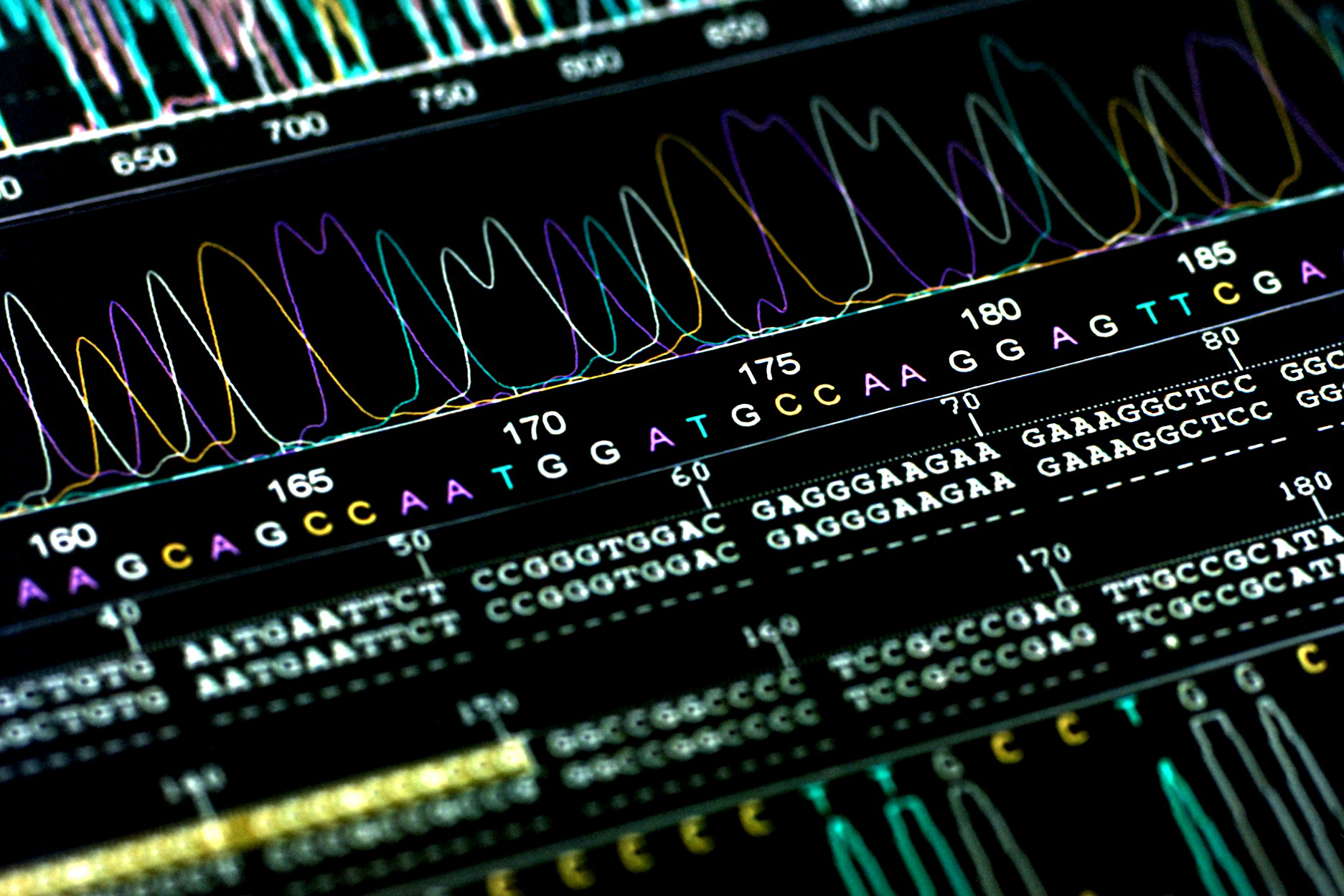 Rapid progress in identifying penetrant and common genetic risk factors is yielding deep insights into putative molecular networks affected in autism spectrum disorder (ASD).
 -
Autism spectrum disorders (ASDs) are prevalent neurodevelopmental disorders characterized by repetitive behaviors and impairments in social interaction.
-
Myt1-like (Myt1l) is a zinc finger transcription factor that has a unique expression pattern: it is both highly specific for and is expressed in virtually all neurons.
-
The striatum is the major input structure for the basal ganglia, processing inputs from virtually all cerebral cortical areas and from the thalamus, thus modulating motor, emotional and …
-
Gastrointestinal (GI) disorders are among the most common medical comorbidities in individuals with autism spectrum disorder (ASD).
-
Cellular function is intimately linked to subcellular architecture.
-
Pamela Ventola seeks to develop more precise treatments for children with autism spectrum disorder (ASD), guided by their distinct brain profiles.
-
The recent explosion in the identification of genetic risk factors for autism spectrum disorder (ASD) has revealed many genes that are likely to be involved in these debilitating …
-
Defects in sensory information processing are considered to be almost universal in individuals with autism spectrum disorder (ASD).
-
Fragile X syndrome (FXS) is a devastating X-linked genetic disorder that is the most-common known cause of inherited intellectual disability.
-
The subunits of the switch/sucrose non-fermentable (i.e., BAF or SWI/SNF) complex are among the most commonly mutated genes in human neurodevelopmental disease and include …
-
 Autism spectrum disorder (ASD) exhibits complex genetic architecture with well-demonstrated contributions of both common and rare, especially de novo, variants.
 -
Despite substantial recent progress in the discovery of multiple rare de novo and inherited causative mutations in over 100 genes, most of the genetic liability of autism spectrum …
-
Viral infection during pregnancy correlates with increased frequency of neurodevelopmental disorders in offspring, a phenomenon well studied in mice prenatally subjected to maternal immune activation (MIA).
-
Although autism spectrum disorders (ASDs) are traditionally described as disorders of the central nervous system, there is emerging evidence suggesting the presence of systemic physiological abnormalities, such as …
-
During corticogenesis, excitatory neurons are born from neural progenitor cells (NPCs).
-
The etiology of autism spectrum disorder (ASD) is poorly understood; however, emerging clinical and epidemiological data have linked dysregulated immune responses with ASD.
-
Whole-exome and whole-genome surveys have revealed multiple transcriptional regulators harboring loss of function mutations associated with risk for autism spectrum disorder (ASD).
-
One of the most important steps in understanding the biology of autism spectrum disorder (ASD) is elucidating the basic neurodevelopmental mechanisms governing cell type specification and how these …
-
Genetic and phenotypic heterogeneity occurs in many diseases, including autism.
-
In this project, Jeffrey Macklis will directly investigate interhemispheric callosal projection neuron (CPN) axonal growth cone (GC) molecular machinery, abnormalities of CPN connectivity and dose-dependent direct effects …
-
High confidence ASD (hcASD) genes encode proteins that regulate synapse formation, neuronal activity and transcription regulation, including chromatin regulation.
-
Multiple behaviors disrupted in autism spectrum disorders (ASDs), including the integration of sensory stimuli and social interaction, are associated with the dysfunction of striatal synapses.
-
A number of genetic mutations have been linked to an increased risk for autism spectrum disorder (ASD).
-
The cellular and developmental basis of autism spectrum disorder (ASD) still represents a significant gap in our knowledge of this developmental disorder.
-
Finding treatments for autism spectrum disorder (ASD) has been challenging because its etiology is so poorly understood.
-
Imbalances in excitatory versus inhibitory postsynaptic signaling in the central nervous system (CNS) have been associated with autism spectrum disorders (ASD).
-
Autism spectrum disorder (ASD) is a major neurodevelopmental disorder, yet despite its prevalence and severity, the substantial genetic heterogeneity of ASD (>700 associated genes) has been a major …
-
Approximately 30 percent of autism spectrum disorder (ASD) cases can be explained by rare de novo variants disrupting gene function.
-
Autism spectrum disorder (ASD) is seen as a collection of disorders that is predominantly developmental in nature and largely genetic in origin.
-
The Simons Initiative for the Developing Brain (SIDB) was established in 2017.
-
Most individuals with autism experience at least one form of hypersensitivity from the five senses.
-
It has been established that children and adolescents with autism spectrum disorder (ASD) show a wide range of abilities to use spoken words and establish interactive conversations.
-
Autism spectrum disorder (ASD) afflicts 1 in 68 individuals in the United States and represents a substantial emotional and financial burden on our society.
-
Autism spectrum disorders (ASDs) are characterized by a variety of behavioral deficits including perseverative behavior.
-
Very little is known about the potential neural abnormalities that exist in the initial stages of autism development.
-
A number of studies have lead to the suggestion that disruptions to chloride homeostasis play a role in a variety of neurological and neurodevelopmental disorders.
-
Little is known or understood about the molecular mechanisms responsible for social cognitive development and the diseases associated with its aberrations, such as autism spectrum disorder (ASD).
-
Whole-exome sequencing studies utilizing samples from the Simons Simplex Collection and other autism cohorts have identified multiple variants in SCN2A, a gene encoding a neuronal voltage-gated …
-
Several key barriers exist to unraveling the mechanistic etiologies of autism spectrum disorder (ASD).
-
Autism spectrum disorders (ASDs) encompass a number of disorders that are typified by communication deficits, reduced behavioral flexibility, poor socialization, learning disabilities and a tendency toward repetitive behaviors.
-
Autism is a neurodevelopmental disorder, and sensorimotor disturbances are among the earliest signs of atypical development in autism, revealing themselves in early infancy.
-
Genetic risks for autism are diverse and encompass mutations and copy number variations in hundreds of genes.