Bringing people and ideas together to fund, conduct, and share transformative science.
Our grants advance knowledge and strengthen connections between science and society.
Discover the latest news, research, and updates.
We convene scientists, mathematicians, and thinkers to share ideas and explore new questions.
Founded by Jim and Marilyn Simons, we’re a private philanthropy advancing mathematics and basic science.
Work with us on the frontier of basic science research.
The Flatiron Institute is a research center that uses computational science to advance fields like physics, biology, and astronomy.
Search
SFARI is pleased to announce that it has selected six fellows in response to the 2021 Bridge to Independence Award request for applications.
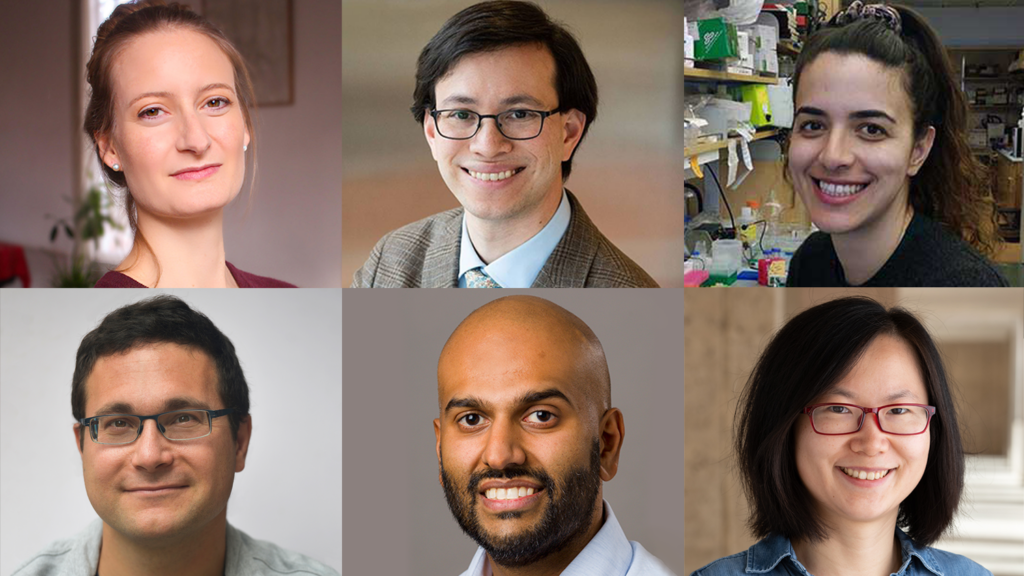
The Simons Foundation Autism Research Initiative (SFARI) is pleased to announce that it has selected six fellows in response to the 2021 Bridge to Independence Award (BTI) request for applications (RFA).
The BTI program is intended to help engage talented early-career scientists in autism research by facilitating their transition from mentored training positions to independent careers. Launched in 2015, the program is aimed at Ph.D.- and M.D.-holding scientists with an interest in autism research who are currently in training positions but intend to seek tenure-track faculty positions at a U.S. or Canadian research institution during the upcoming academic year. Fellows will receive a commitment of $495,000 over three years, activated upon assumption of their faculty positions. With the addition of the 2021 BTI cohort, the program now boasts 37 outstanding fellows.
The selected projects span a broad range of disciplines, tackling questions about the brain mechanisms that underlie features of autism, such as agitation and aggression, changes in attention and cognitive flexibility, as well as aspects of genetic and epigenetic regulation that may affect brain development. These studies will use a variety of experimental approaches, including human neuroimaging studies, genetic mouse and rat models of autism, and induced pluripotent stem cells.
Finalists were selected through a competitive review process. The scientific review panel included Helen Bateup, Ph.D. (associate professor, University of California, Berkeley), Kamran Khodakhah, Ph.D. (professor, Albert Einstein College of Medicine), Genevieve Konopka, Ph.D. (associate professor, University of Texas Southwestern Medical Center), Brian O’Roak, Ph.D. (associate professor, Oregon Health & Science University), Carlos Portera-Cailliau, M.D., Ph.D. (professor, University of California, Los Angeles) and Anne E. West (professor, Duke University). Members of the panel evaluated the quality of each applicant, the scientific merit of their research proposal and their commitment to autism research.
“The BTI Award is a unique program that provides invaluable funding and guidance to early-career scientists at a critical stage of their careers,” says West. “We reviewed many outstanding applications this year, and I have no doubt that the new BTI fellows will make important contributions to the field of autism in the coming years.”
Alongside research money, for the first time this year the BTI Award will also provide a $10,000 gift for the 2021 fellows to use, during their transition year, for a variety of professional development opportunities. Examples of activities include attendance at scientific conferences and professional development workshops, as well as informal visits to prospective faculty institutions. This initiative is part of SFARI’s broader effort to provide the BTI fellows with training and learning experiences that can help them navigate the many aspects of becoming a successful academic investigator. In the fall, the SFARI BTI program is also planning to offer additional training and networking opportunities, in conjunction with its sister BTI program recently launched by the Simons Collaboration on the Global Brain.
“Given the pandemic’s effects on the scientific workforce, the SFARI BTI program seems more relevant than ever,” says Alice Luo Clayton, SFARI senior scientist who oversees the BTI program. “I look forward to collaborating with these new fellows and supporting their academic and professional growth as they transition to research independence.”
The six awardees are:
Gabriella L. Boulting, Ph.D.
Current position:
Research fellow in the laboratory of Michael Greenberg, Ph.D. (Harvard Medical School)
Alexander Li Cohen, M.D., Ph.D.
Current position:
Instructor of neurology (Boston Children’s Hospital, Harvard Medical School)
Eirene Markenscoff-Papadimitriou, Ph.D.
Current position:
Associate specialist in the laboratory of John Rubenstein, M.D., Ph.D. (University of California, San Francisco)
Marino Pagan, Ph.D.
Current position:
Postdoctoral research associate in the laboratory of Carlos Brody, Ph.D. (Princeton University)
Kartik Pattabiraman, M.D., Ph.D.
Current position:
Clinical fellow in the laboratory of Nenad Sestan, M.D., Ph.D. (Yale University School of Medicine)
Zhuzhu Zhang, Ph.D.
Current position:
Postdoctoral fellow in the laboratory of Joseph Ecker, Ph.D. (The Salk Institute for Biological Studies)