Space Probe Proposed by Team Including CCA Scientist Reaches Final Round of $1 Billion NASA Mission Selection
Featuring
-

Rachel Somerville
Senior Research Scientist, Center for Computational Astrophysics
Bringing people and ideas together to fund, conduct, and share transformative science.
Our grants advance knowledge and strengthen connections between science and society.
Discover the latest news, research, and updates.
We convene scientists, mathematicians, and thinkers to share ideas and explore new questions.
Founded by Jim and Marilyn Simons, we’re a private philanthropy advancing mathematics and basic science.
Work with us on the frontier of basic science research.
The Flatiron Institute is a research center that uses computational science to advance fields like physics, biology, and astronomy.
Search
Senior Research Scientist, Center for Computational Astrophysics
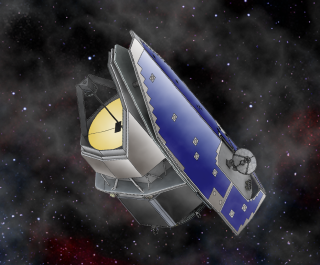
A space probe proposed by a team including a scientist at the Flatiron Institute’s Center for Computational Astrophysics (CCA) is one step closer to reality. NASA selected the proposal — called the Probe far-Infrared Mission for Astrophysics (PRIMA) — as one of two finalists for its Probe Explorers program, which aims to establish missions for observatory tools that are smaller than NASA’s typical flagship missions — like the James Webb Space Telescope — but still capable of tackling big questions in astrophysics.
CCA Senior Research Scientist Rachel Somerville is a co-investigator on the PRIMA science team and serves as theory lead. Simulations developed by scientists at CCA have contributed to the development of the mission’s science.
PRIMA would create a 1.8-meter telescope to study far-infrared wavelengths, helping bridge the gap between existing infrared observatories like the James Webb Space Telescope, and radio telescopes. By studying radiant energy that only emerges in the far-infrared, the mission would address questions about the origins and growth of planets, supermassive black holes, stars and cosmic dust.
“I’m very excited to be part of the team that will move this concept forward,” says Somerville. “PRIMA’s proposed far-infrared science will be transformative for a wide swath of the astrophysics community. I’m also keen to play a role in engaging my CCA colleagues, especially early-career scientists, in planning for and supporting the next generation of astrophysics facilities.”
Each proposal team will receive $5 million to conduct a 12-month concept study. At the conclusion of the studies, NASA will select one project to proceed with construction, culminating in an expected 2032 launch. This will be a major investment for the agency, which will put $1 billion into the winning project.
“NASA’s Explorers Program brings out some of the most creative ideas for missions that help us reveal the unknown about our universe. Establishing this new line of missions — the largest our Astrophysics program has ever competed — has taken that creativity to new heights,” says Nicola Fox, associate administrator of the NASA Science Mission Directorate. “Both of the selected concepts could enable groundbreaking science responsive to the top astrophysics priorities of the decade; develop key technologies for future flagship missions; and offer opportunities for the entire community to use the new observatory, for the benefit of all.”

