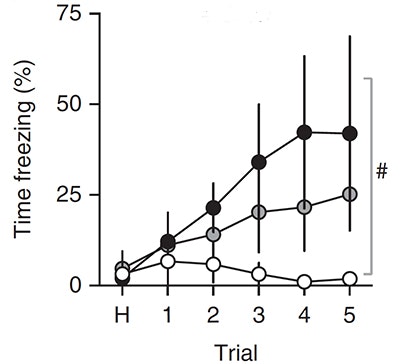
Our ability to perform social interactions is driven by a social brain network, of which the amygdala is a key component. Social interaction difficulties are a core symptom in autism spectrum disorder (ASD) and a number of studies have found functional alterations in the amygdala in individuals with ASD. While intra-communication between amygdala subregions and inter-communication with connected brain regions regulates a variety of behaviors, the precise nature of these connections in the context of social learning has remained unclear. SFARI Investigator Amiel Rosenkranz and colleagues have now demonstrated in rats that interactions between two key regions of the amygdala, the lateral amygdala (LA) and the posterior medial amygdala (MeA), are important. Specifically, the LA-MeA circuit functions as a link between social cue comprehension and the subsequent use of this information to guide appropriate behavioral responses. The researchers also found that this circuit was disrupted in a rat model of ASD (NRXN1 knockout). Importantly, activation of the MeA alleviated some of the social behavioral deficits in this model. These findings argue for the importance of this circuitry in social learning and suggest that targeted augmentation of this circuit could be explored as a potential therapeutic intervention for improving social interaction difficulties in ASD.

