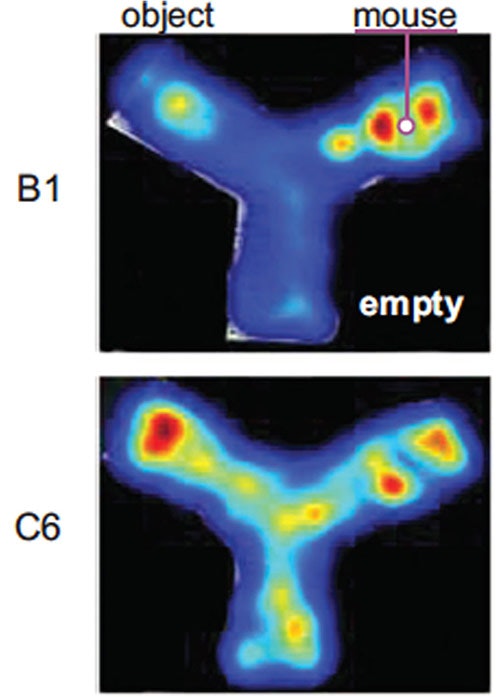
Numerous studies have provided evidence suggesting that maternal infection increases the risk of autism spectrum disorder (ASD) in offspring. Further, in mouse and nonhuman primate models, in utero exposure to serum or polyclonal antibodies from mothers of children with ASD causes neurodevelopmental abnormalities. In the current study, SFARI Investigator Betty Diamond and her colleagues provide a method to isolate and characterize monoclonal brain-reactive antibodies from plasma obtained from mothers enrolled in the Simons Simplex Collection who had previously been identified as having antibodies to fetal brain tissue (Brimberg et al., 2013). The researchers found that one of these monoclonal antibodies targets contactin-associated protein-like 2 (CASPR2). The CASPR2 protein is critical for normal brain development, and the gene encoding this protein, CNTNAP2, is linked to increased ASD risk. Administration of CASPR2 monoclonal antibodies to pregnant mice resulted in neurodevelopmental and behavioral alterations in male pups, but not in females. The researchers also found that antibodies with CASPR2 specificity are significantly more frequent in the plasma of mothers with brain-reactive serology and a child with ASD (compared to mothers of a child with ASD who lack brain-reactive antibodies and to mothers of typically developing children). Together, these findings provide evidence that ASD-like phenotypes can result from in utero exposure to maternal antibodies targeting specific brain proteins.

