Gating of Social Reward by Oxytocin in the Ventral Tegmental Area
Featuring
-

Robert Malenka
SFARI Investigator
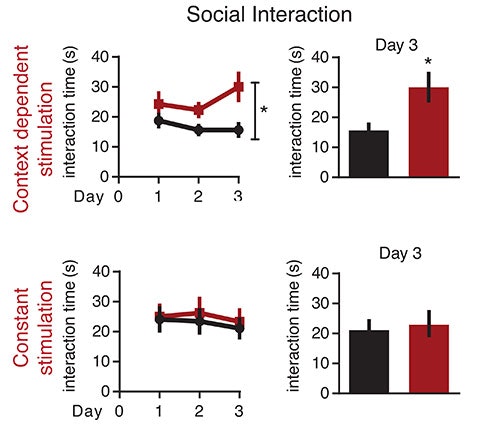
Animal studies have shown that the neuropeptide oxytocin (OXT) acts within the nucleus accumbens (NAc), a reward circuitry brain region, to help promote the positive effects of prosocial interactions. In mouse models of autism, administration of OXT also appears to reduce social deficits. How exactly OXT exerts its effects on the brain reward circuitry to reinforce prosocial interactions as rewarding, however, has remained unclear, thus making it difficult to understand how these findings in mice might be translated to possible treatments for individuals with autism. In a recent article, SFARI Investigators Robert Malenka, Liqun Luo, Karl Deisseroth and their colleagues report that OXT acts directly upon the dopaminergic neurons of the ventral tegmental area (VTA) to mediate social reward. Using in vivo activation and inhibition experiments in mice, the authors demonstrate that social interactions cause an increase in OXT release from paraventricular nucleus neurons into the VTA. This OXT then modulates the reward circuitry by increasing excitatory drive onto VTA dopamine neurons, reinforcing the rewarding aspects of social behaviors. These findings provide key mechanistic insights into the effects of OXT in the brain and a step in understanding whether OXT therapeutics might eventually be possible in humans.

