
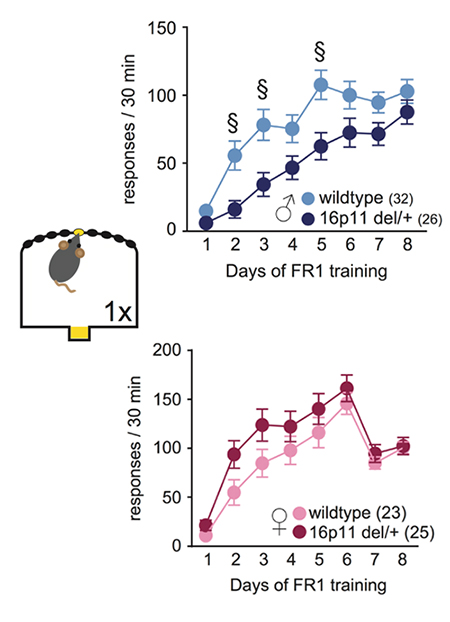
Many neurodevelopmental disorders show a higher prevalence in males. Thus far, the underlying molecular and pathophysiological cause(s) for this male-specific vulnerability has remained unclear. Striatal dysfunction is also often observed in neurodevelopmental disorders, and, interestingly, healthy males and females show distinct striatal responses to reward learning. To determine whether differences in striatal responses might, at least in part, underlie male versus female vulnerabilities to neurodevelopmental disorders, SFARI Investigators Ted Abel, Steven Siegel and colleagues undertook an assessment of reward learning in the 16p11.2 hemideletion mouse model. Abel’s team uncovered male-specific deficits in striatal function in this autism mouse model that result in impaired reward learning in male mice. By assessing mRNA and protein levels in the striatum of male and female 16p11.2 mice, the group found sex differences in ERK molecular signaling, a pathway that regulates striatal function. The results of this research provide insights into a potential mechanism underlying male-specific vulnerability in 16p11.2 mutation carriers, and suggest broader insights into sex differences in autism.

