Alterations in Cellular pH Gradients Cause Defects in Neuronal Communication and Autism-Related Behaviors in Mice Lacking NHE9
Featuring
-

Robert Edwards
SFARI Investigator
-

Vikaas Sohal
SFARI Investigator
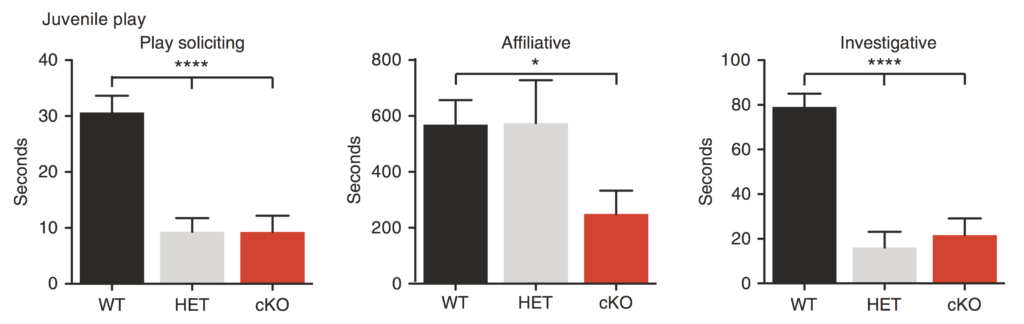
Cells utilize pH gradients to transport chemicals across their membranes, and, in neurons, these gradients help transport neurotransmitters into synaptic vesicles, readying these vesicles for neuronal communication. Mutations in sodium/hydrogen exchangers (NHEs), which regulate cellular pH gradients, have been linked to both autism and attention deficit hyperactivity disorder. Further, both psychoactive and antipsychotic behavioral drugs affect cellular pH gradients. This suggests that pH gradients play an important role in neuronal cross-talk and in driving behaviors, but direct assessments of synaptic communication have been lacking. In creating a mouse model lacking NHE9 expression in the brain, SFARI Investigators Robert Edwards, Vikaas Sohal and colleagues showed that loss of NHE9 leads to repetitive behaviors and deficits in social interactions, which are typically reported in ASD. At the cellular level, NHE9 loss disrupts neuronal pH within dendritic internal membranes, called endosomes, and in presynaptic vesicles. These presynaptic vesicles show defects in the release of neurotransmitters, causing disruptions in synaptic communication. These data argue that alternations in cellular pH gradients alter neuronal communication and suggest a potential mechanistic role in autism.

