First 1,000 Participants in RI-CART Study
Featuring
-

Eric Morrow
SFARI Investigator
-

Stephen Sheinkopf
SFARI Investigator
Bringing people and ideas together to fund, conduct, and share transformative science.
Our grants advance knowledge and strengthen connections between science and society.
Discover the latest news, research, and updates.
We convene scientists, mathematicians, and thinkers to share ideas and explore new questions.
Founded by Jim and Marilyn Simons, we’re a private philanthropy advancing mathematics and basic science.
Work with us on the frontier of basic science research.
The Flatiron Institute is a research center that uses computational science to advance fields like physics, biology, and astronomy.
Search
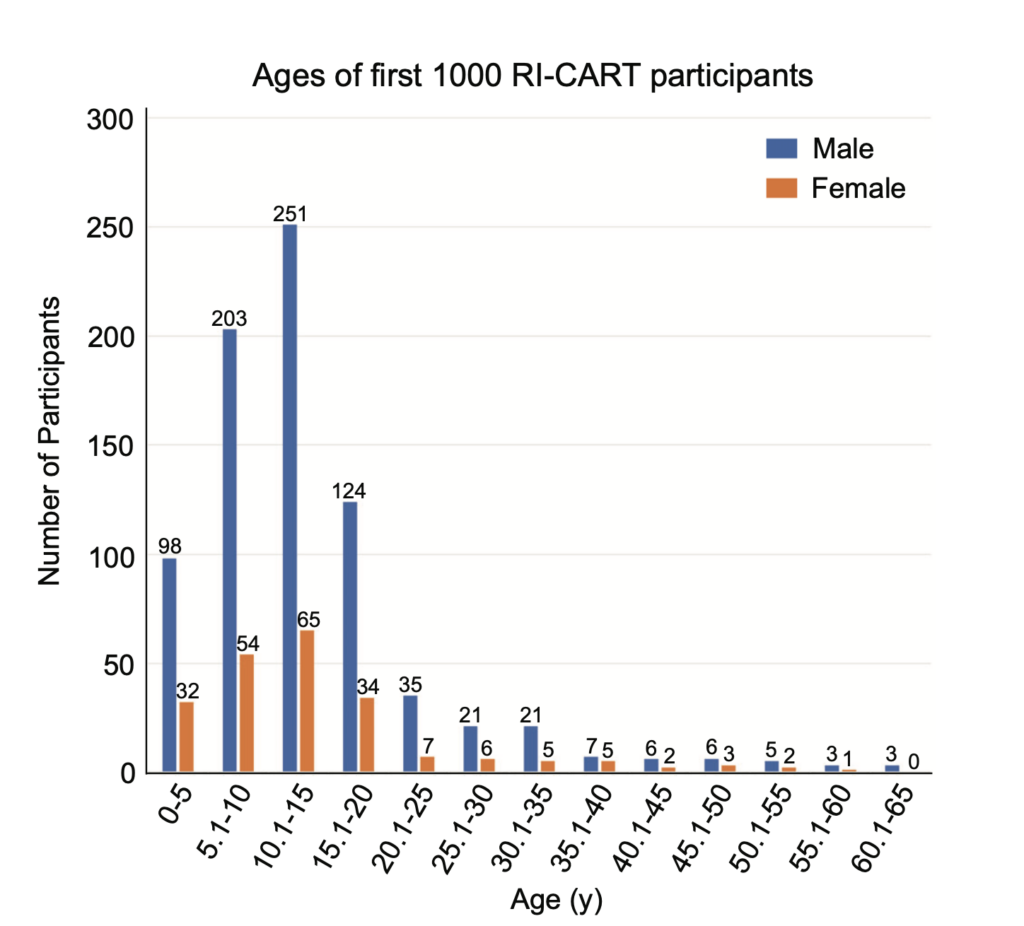
Eric Morrow, Stephen Sheinkopf and colleagues reported the characteristics of the first 1,000 participants in the RI-CART study, a population-based cohort of individuals with autism in Rhode Island.
SFARI Investigator
SFARI Investigator
Recruitment for autism cohorts tends to involve a trade-off between large numbers and depth of phenotyping. A public-private-academic collaboration in the state of Rhode Island, The Rhode Island Consortium for Autism Research and Treatment (RI-CART), has attempted to establish a major statewide research registry that combines epidemiological sampling with direct evaluation. They now report a summary of the first 1,000 participants.
The RI-CART registry was supported in part by a SFARI award to Eric Morrow and Stephen Sheinkopf and was designed as a broad effort to recruit across the state of Rhode Island with the active help of providers and advocacy organizations. Individuals were eligible to participate if they had previously been diagnosed with autism spectrum disorder (ASD) and/or there was concern on the part of a family member or clinician about a possible ASD diagnosis. The authors’ analysis of the first 1,000 participants (recruited between 2013 and 2016) identified more than 90 percent concordance between community diagnoses and results from gold-standard Autism Diagnostic Observation Schedule, Second Edition (ADOS-2) assessments offered as part of the RI-CART evaluation. Other analyses delved into demographic characteristics, phenotypes as characterized by a range of other assessments, and co-occurring psychiatric and medical conditions stratified by sex. They note a clear delay in the diagnosis of females, likely owing to better language skills.
All told, Morrow, Sheinkopf and colleagues emphasize the unique nature of the RI-CART cohort, which involves a large geographic population and good depth of sampling (estimated as 20–49 percent of the pediatric age population in Rhode Island). The heterogeneity of presentation across the cohort also mirrors that reported in other cohorts.

