Sex Differential Effects of Excitation-Inhibition Imbalance in Autism
Featuring
-

Stefano Panzeri
Senior Scientist
Bringing people and ideas together to fund, conduct, and share transformative science.
Our grants advance knowledge and strengthen connections between science and society.
Discover the latest news, research, and updates.
We convene scientists, mathematicians, and thinkers to share ideas and explore new questions.
Founded by Jim and Marilyn Simons, we’re a private philanthropy advancing mathematics and basic science.
Work with us on the frontier of basic science research.
The Flatiron Institute is a research center that uses computational science to advance fields like physics, biology, and astronomy.
Search
Stefano Panzeri and colleagues used neuroimaging-derived measures to assess the sex differential impact of excitation/inhibition imbalance in idiopathic ASD.
Senior Scientist
Imbalances in neuronal excitation and inhibition have been proposed as an overarching explanation of at least some features of autism spectrum disorder (ASD), although they have typically been measured in model systems carrying rare mutations associated with the condition. In addition to continued work on this topic in mice, a new study establishes biomarkers of E/I balance in humans that are derived from neuroimaging data, and links them to sex differences in ASD at the neural and behavioral levels.
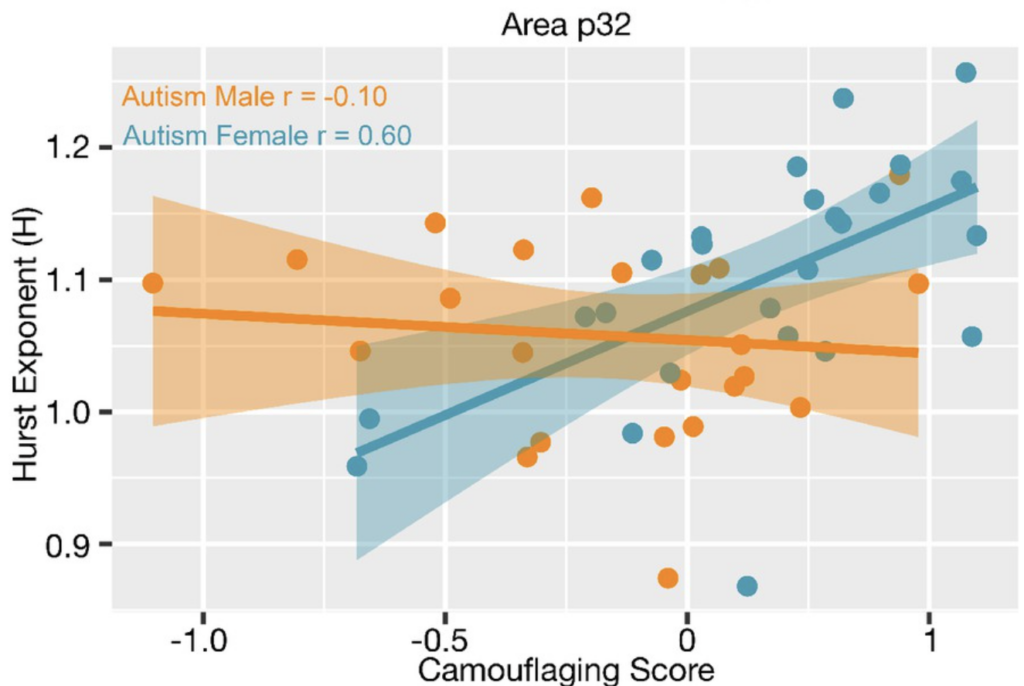
The work was supported in part by an Explorer Award to SFARI Investigator Stefano Panzeri, who collaborated with a group of investigators to develop new methods to measure E/I balance in human participants and to link it to other aspects of the condition. Specifically, Panzeri and colleagues used neuroimaging readouts such as local field potential and blood oxygenation levels to determine measures—including the Hurst exponent (H, related in some sense to neural noise)—that index E/I balance. They showed that H is reduced in the ventral medial prefrontal cortex in males with ASD, but not in females. Moreover, the authors reported an association between levels of H in females with ASD and their ability to compensate for, or camouflage, difficulties in social communication that define the disorder.
Of note, the investigators also reported that autism-associated genes that are known to affect neuronal excitation are highly overlapping with the set of genes whose expression is induced by androgens in neural stem cells. This result suggests that sex hormone-dependent gene expression may initiate a cascade of events leading to altered E/I balance. The ability to measure this imbalance using neuroimaging methods in individuals with idiopathic ASD should be a boon to research efforts aimed at understanding how the known sex bias arises.

