Bringing people and ideas together to fund, conduct, and share transformative science.
Our grants advance knowledge and strengthen connections between science and society.
Discover the latest news, research, and updates.
We convene scientists, mathematicians, and thinkers to share ideas and explore new questions.
Founded by Jim and Marilyn Simons, we’re a private philanthropy advancing mathematics and basic science.
Work with us on the frontier of basic science research.
The Flatiron Institute is a research center that uses computational science to advance fields like physics, biology, and astronomy.
Search
SFARI is pleased to announce the release of genetic data for 119 Autism BrainNet brain tissue samples, including whole genome and whole exome data.
SFARI is pleased to announce the release of genetic data for 119 Autism BrainNet (ABN) brain tissue samples, bringing the total number of samples in the ABN collection for which such data are available to 246. ABN’s mission is to promote innovative, high-quality research on postmortem brain tissue with the goal of improving the understanding of the biological causes of autism spectrum disorder (ASD) and related neurodevelopmental disorders (NDD).
All tissue samples are taken from Brodmann area 10. All are taken from individuals who are either controls or have a confirmed or ‘under review’ autism diagnosis, or have an NDD or epilepsy diagnosis. DNA sequencing was performed in multiple batches at the New York Genome Center using Illumina NovaSeq 6000 machines, and sequence reads were mapped to the human reference genome version GRCh38.
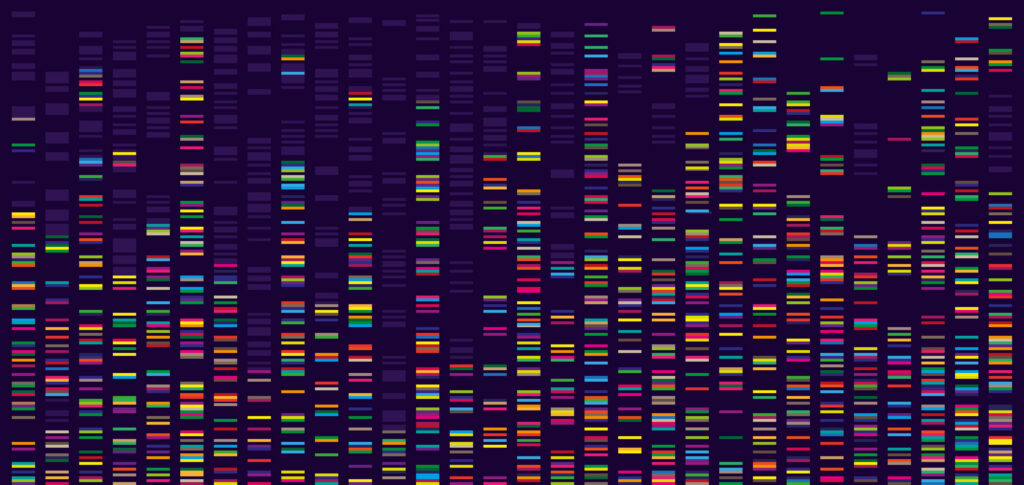
Datasets include whole-genome and whole-exome sequence files, genotyping array data and variant calls (GATK HaplotypeCaller, Canvas/Manta copy number variant calls, and mitochondrial variants). Whole genome data is available for all individuals (WGS1-WGS10) and whole exome and limited genotype data are available for the first seven batches (WGS1-WGS7). Additional whole-exome data and more extensive genotyping array data will be added as they become available.
Interested researchers can request access to these datasets through SFARI Base, where they can also find more information on the sample metadata and data use guidelines. Further information about tissues in the collection can be found in the Autism BrainNet Tissue Catalogue. Information about the tissue and data request process can be found here.