A circular pattern of evenly spaced, white radial lines on a light gray background, creating a sunburst or spinning wheel effect with an empty center.

Computational Quantum Physics: Software

We develop, optimize and support codes implementing key algorithms for many-body quantum systems.

Our reliable, efficient, and productive software accelerates discovery and fosters scientific consensus and reproducibility.

We are home to several software libraries, and our researchers are nurturing the development of codes in areas including quantum embedding methods, tensor networks, quantum Monte Carlo, electronic structure and neural quantum states.

TRIQS

TRIQS (Toolbox for Research on Interacting Quantum Systems) is an open-source software platform designed to support the implementation and development of advanced diagrammatic and embedding methods for studying strongly correlated quantum systems.

Developed and coordinated by the Center for Computational Quantum Physics (CCQ) at the Flatiron Institute, TRIQS provides a robust and modular foundation that combines high-performance C++ with Python bindings to enable efficient and user-friendly workflows. At its core, TRIQS offers general-purpose libraries for Green’s functions, many-body operators, and lattice models, along with tools for exact diagonalization, Monte Carlo sampling, and statistical analysis.

TRIQS hosts a suite of applications—ranging from quantum impurity solvers for dynamical mean-field theory (DMFT) to ab initio integration tools and lattice diagrammatic Monte Carlo—enabling researchers to tackle a wide range of problems in condensed matter physics. The platform encompasses a set of standalone core libraries (e.g., nda, h5, mpi), designed for performance and ease of use, that are shared with the broader scientific community. TRIQS is developed collaboratively by an international research community, with active outreach through annual community meetings, workshops, and summer schools. This dynamic ecosystem supports both cutting-edge research and education in quantum many-body physics.


Project Leader: Olivier Parcollet

Lead Developers: Nils Wentzell

Project Scientists: Jenny Coulter, Jason Kaye, Harrison LaBollita, Chia-Nan Yeh, Marco Barbone, Andrew Klevorkin-Hardy, David Abramovitch

TRIQS

SAFIRE

The Auxiliary-Field Quantum Monte Carlo package, called SAFIRE, provides a comprehensive software environment using auxiliary-field quantum Monte Carlo, broadly defined, to study quantum many-fermion systems. The package is designed for large-scale distributed calculations, with GPU support for high performance applications. The aim is to provide a platform for community development and for state-of-the-art applications.

The library will contain a suite of software for the following:

  1. correlated electron models and ultracold fermionic atom systems
  2. molecular calculations treating standard quantum chemistry Hamiltonians (for example, using Gaussian basis sets)
  3. ab initio calculations in extended systems with either Kohn-Sham-orbital-like basis sets or planewaves and pseudopotentials

The software implements importance-sampled branching random walks in non-orthogonal Slater determinant space. A constrained-path or phaseless approximation is used to control the fermion sign or phase problem. Total energy, as well as other observables and correlation functions, is computed.

Upon initial release, the package will use a ground-state, canonical ensemble formalism. Corresponding finite-temperature extensions are also being developed and will be made available to the community.

A pedagogical package for model systems, written in Matlab and with a graphical interface, is available.


Project Leaders: Miguel Morales, Shiwei Zhang
Project Scientists: Zhou-Quan Wan, Lukas Weber, Fikret Ardal


SAFIRE

ITensor

The ITensor library supports the productive development of robust and efficient software based on tensor networks. The innovative design of the ITensor library lets users focus on the connectivity of tensor networks instead of lower-level details and is modeled on tensor diagram notation.

ITensor has a multi-layered design including basic dense tensors; sparse tensor types; sophisticated handling of quantum number symmetries; and high-level algorithms for matrix product states and general tensor networks.

In addition to providing ongoing support for users, there is a major effort at CCQ to expand ITensor’s capabilities to make handling complex quantum systems easier, to support new application domains, and to incorporate the latest algorithmic developments and tensor network formats.


Project Leaders: Miles Stoudenmire, Matt Fishman

Project Scientists: Joseph Tindall, Lukas Devos

ITensor

CoQuí

CoQuí is a software project designed for ab initio electronic structure beyond density functional theory (DFT).


Project Leaders: Miguel Morales, Chia-Nan Yeh, Olivier Parcollet


CoQuí

Tachys

Tachys is a Variational Monte Carlo for quantum many-body systems. To reach the system sizes that real materials demand, tachys is optimized to scale across large GPU clusters.


Project Leader: Riccardo Rende

Tachys

People

Portrait photo of Matthew Fishman

Matthew Fishman

Research Scientist, Center for Computational Quantum Physics

Portrait photo of Johannes Flick

Johannes Flick

Associate Research Scientist, Center for Computational Quantum Physics

A portrait photo of Miguel Morales.

Miguel Morales

Research Scientist, Center for Computational Quantum Physics

Portrait photo of Olivier Parcollet

Olivier Parcollet

Senior Research Scientist, Center for Computational Quantum Physics

Portrait photo of Miles Stoudenmire

Miles Stoudenmire

Research Scientist, Center for Computational Quantum Physics

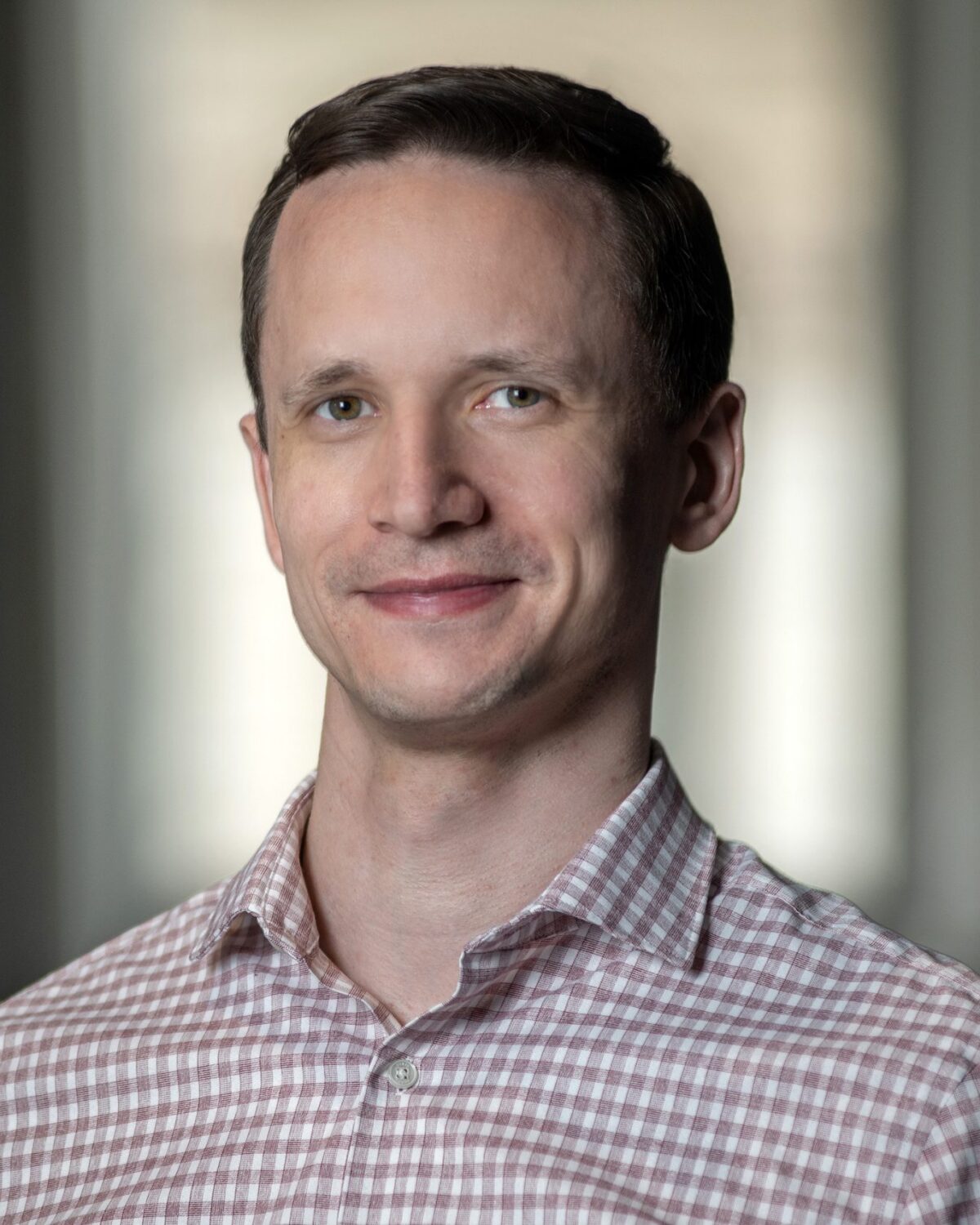
A man with short brown hair wearing a pink and white checkered shirt smiles softly while standing indoors with a blurred background.

Nils Wentzell

Research Scientist, Center for Computational Quantum Physics

Portrait photo of Shiwei Zhang

Shiwei Zhang

Senior Research Scientist, Center for Computational Quantum Physics