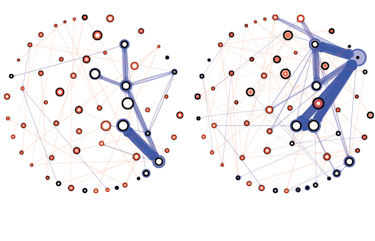
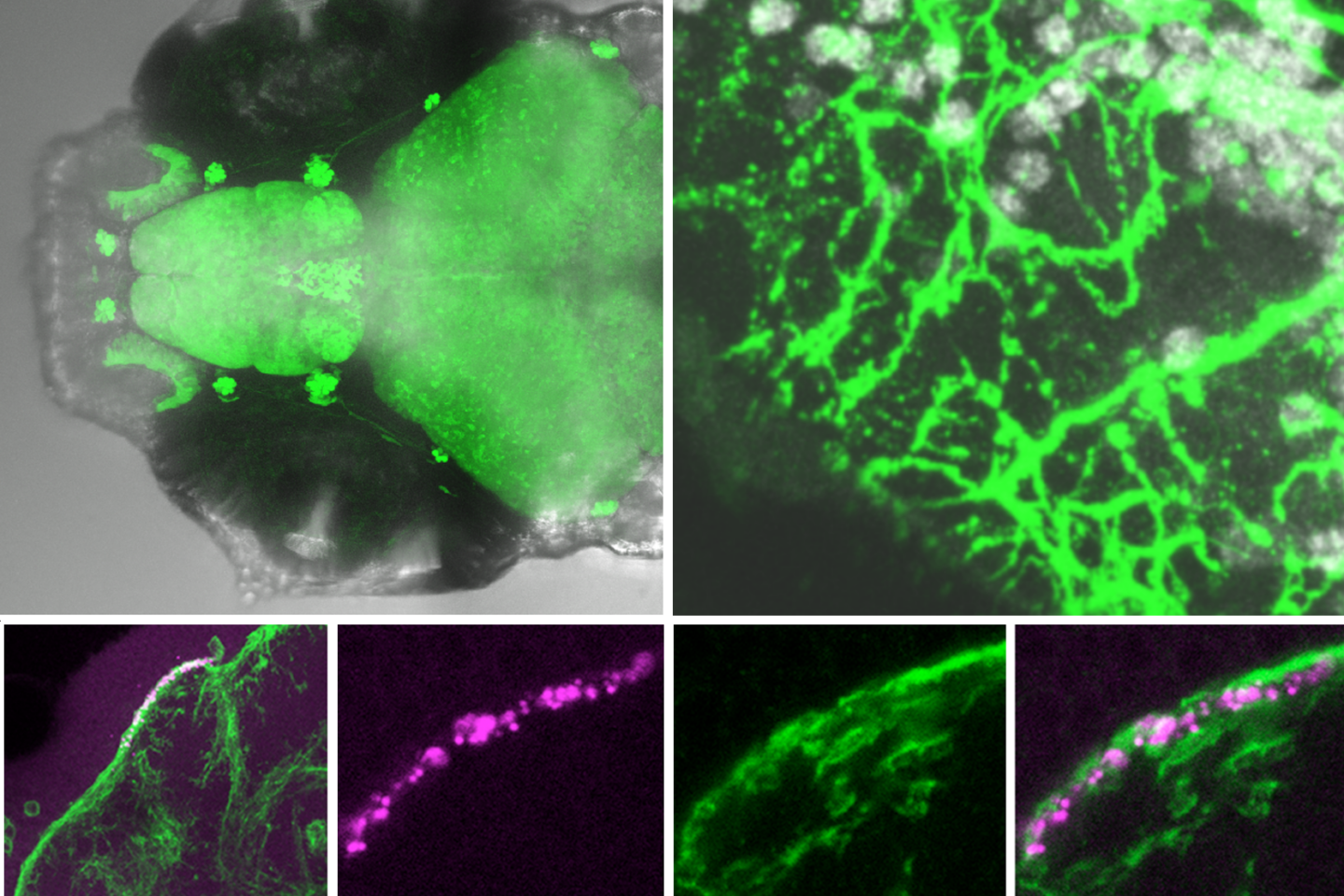
The cerebral cortex—the outermost, wrinkled layer of our brains—contains a variety of brain areas that are connected to form neural networks. Some areas of the cerebral cortex, including two areas known as PFC and PPC, are specialized to be involved in movements to a goal or target.
These movements might be rapid eye movements, known as saccades, or arm reaches. PFC and PPC contain patterns of neural activity that predict, when faced with choices about which movement to make, the impending decision. Other brain areas outside of the cortex, such as the thalamus, are also involved in that choice. Our goal is to dissect the activity of the neural networks formed by PFC, PPC, and the thalamus by building computational models and testing them with experiments. We specifically plan to study the connectivity of the networks in these three brain areas. We have developed wireless technology to record the activity of neurons in many brain areas at once. We will take advantage of this new technology to record neurons while monkeys are trained to select a target with a saccade. This set-up will allow us to examine network processing while the monkey is making decisions. We can then use sophisticated genetic techniques to assess how directly the PFC, PPC, and thalamic networks influence one another, and how information flows through those neural networks. Working in collaboration with theoretical neuroscientists, we will build computational models of these networks to study the interactions among all three brain areas and test the model’s predictions with new experiments. This arrangement allows for a close marriage of theory and experiment, and should provide general insights into how multiple brain areas work together when making decisions.
FULL PROJECT
Awardees
Bijan Pesaran
Investigator, Simons Collaboration on the Global Brain
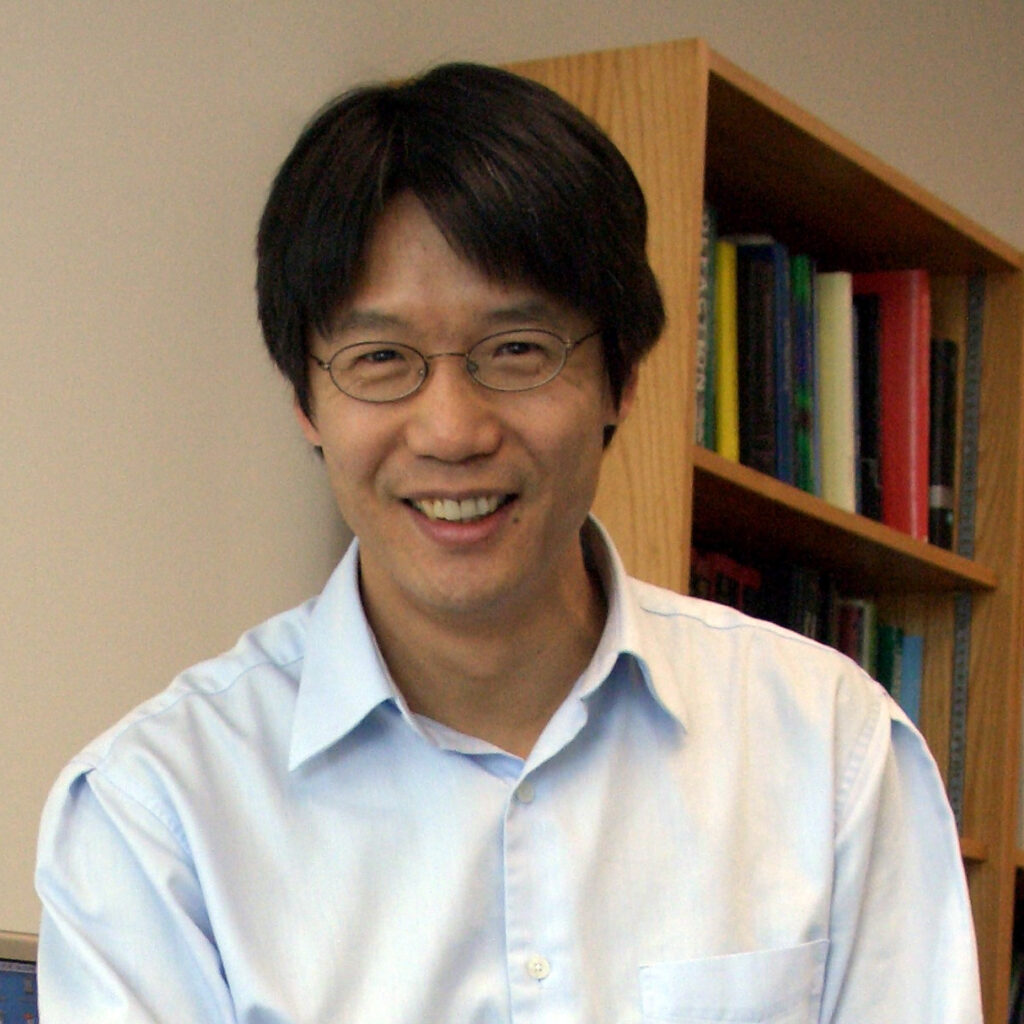
Xiao-Jing Wang
Investigator, Simons Collaboration on the Global Brain