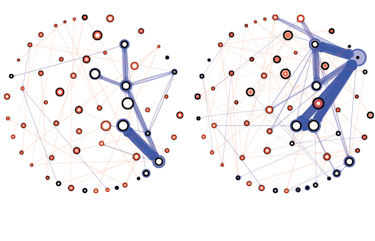
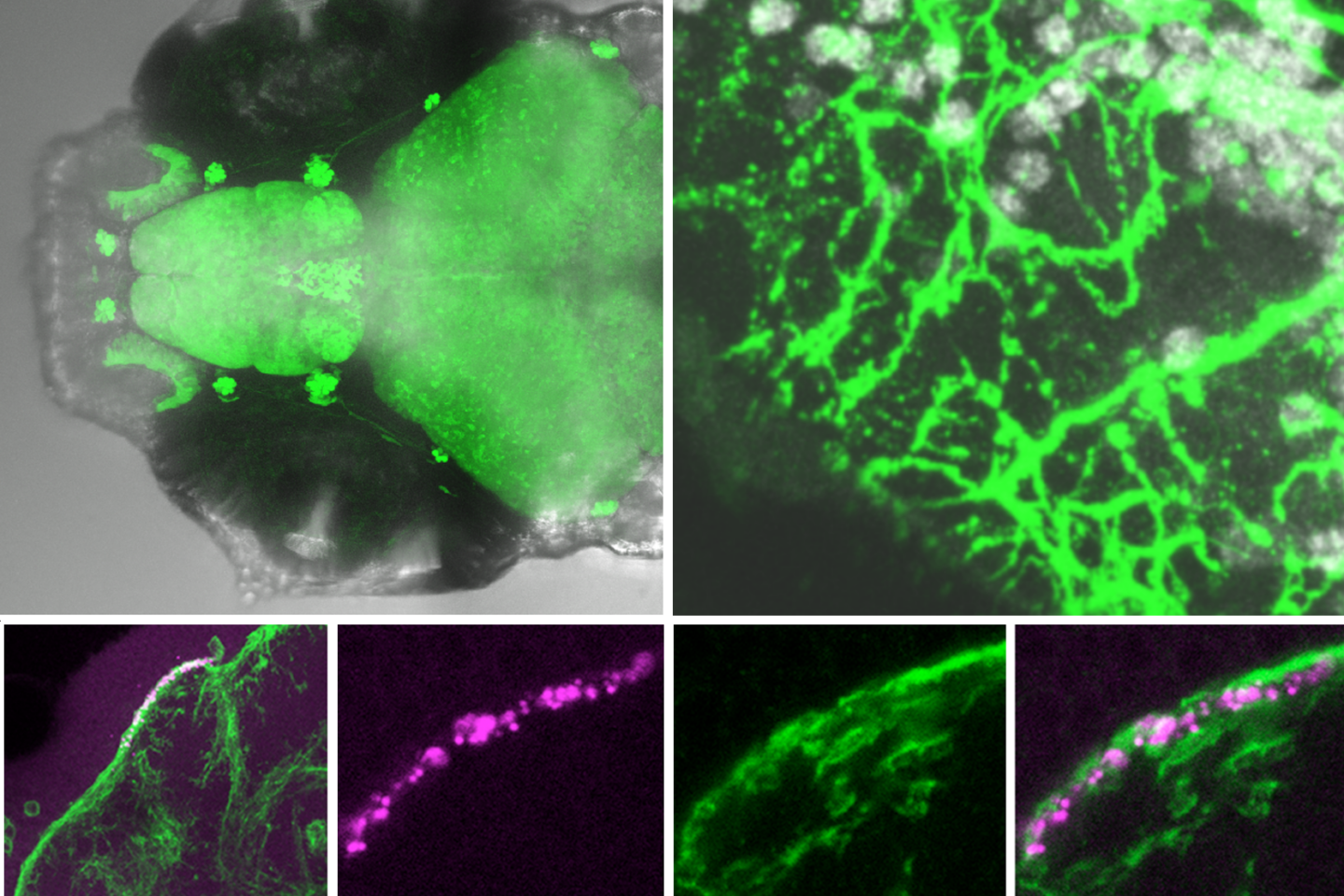
Neural networks in the brain have their own intrinsic activity independent of incoming sensory stimuli. This intrinsic activity is known as the global brain state, and the brain’s state will affect the processing of incoming sensory stimuli.
For example, what we notice in the world is a function of what we pay attention to. Another way to say this is that the global brain state of attention determines what sensory stimuli we process. But exactly how, at the level of neural circuits, do global brain states influence sensory processing? Working in the visual system of mice, our lab has made significant progress towards answering this question. We have found that locomotion puts the visual cortex of mice into a so-called “high gain” state, which renders it more sensitive to visual stimuli. In this state, visual experience can cause long-lasting changes in the adult brain. We will allow mice to walk through a simple virtual reality environment in which they learn a foraging task, associating certain visual objects with a reward. When the mouse virtually passes one of these objects, he is trained to pause and lick. We Will study the mouse under two conditions: when the mouse is moving through the virtual environment on its own, or when the mouse is still and the virtual objects move past the mouse. In both cases, the mouse has to lick the passing objects for the reward. But in the two cases, even though the sensory stimuli remain the same, the brain state is different: the mouse is either moving or not. We will then implant electrodes that allow us to monitor the activity of multiple neurons at the same time. We hypothesize that the mouse will be better at the foraging task when moving because locomotion puts the brain in high gain state. We will then use sophisticated genetic techniques to manipulate neural activity and mathematical analyses to determine which features of activity in the high gain state are responsible for the increased learning. Evidence from humans shows that global brain state can affect perceptual learning. Our results, therefore, will shed light not only on how movement-induced brain states influences visual perception, but also on how global brain states affect cognitive processing more generally.
FULL PROJECT
Awardees

Michael Stryker
Investigator, Simons Collaboration on the Global Brain

Steven Zucker
Investigator, Simons Collaboration on the Global Brain