Context matters when making a decision. For example, we answer a ringing phone if we are in our own office but not in a colleague’s. This collaborative project studies how the brain learns about different contexts — ‘my office’ and ‘not my office’, for example — and how it uses context representations to guide decisions.
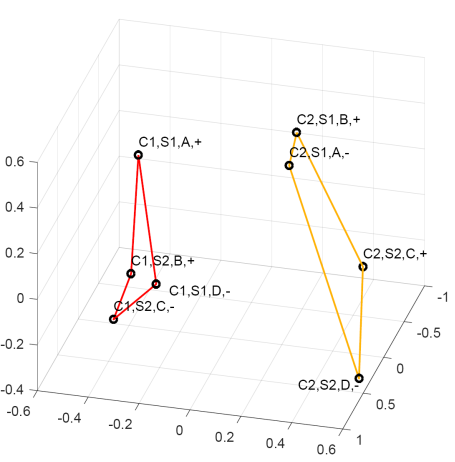
We will address these questions by training macaque monkeys to integrate sensory and contextual factors in well-controlled behavioral tasks. The monkeys will learn to follow specific rules based on the experimental context. We will record from different brain areas, including the prefrontal cortex, posterior parietal cortex, amygdala and hippocampus, as the animals perform the task. We hypothesize that the prefrontal cortex and amygdala will contain neural representations of the context in each task, while the hippocampus will play an important role in learning these contexts. We will test our hypothesis by applying different mathematical techniques, including dimensionality reduction, state space analyses, and neural network modeling, on our behavioral and neural datasets. These techniques enable us to extract context-related neural response patterns from the activity of hundreds of neurons within and across the recorded regions. Our results will offer insights into how context-based decisions are made in the primate brain.
FULL PROJECT
Awardees

Stefano Fusi
Investigator, Simons Collaboration on the Global Brain

Roozbeh Kiani
Investigator, Simons Collaboration on the Global Brain

C. Daniel Salzman
Investigator, Simons Collaboration on the Global Brain