Autism spectrum disorders (ASDs) have a prevalence of 1.5 percent in the general population, with affected individuals characterized by varying levels of developmental, intellectual and behavioral impairments. Genetic studies in individuals with ASD have identified mutations in a variety of epigenetic regulators, including the chromodomain helicase DNA-binding proteins 2 and 8 (CHD2, CHD8). However, while epigenetic mechanisms have been shown to influence the normal progression of neuronal and glial development and synaptic plasticity, little is known about the molecular and cellular mechanisms through which the abnormal activities of these regulators affect neuronal and glial function and increase susceptibility to ASD. The generation of appropriate disease model systems is necessary to allow thorough analyses of how epigenetic risk genes modulate neural physiology and is an important step in bridging the gap between human genetics data and the cellular deficits that underlie the clinical presentation of ASD.
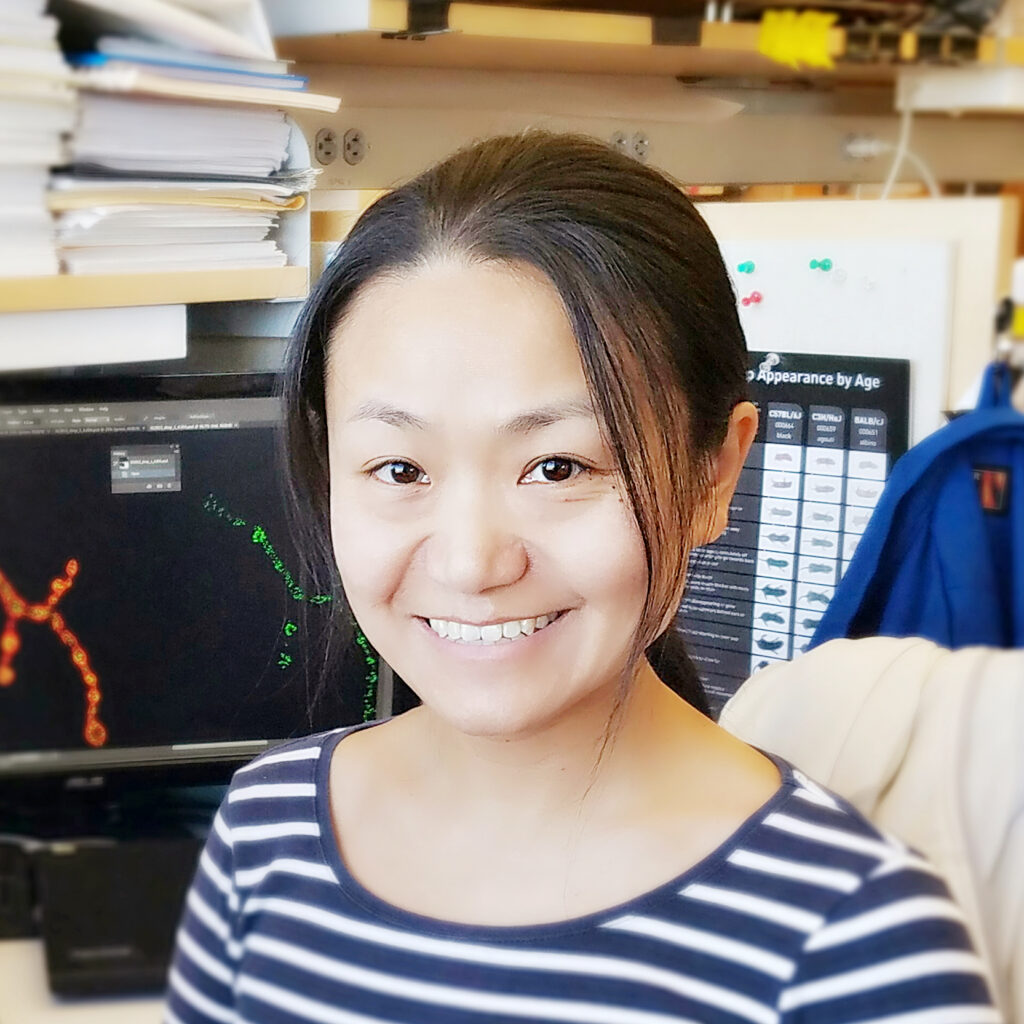
Tingting Wang’s laboratory focuses on understanding the molecular mechanisms underlying homeostatic synaptic plasticity in the nervous system and how dysfunction of homeostatic control contributes to neurodevelopmental disorders such as ASD. In the current project, Wang and her team plan to assess how altered epigenetic regulation affects glial function and homeostatic plasticity. Specifically, they will create Drosophila and mouse models that lack Chd2 in glial cells to explore the cellular and functional consequences on glial function and downstream effects on synaptic physiology and homeostatic signaling. This work will provide a more precise understanding of how signaling systems in glia affect synapse formation during development and stabilize synapse physiology. Further, this work will increase our understanding of the role that alterations in epigenetic signaling and plasticity play in ASD and may provide candidate molecular targets for potential therapies for ASD.