Applications of Chern-Simons Theory

Lecture

Speakers

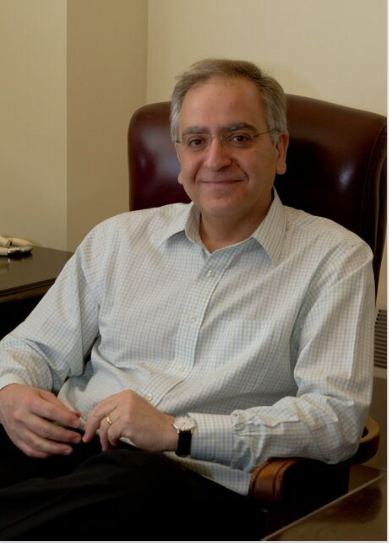
  • Portrait photo of Cumrun Vafa
    Cumrun Vafa Donner Professor of Science, Harvard University
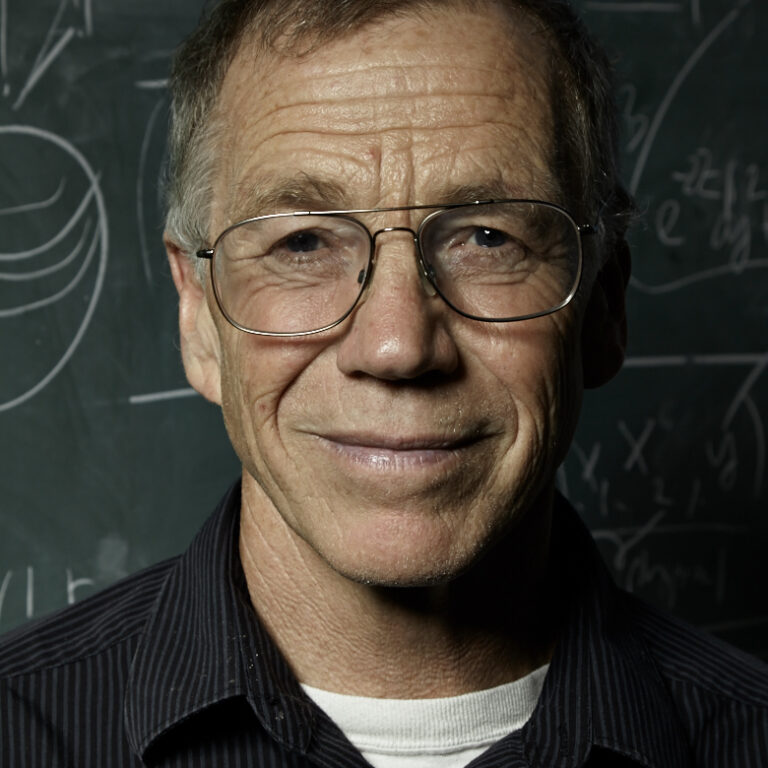
  • Mike Freedman in front of a chalkboard with math on it
    Michael Freedman Director, Station Q
  • Portrait photo of Charles Kane
    Charles Kane University of Pennsylvania
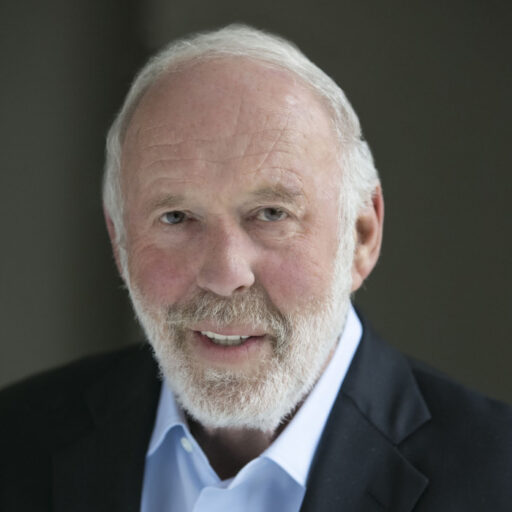
  • Portrait photo of Jim Simons
    James Simons Trustee, Co-Founder and Chair Emeritus, Simons Foundation

When

  • – ET

Where

Gerald D. Fischbach Auditorium

160 5th Ave

New York, NY 10010, United States

In the early 1970s mathematicians S.S. Chern and Jim Simons collaborated on a paper, “Characteristic Forms and Geometric Invariants,” inspired by a failed effort by Jim to find a combinatorial formula for the signature of a 4-manifold. Out of that work a term related to 3-manifolds emerged with some very interesting properties, and when Chern saw this he realized it could be vastly generalized – thus the paper referenced above. That paper led to additional interesting mathematics such as differential cohomology, but it never occurred to its authors that so called Chern-Simons theory would subsequently play a significant role in a number of areas of physics.

On April 25, Simons briefly described his work with Chern, followed by three talks on different areas of physics that involve Chern-Simons theory.

About the Speakers

Cumrun Vafa, the Donner Professor of Science at Harvard University, will talk about the impact of Chern-Simons theory on topological aspects of string theory. He will review how the theory has led, among other things, to profound advances in enumerative geometry.

Michael Freedman will discuss Jim’s topological term and quantum computing. Freedman is director of Station Q, Microsoft’s project on quantum physics and quantum computation located on the campus of the University of California, Santa Barbara. He will discuss how the Chern-Simons theory opens a direct path to topological physics and can help bring about quantum computing. Experiments are underway to show that topological physics derived from SU(2)_2 Chern-Simons theory will supply the stability missing from conventional qubit systems. The SU(2)_2 theory is closely related to the Ising theory and Majorana fermions, Jones polynomial of links at 4-th root of unity, and the fractional quantum Hall state at filling fraction 5/2.

Charles Kane, the Christopher H. Browne Distinguished Professor of Physics at the University of Pennsylvania, will present on Chern-Simons theory in condensed matter physics from topological band theory to topological field theory. He will demonstrate how the mathematical constructions introduced by Chern and Simons have had a profound impact on our understanding of quantum phases of matter, helping to inspire the discoveries of new classes of electronic materials that have significant implications for both fundamental science and technology.

A softly shaded, grainy blue circle with a glowing center sits on a light beige background, creating a subtle gradient and halo effect.

Event Series

Presidential Lectures 2018

Free public talks that spotlight groundbreaking research.

This series spotlights groundbreaking research across neuroscience and autism, physics, biology, and mathematics and computer science. Featuring leading scientists and mathematicians, these talks foster discussion and discovery within the New York City research community.

See events

More Events

October 12–14, 2026

Speaker

Shep Doeleman

A man in a checked shirt and dark blazer faces the camera, wearing a pin on his jacket and a pen in his pocket, against a plain background.

Speaker

Sonya Hanson

A portrait photo of Sonya Hanson.