How Exoplanets Provide Insight Into Atmospheric Physics Within Extreme Regimes

Lecture

Speaker

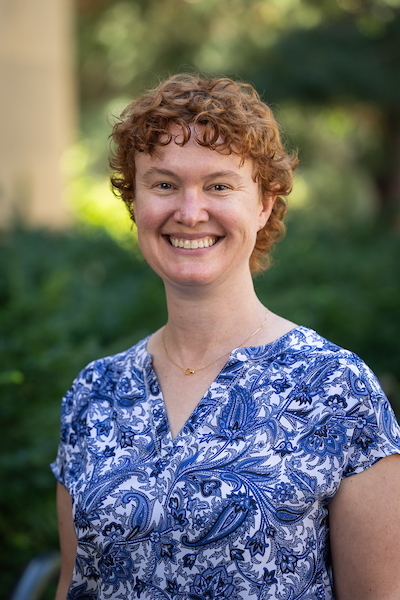
  • A person with short curly red hair, wearing a blue and white paisley-patterned shirt, smiles at the camera. Green foliage and soft sunlight fill the background.
    Emily Rauscher University of Michigan

When

  • – ET

Where

Gerald D. Fischbach Auditorium

160 5th Ave

New York, NY 10010, United States

What would happen to the atmosphere of Jupiter if we moved it to a tenth of Mercury’s distance from the sun? From basic atmospheric physics, we would expect it to retain its atmosphere. Still, the wind speeds would increase, the circulation patterns would change, and there would be huge temperature differences between the day and night sides. We might even expect the day to be hot enough for ions to be sprinkled throughout, while on the night side, clouds composed of mineral and metallic species could form. This extreme environment is not a thought experiment but the conditions we expect for a class of exoplanets known as hot Jupiters. This is just one example of the diversity of worlds we have discovered orbiting stars within our galaxy. With over 5,000 exoplanets discovered, nature has forced us to stretch our understanding of atmospheric physics into exciting new regimes.

In this Presidential Lecture, Emily Rauscher will begin with a brief overview of the state of exoplanet detection and atmospheric characterization. She will then focus on hot Jupiters, as these planets are the most extreme in their atmospheric physics and the planets whose atmospheres we can measure in the most detail. She will highlight discoveries about atmospheric physics in this regime, some of the remaining mysteries, and why it is so challenging to numerically model their atmospheres. Finally, she will imagine what new insights future observational and numerical advancements might bring.

About the Speaker

Rauscher obtained her Ph.D. from Columbia and is an associate professor of astronomy at the University of Michigan. She is an expert in three-dimensional numerical simulations of exoplanet atmospheres. She also identified novel techniques for measuring complex atmospheric properties: ‘eclipse mapping’ to create images of exoplanet daysides and using Doppler shifts in high-resolution spectra to constrain planets’ wind speeds and rotation rates. She is a Cottrell Scholar and a Simons Fellow in Theoretical Physics.

A softly shaded, grainy blue circle with a glowing center sits on a light beige background, creating a subtle gradient and halo effect.

Event Series

Presidential Lectures 2024

Free public talks that spotlight groundbreaking research.

This series spotlights groundbreaking research across neuroscience and autism, physics, biology, and mathematics and computer science. Featuring leading scientists and mathematicians, these talks foster discussion and discovery within the New York City research community.

See events

More Events

October 12–14, 2026

October 14, 2026

6–7 p.m. ET

Speaker

Shep Doeleman

A man in a checked shirt and dark blazer faces the camera, wearing a pin on his jacket and a pen in his pocket, against a plain background.

October 15–16, 2026