Copernicus Revisited: Is Earth Special?

Lecture

Speaker

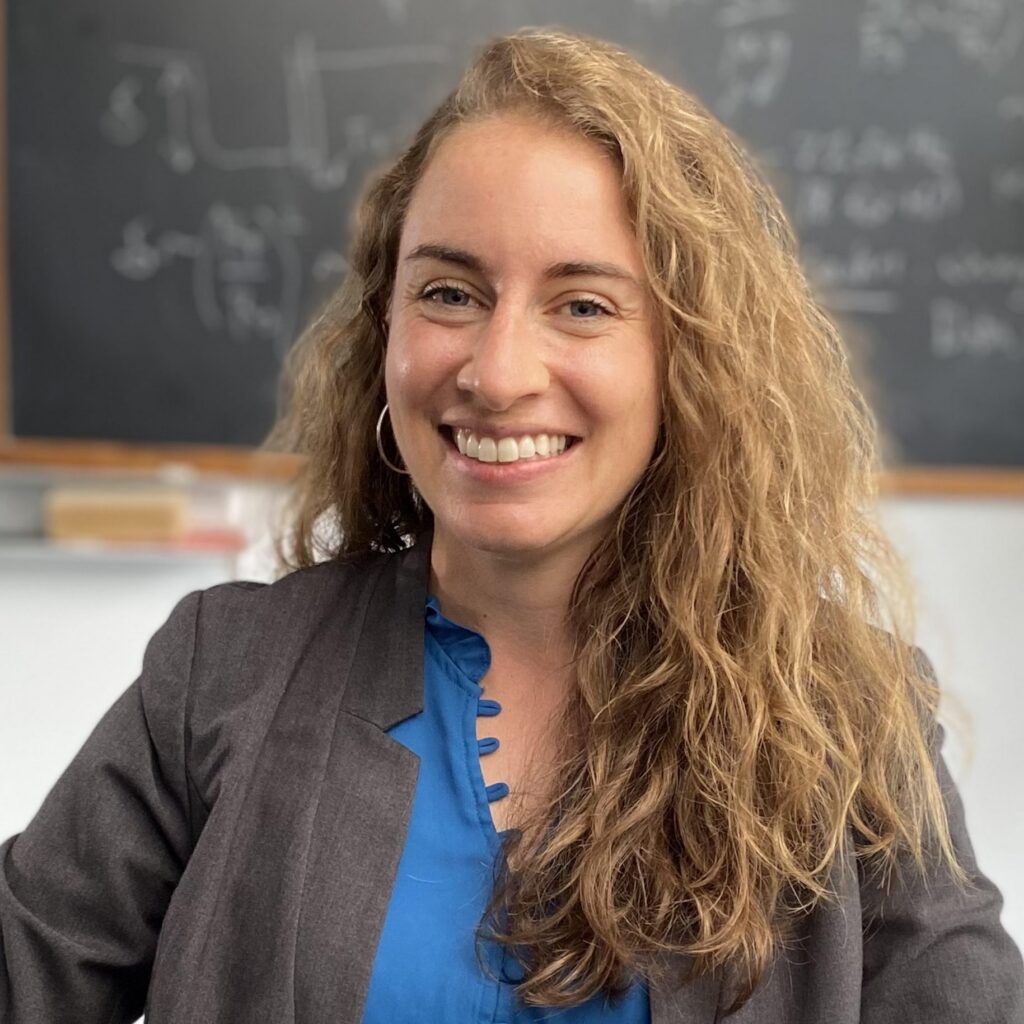
  • A woman with long curly hair, wearing a blue blouse and gray blazer, smiles while sitting in front of a chalkboard filled with equations.
    Laura Kreidberg Managing Director, Atmospheric Physics of Exoplanets Department, Max Planck Institute for Astronomy

When

  • – ET

Where

Gerald D. Fischbach Auditorium

160 5th Ave

New York, NY 10010, United States

Nearly 500 years ago, Nicolaus Copernicus published his disruptive theory that Earth is not the center of the universe. This ‘Copernican demotion’ has held fast over the centuries, as astronomers have learned that there is nothing particularly remarkable about Earth or even the Milky Way galaxy. In the last two decades, however, a new test of the Copernican principle has emerged: the discovery of an abundance of planets orbiting other stars. These discoveries allow us to put Earth in context and evaluate whether the formation, architecture and present-day characteristics of our solar system are, in fact, typical.

One of the biggest open questions is whether Earthlike exoplanets have water, a key ingredient for life. Thanks to the revolutionary new observing capabilities of the James Webb Space Telescope (JWST), it is possible to characterize the atmospheres of Earth-sized worlds for the first time. In this Presidential Lecture, Laura Kreidberg will share the latest observations of rocky exoplanet atmospheres from JWST, discuss the implications of their water abundances compared to the Earth’s, and answer the question, “Was Copernicus wrong?”

About the Speaker

Kreidberg is the founding director of the APEx Department at the Max Planck Institute for Astronomy in Heidelberg, Germany. Her research focuses on the characterization of extrasolar planet atmospheres, and she is a frequent user of space-based telescopes. She has received numerous awards for her work, including the International Astronomical Union’s PhD Prize and the American Astronomical Society’s 2021 Annie Jump Cannon Award. Before her move to Germany, Laura was a Clay fellow at the Harvard-Smithsonian Center for Astrophysics and a Harvard Junior Fellow. She received her Ph.D. from the University of Chicago in 2016 and was an undergraduate at Yale University.

A softly shaded, grainy blue circle with a glowing center sits on a light beige background, creating a subtle gradient and halo effect.

Event Series

Presidential Lectures 2024

Free public talks that spotlight groundbreaking research.

This series spotlights groundbreaking research across neuroscience and autism, physics, biology, and mathematics and computer science. Featuring leading scientists and mathematicians, these talks foster discussion and discovery within the New York City research community.

See events

More Events

October 12–14, 2026

Speaker

Shep Doeleman

A man in a checked shirt and dark blazer faces the camera, wearing a pin on his jacket and a pen in his pocket, against a plain background.

Speaker

Sonya Hanson

A portrait photo of Sonya Hanson.