Funded Work
Our funded projects advance discovery across mathematics, the physical and life sciences, neuroscience, and autism.
Results
-
 Despite tremendous efforts by parents, researchers, clinicians and educators, autism spectrum disorder (ASD) continues to present a significant lifelong challenge to most affected individuals and their families.
 -
Impairments in social communication are among the core symptoms of autism spectrum disorder (ASD), but there are currently no available, well-validated, objective measures that could be used …
-
 Behavioral treatments for children with autism spectrum disorder (ASD) seek to improve how children learn about others.
 -
Fever, the increase in body temperature that follows infection, is typically associated with sickness behaviors, such as lethargy and a lack of appetite.
-
 Autism spectrum disorder (ASD) is a major global health concern, affecting 1 in 59 children in the United States.
 -
Mutations identified by exome sequencing demonstrate that disruption of the gene SCN2A, which encodes the alpha subunit of the neuronal voltage-gated sodium channel 1.2 (Nav1.2 …
-
Autism spectrum disorder (ASD) is classically characterized by its social and cognitive symptoms, but changes in sensory processing also occur, and these may contribute to, or even be …
-
Uncontrolled inflammation during pregnancy, coined ‘maternal immune activation’ (MIA), may induce behavioral phenotypes and brain pathologies relevant to autism in affected offspring.
-
Disruption of basal ganglia maturation by cortical hyperactivity in the Shank3 mouse model of autism
While the neural substrates and pathophysiological mechanisms underlying the onset of cognitive and motor deficits in autism spectrum disorder (ASD) remain unclear, research suggests that aberrant corticostriatal development … -
Genetic analyses of large cohorts of individuals with autism spectrum disorder (ASD) have enabled the identification of numerous de novo and inherited rare DNA variants linked to ASD.
-
 With more than 100 genes causally linked to autism spectrum disorders (ASDs), the next major challenge is to discover the neurodevelopmental consequences of different genetic mutations.
 -
It is now widely appreciated that de novo mutations contribute to a large fraction of autism spectrum disorders (ASD) risk.
-
A key challenge for clinical trials of autism spectrum disorder (ASD) is the lack of objective measures that are sensitive to changes in core features.
-
Analyses of penetrant mutations and transcriptome studies implicate transcriptional dysregulation within the fetal cerebral cortex in the pathophysiology of autism spectrum disorders (ASD).
-
The 2013 Strategic Plan of the Interagency Autism Coordinating Committee described regression as one of the most mysterious and troubling aspects of autism spectrum disorder (ASD) and set …
-
Autism spectrum disorder (ASD) is characterized by impairments in social communication/interaction (SCI) and the presence of restricted/repetitive behaviors (RRB) and is often accompanied by language impairment.
-
A long-term goal of Guillermo Sapiro’s laboratory is to develop and validate sensitive, objective, reliable and scalable digital tools for measuring outcomes in autism spectrum disorder …
-
Autism spectrum disorder (ASD) is a neurodevelopmental disorder whose underlying genetic basis has started to be revealed through the use of advanced genetic tools.
-
A hallmark of autism spectrum disorder (ASD) is difficulty with social interactions, including reduced social reciprocity and cooperative behavior, that in turn may stem from the inability to …
-
The neural mechanisms that underlie the cognitive and behavioral deficits in autism spectrum disorders (ASDs) are not well understood at the circuit level, although there is converging evidence …
-
Angelman syndrome (AS) is a severe neurodevelopmental disorder caused by deletion or mutation of the maternal allele UBE3A.
-
Each individual with autism spectrum disorder (ASD) is unique, but there are patterns in individual variability.
-
Tbr1, a high-confidence autism spectrum disorder (ASD) risk gene, encodes a T-box transcription factor that plays a central role in the development of early-born cortical …
-
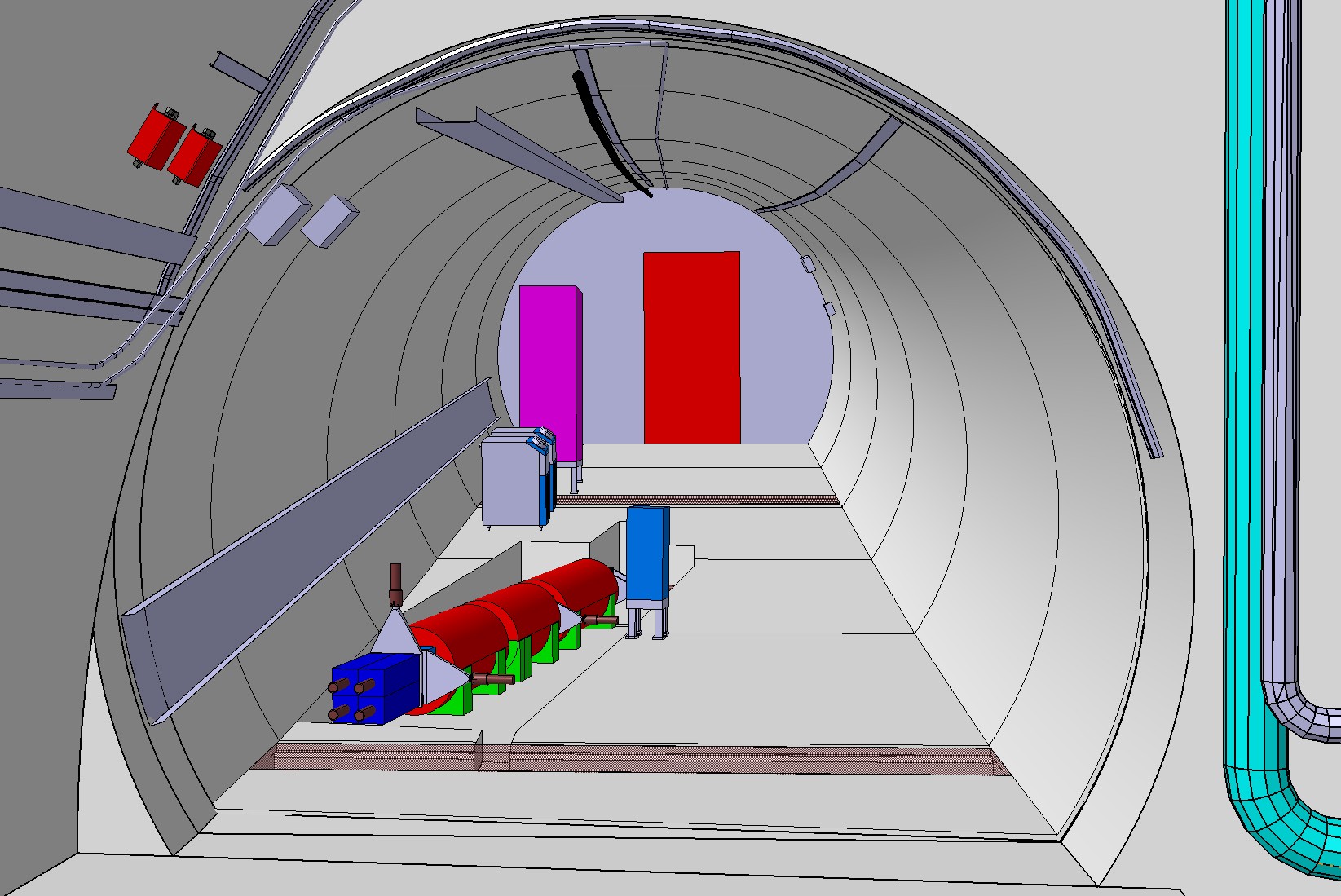 FASER, the Forward Search Experiment, is the first experiment dedicated to searching for new light weakly interacting particles at CERN’s Large Hadron Collider (LHC) in Geneva.
 -
Several brain disorders, with high rates of autism, such as tuberous sclerosis, PTEN hamartoma syndrome and fragile X syndrome (FXS), are associated with a loss of function of …
-
Building the cerebral cortex requires the orchestration of molecular signals spatially synchronized across neural progenitor cells.
-
Autism spectrum disorders (ASDs) affect approximately 1 percent of the worldwide population and are associated with cognitive deficits in perception, social interaction and communication; these functions are all …
-
Social processing has been established as one of the six trans-diagnostic core domains (according to the Research Domain Criteria framework) of neuropsychiatric disorders, including autism spectrum disorders …
-
Jeremy Veenstra-VanderWeele and colleagues previously demonstrated in mice that the maternal serotonin transporter (SERT) Ala56 genotype — but not embryo genotype — affected placental and forebrain serotonin (5-HT …
-
Converging evidence from human and animal studies have identified cellular and molecular disruptions that are central to the pathophysiology of autism spectrum disorders (ASDs).
-
A central feature of autism spectrum disorder (ASD) that has emerged from converging lines of evidence is dendritic spine pathology.
-
Noninvasive neuroimaging, such as functional magnetic resonance imaging (fMRI), has provided insights into dysfunction of large-scale neural systems in autism spectrum disorder (ASD) and its relationship to …
-
Autism is a neurodevelopmental disorder associated with deficits in social behaviors and characteristic repetitive behaviors.
-
Recent years have seen major strides in our understanding of the complex genetics of autism spectrum disorder (ASD).
-
Genes encoding chromatin-remodeling enzymes are among the most prominent targets of de novo mutations associated with autism spectrum disorder (ASD).
-
Autism spectrum disorders (ASDs) are complex neurodevelopmental disorders with a strong genetic component.
-
Behavior is governed by the coordination of multiple learning and memory systems.
-
Genetic data implicate two pathways most strongly in autism spectrum disorders (ASDs): synaptic networks and transcriptional regulatory pathways.
-
The phenotypic and genetic heterogeneity of autism spectrum disorder (ASD) has posed immense clinical and research challenges to understanding the underlying genetic determinants of ASD risk.
-
SFARI has been a leader in using whole-genome sequencing (WGS) to interrogate the genetic causes of autism spectrum disorder (ASD).
-
One of the most important objectives of autism spectrum disorder (ASD) interventions is to improve spoken communicative language skills.
-
Despite advances in elucidating the genetic basis of autism, there remains uncertainty about the specific causal genes involved in pathogenesis and how their functions are neurodevelopmentally regulated.
-
Although a strong genetic component is evident in the etiology of autism spectrum disorders (ASD), mutations in any given ‘ASD susceptibility gene’ account for less than 1% of …