How, and What, Does AlphaFold Learn About Protein Structure?

  • Speaker
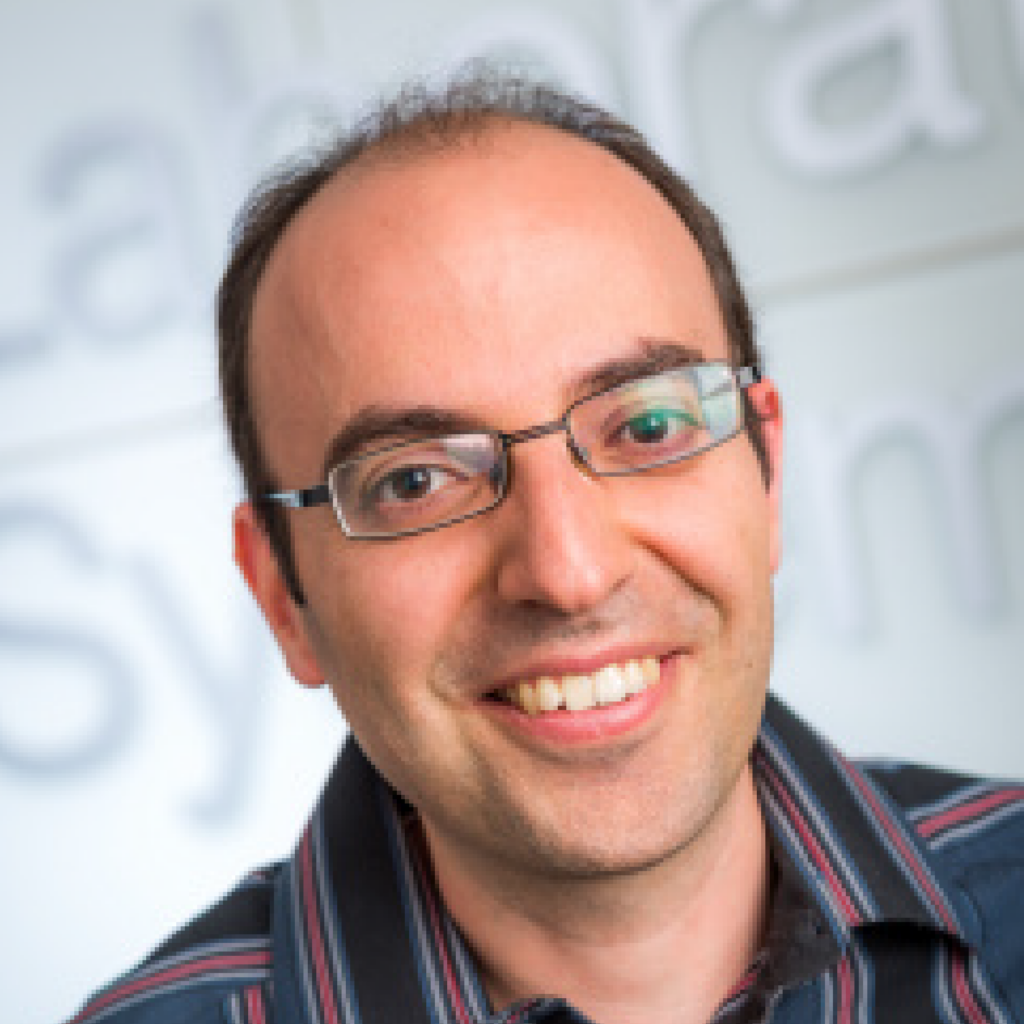
  • Mohammed AlQuraishi, Ph.D.Assistant Professor, Department of Systems Biology, Columbia University
Date & Time


Location

Gerald D. Fischbach Auditorium
160 5th Ave
New York, NY 10010 United States

View Map

Doors open: 5:30 p.m. (No entrance before 5:30 p.m.)

Lecture: 6:00 p.m. – 7:00 p.m. (Admittance closes at 6:20 p.m.)

The 2026 lecture series in biology is “Folding the Future: The Structural Biology Revolution.” In this series, scientists will explore the rapid advances transforming how we visualize and engineer the molecular machinery of life. From breakthroughs in protein structure prediction to innovations in integrative structural biology, speakers will examine how these computational and experimental tools are reshaping drug discovery, synthetic biology, and our broader understanding of cellular function.
 
 
2026 Lecture Series Themes

Biology – Folding the Future: The Structural Biology Revolution

Mathematics and Computer Science – Randomness

Neuroscience and Autism Science – Brain and Body: Communication and Connection

Physics – Black Holes

About Presidential Lectures

Presidential Lectures are a series of free public colloquia spotlighting groundbreaking research across four themes: neuroscience and autism science, physics, biology, and mathematics and computer science. These curated, high-level scientific talks feature leading scientists and mathematicians and are designed to foster discussion and drive discovery within the New York City research community. We invite those interested in these topics to join us for this weekly lecture series.

DeepMind’s AlphaFold transformed structural biology, offering an unprecedented way to predict the three-dimensional structure of proteins directly from primary amino acid sequences. While AlphaFold performs exceedingly well at its task, questions remain over the precise nature of the internal representation it builds.

In this Presidential Lecture, AlQuraishi will discuss recent evidence on the extent to which AlphaFold appears to learn to perform implicit physical modeling, and how this knowledge is acquired during its training. He will present use cases in which this implicit knowledge unlocks new capabilities and where it falls short. He also plans to discuss the differences between AlphaFold 2 and AlphaFold 3 regarding this question of implicit physical knowledge, and how their architectural differences may have led to different inductive priors.

About the Speaker

AlQuraishi is an assistant professor in the Department of Systems Biology at Columbia University and a member of Columbia’s Program for Mathematical Genomics, where he works at the intersection of machine learning, biophysics and systems biology. AlQuraishi earned an MS in statistics and a Ph.D. in genetics from Stanford University. He subsequently joined the Department of Systems Biology at Harvard Medical School as a departmental fellow and a fellow in systems pharmacology, where he developed the first end-to-end differentiable model for learning protein structure from data. Prior to starting his academic career, AlQuraishi spent three years founding two startups in the mobile computing space.

Advancing Research in Basic Science and MathematicsSubscribe to our newsletters to receive news & updates