Kakeya Sets and Related Problems

Presidential Lecture

Speaker

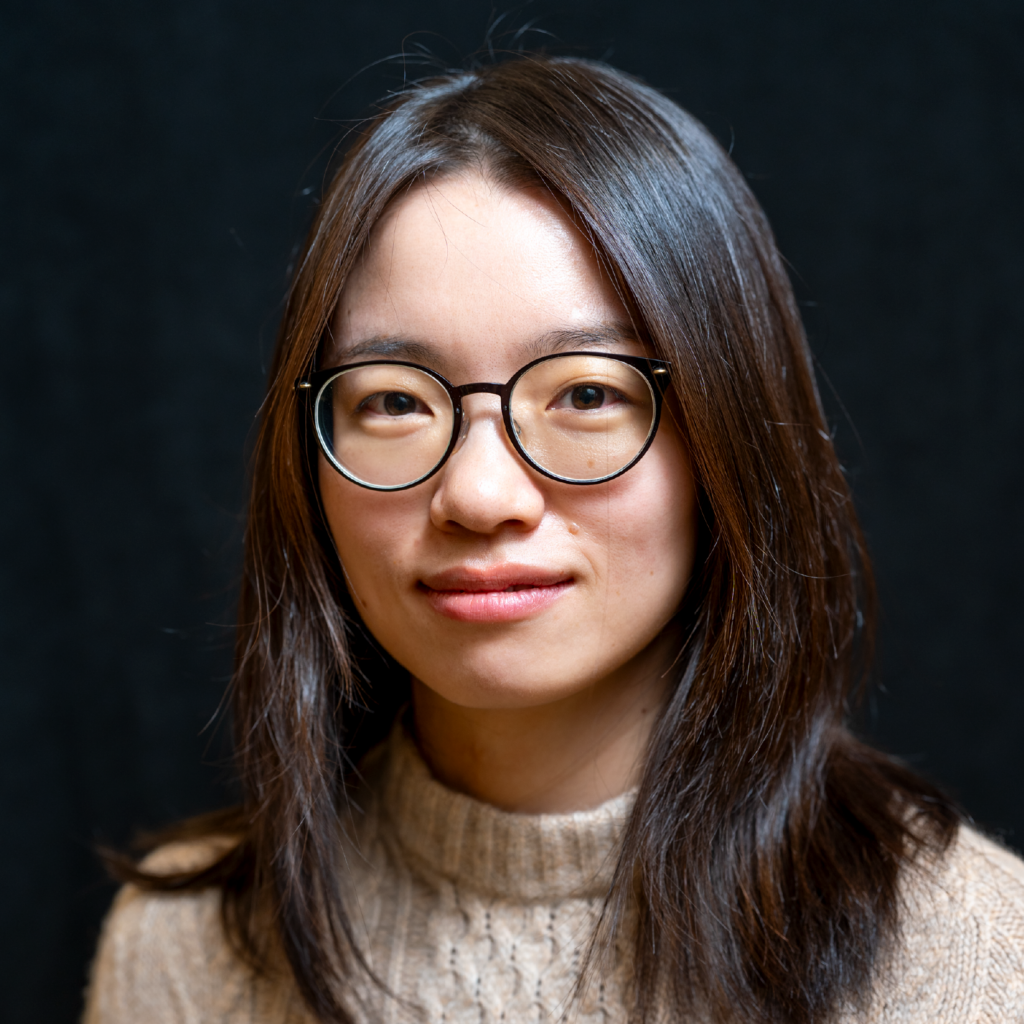
  • Mathematician and Scientist Hong Wang headshot
    Hong Wang Silver Professor of Mathematics, New York University

When

  • – ET

  • Doors Open

    5:30 p.m. (No entrance before 5:30 p.m.)

  • Lecture

    6:00 p.m. – 7:00 p.m. (Admittance closes at 6:20 p.m.)

Where

Gerald D. Fischbach Auditorium

160 5th Avenue

New York, NY 10010, United States

Open Map for Gerald D. Fischbach Auditorium

Put a needle flat on a table. Now, try to rotate and wiggle the needle so that it rotates a full 360 degrees while carving out the smallest possible area on the table. This is the problem Soichi Kakeya posed in 1917. It led to the study of Kakeya sets — sets that contain a unit line segment in every direction.

In this Presidential Lecture, Hong Wang will survey recent developments on problems related to Kakeya sets, beginning with a question about sums and products. Consider a finite set of real numbers, A. Its ‘sum set’ (A + A) consists of every possible sum of two numbers contained in A. Its ‘product set’ (A × A) consists of every possible product of two numbers contained in A. The expectation is that at least one of these two resulting sets must contain substantially more numbers than A. A continuum version of this sum-product question is closely related to the geometry of Kakeya sets, as well as to questions about projection of fractal sets. She will also discuss how the uncertainty principle connects the geometry of Kakeya sets to fundamental questions in Fourier analysis.

About the Speaker

Wang is a Silver Professor of Mathematics at New York University’s Courant Institute of Mathematical Sciences and a permanent professor of mathematics at France’s Institut des Hautes Études Scientifiques (IHES). Her work focuses on Fourier analysis and related problems. A specialist in harmonic analysis, Wang recently announced a solution to the 3D Kakeya conjecture, a longstanding open problem at the intersection of analysis and geometry. She has received many awards for her work, including the 2026 Fields Medal.

Originally from Guangxi, China, Hong Wang earned her undergraduate degree in mathematics from Peking University in 2011. She then moved to France, where she graduated from École Polytechnique and obtained a master’s degree in mathematics at Université Paris-Saclay in 2014. During her Ph.D. at MIT, which she completed in 2019 under the supervision of Larry Guth, she began working on problems in Fourier analysis. Following a postdoctoral position at the Institute for Advanced Study in Princeton, New Jersey, she became an assistant professor at UCLA in 2021 before joining the Courant Institute in 2023.

Three overlapping wavy lines—dark blue, light blue, and yellow—are shown against a light background, each representing different waveforms or data trends.

Event Series

Presidential Lectures 2026

A weekly series of free colloquia spotlighting groundbreaking research.

Presidential Lectures span four themes: neuroscience and autism science, physics, biology, and mathematics and computer science. These curated, high-level scientific talks feature leading scientists and mathematicians and are designed to foster discussion and drive discovery within the New York City research community.

See events

More Events

October 14, 2026

6–7 p.m. ET

Speaker

Shep Doeleman

A man in a checked shirt and dark blazer faces the camera, wearing a pin on his jacket and a pen in his pocket, against a plain background.

October 21, 2026

6–7 p.m. ET

Speaker

Sonya Hanson

A portrait photo of Sonya Hanson.

November 4, 2026

6–7 p.m. ET

Speaker

Daniel Mucida
A smiling man with a mustache wearing a black t-shirt.