Timing mechanisms of critical periods in brain development

Lecture

Speaker

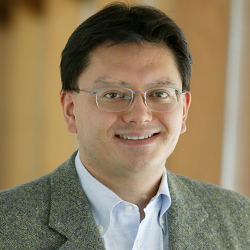
  • A man with short dark hair, glasses, and a gray blazer over a light blue shirt smiles in front of a blurred indoor background.
    Takao Hensch Professor, Harvard University

When

  • – ET

Where

Columbia University, Columbia Secondary School

160 5th Avenue

New York, NY 10010, United States

 
On 30 September 2015, Takao Hensch discussed the biological bases of critical periods in brain development. Mechanisms that open and close windows of plasticity (E/I balance and molecular brakes, respectively) have been implicated in autism, suggesting mistimed maturational processes that can be strategically rescued at the circuit level.

His talk was part of the Simons Foundation Autism Research lecture series.
 

About the Lecture

Maturing neural circuits are dramatically shaped by the environment during windows of increased plasticity, but the timing of these ‘critical periods’ varies across brain regions, and plasticity declines with age.

Focusing on cellular/molecular mechanisms underlying these developmental trajectories, Dr. Hensch discussed specific events that control the onset and closure of critical periods. Maturation of excitatory-inhibitory (E/I) circuit balance triggers plasticity, which ends when molecular brake-like factors emerge to stabilize adult networks. Targeting specific GABA circuits using pharmacological or genetic manipulations can either accelerate or delay the onset of plasticity, and lifting the molecular brakes can reopen windows of circuit rewiring. Implications for autism spectrum disorder etiology and potential therapeutic strategies were also discussed.

More Events

October 12–14, 2026

Speaker

Shep Doeleman

A man in a checked shirt and dark blazer faces the camera, wearing a pin on his jacket and a pen in his pocket, against a plain background.

Speaker

Sonya Hanson

A portrait photo of Sonya Hanson.