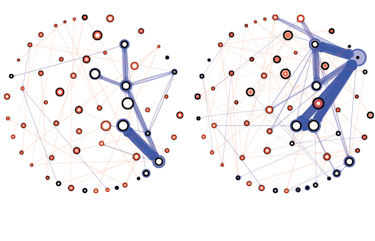
Each time you look at a picture on a wall, even though you see the same thing, the electrical activity of neurons in your brain’s visual areas will be slightly different. These slight differences are known as variability, and typically researchers seek to remove variability from their data by taking the average of neural responses over many trials of whatever task they are studying. Then, they build theoretical models based on the averaged data.
However, researchers have run into trouble with this approach: many different models seem to explain the same data, making it difficult to determine which model is correct. We propose a radically different approach in which we embrace the variability, and use it to constrain new theoretical models. We will use visual attention to test our model, in which observers focus on particular parts of a complex scene. We will then record the activity of large groups of neurons, and examine how visual attention modulates the variability in those neurons. The goals of our research are threefold. Can our model account for the existing data on how attention changes variability? Can we conduct experiments to determine how attention affects the extent to which variability is shared among neurons? Can we extend our model to this new data we collect? By focusing on variability, we can overcome many of the shortcomings of previous models, establishing a new approach for studying neural circuits in the visual system and other areas of the brain.
FULL PROJECT
Awardees

Marlene Cohen
Investigator, Simons Collaboration on the Global Brain

Brent Doiron
Investigator, Simons Collaboration on the Global Brain