While we may take for granted social tasks such as inferring what others are thinking and feeling, or predicting someone’s next move, they pose considerable processing challenges for the brain. Social cognition is incredibly complex, with accurate judgments often made with very little evidence, yet we perform these tasks automatically, virtually every moment in time.
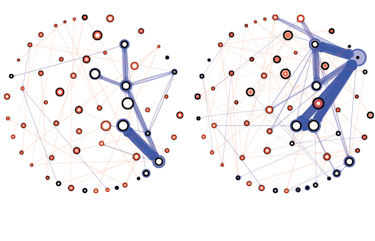
One skill at the core of social cognition is facial recognition, itself a complex task, which is found in several species of primates, including humans. Face recognition is supported by a dedicated face-processing network, which encompasses many of the organizational features of the brain as a whole. Because it is so closely devoted to the processing of the diverse social cues the face conveys, studying this network is an ideal entry point to investigate the neural mechanisms of social cognition. We will study activity in this model system at many different levels. In our experiments, we will measure the activity of individual neurons, or even parts of neurons, and we will measure the activity of local networks of neurons within a face-selective brain region. We will develop cutting-edge machine-learning techniques to analyze and understand this high-dimensional data and to create models of how this network processes information. This work will allow us not only to understand how faces are processed, but how neurons interact to generate the key characteristics of social cognition. With this work we also aim to lay the foundation for future work in autism models to understand the neural mechanisms underlying the alterations of social information processing in this condition.
FULL PROJECT
Awardees
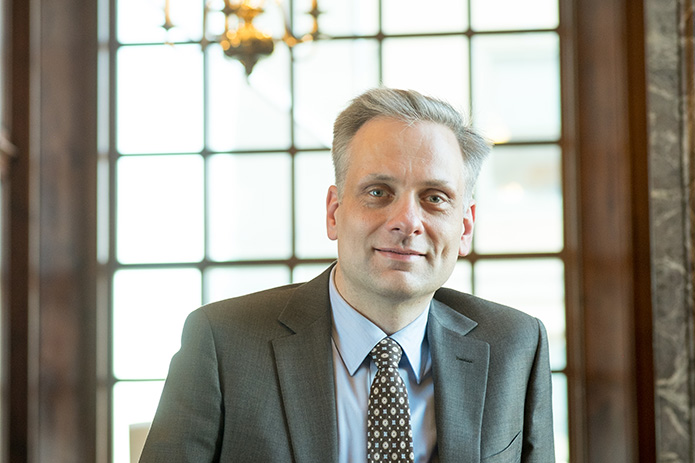
Winrich Freiwald
Investigator, Simons Collaboration on the Global Brain

Stefano Fusi
Investigator, Simons Collaboration on the Global Brain

Liam Paninski
Investigator, Simons Collaboration on the Global Brain