Imagine deciding whether or not to eat a piece of cake. When making that decision, there are two main factors. First, is the cake appetizing? That is, does the sensory experience of the cake compel you to eat it? Second, are you hungry?
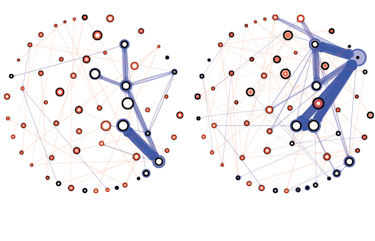
That is, is the internal state of your brain—hungry or not—conducive to eating the cake? Every decision depends upon these two factors—incoming sensory stimuli and internal brain state—yet how they interact in neural circuits remains a mystery. We are working in mice to study how internal states are combined with sensory experience to guide decisions. We have trained mice to make choices about various types of sensory stimuli. To investigate how internal states influence these perceptual decisions, we plan to take advantage of the fact that, even without training, each mouse has an inherent bias to choose one choice over another. This bias will be reflected in the internal state of the brain. So, because of the pre-existing bias, even when the animal is making a decision about the same sensory stimulus, the internal brain state will be different depending on which choice the animal makes. Then, we will record the activity of large populations of neurons. With this technique, we can compare the neuronal activity to the same sensory stimulus during different brain states—that is, when the choice is the same or different from the mouse’s initial bias. By computationally modeling the network of neurons, we will be able to determine how bias—i.e., the internal brain state—affects the activity of the neural network involved in decision-making. Finally, once we have established how brain state changes the activity of the population of neurons, we can use sophisticated genetic techniques to examine which neurons in the population contribute to the changes in brain state. By incorporating information about internal brain states, these experiments will allow a much deeper understanding of decision-making.
FULL PROJECT
Awardees
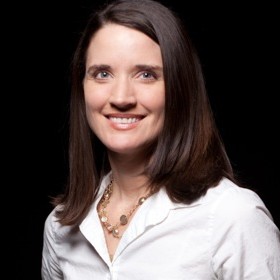
Anne K. Churchland
Investigator, Simons Collaboration on Plasticity and the Aging Brain
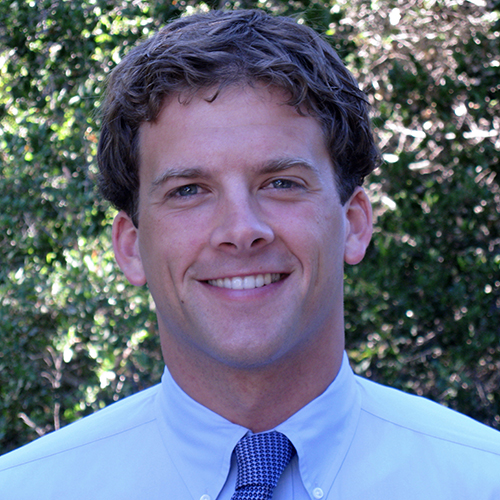
John Cunningham
Investigator, Simons Collaboration on the Global Brain