The way in which neurons process information determines how the brain functions. For example, in order to make a decision, neurons accumulate evidence towards different, competing alternatives, eventually allowing an animal to make one choice over another.
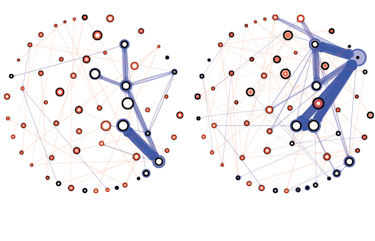
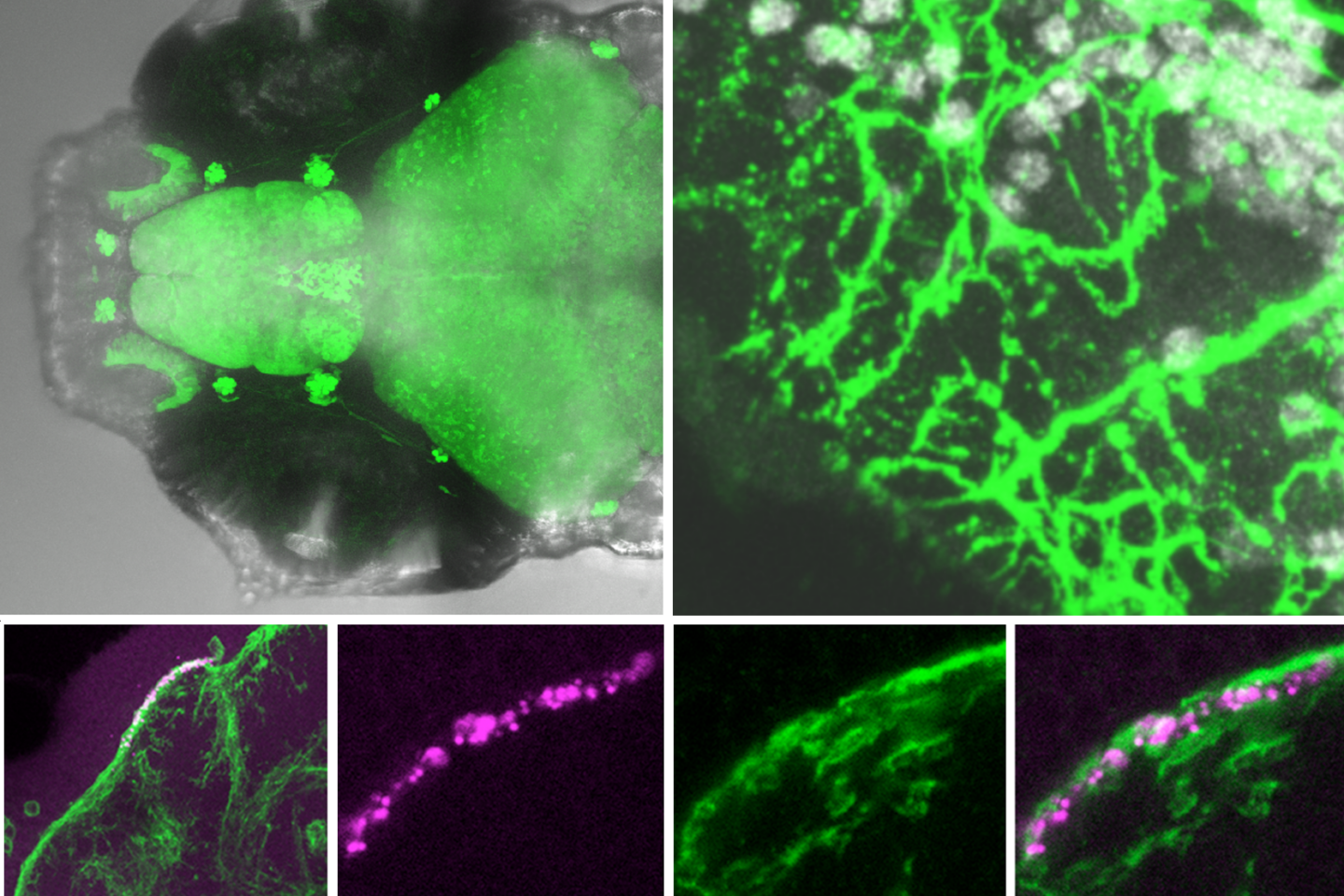
These accumulating neurons are termed “neural integrators.” Neural integrators can be thought of as short-term memory systems that store a running total of the inputs they have received. While easiest to understand in terms of decision-making, neural integrators show up in a variety of other brain processes. For instance, in motor control and navigation, when signals that contain information about the velocity of movements are integrated, they become signals that contain information about body position. In either of these cases—decision-making or motor control—the accumulation and storage of information can be context-specific. That means that different information is accumulated depending on the conditions under which a task is performed; in other words, the task’s context. We will investigate such context-specific accumulation and storage of information in a well-studied system in the brain: the oculomotor system that controls eye movements. This system contains a neural integrator circuit that converts eye velocity signals into eye position signals. This conversion is context-specific: the circuit maintains distinct patterns of neural activity depending on whether a given eye position has been reached through a sudden, rapid eye movement or a slower, tracking eye movement. We will develop a computational model of the oculomotor neural integrator system in larval zebra fish, and collaborate with experimentalists to incorporate data from the activity of every neuron in this system. We will test our model predictions using sophisticated genetic techniques to manipulate the activity of neurons to determine the core features of the process of neural integration in different contexts. This work promises to reveal ubiquitous mechanisms by which neurons accumulate information and store it in short-term memory, applicable not only to motor systems, but also to higher-level cognitive processes such as decision-making.
FULL PROJECT
Awardees

Mark S. Goldman
Investigator, Simons Collaboration on the Global Brain