
Bryna Kra
MPS Scientific Advisory Board Member
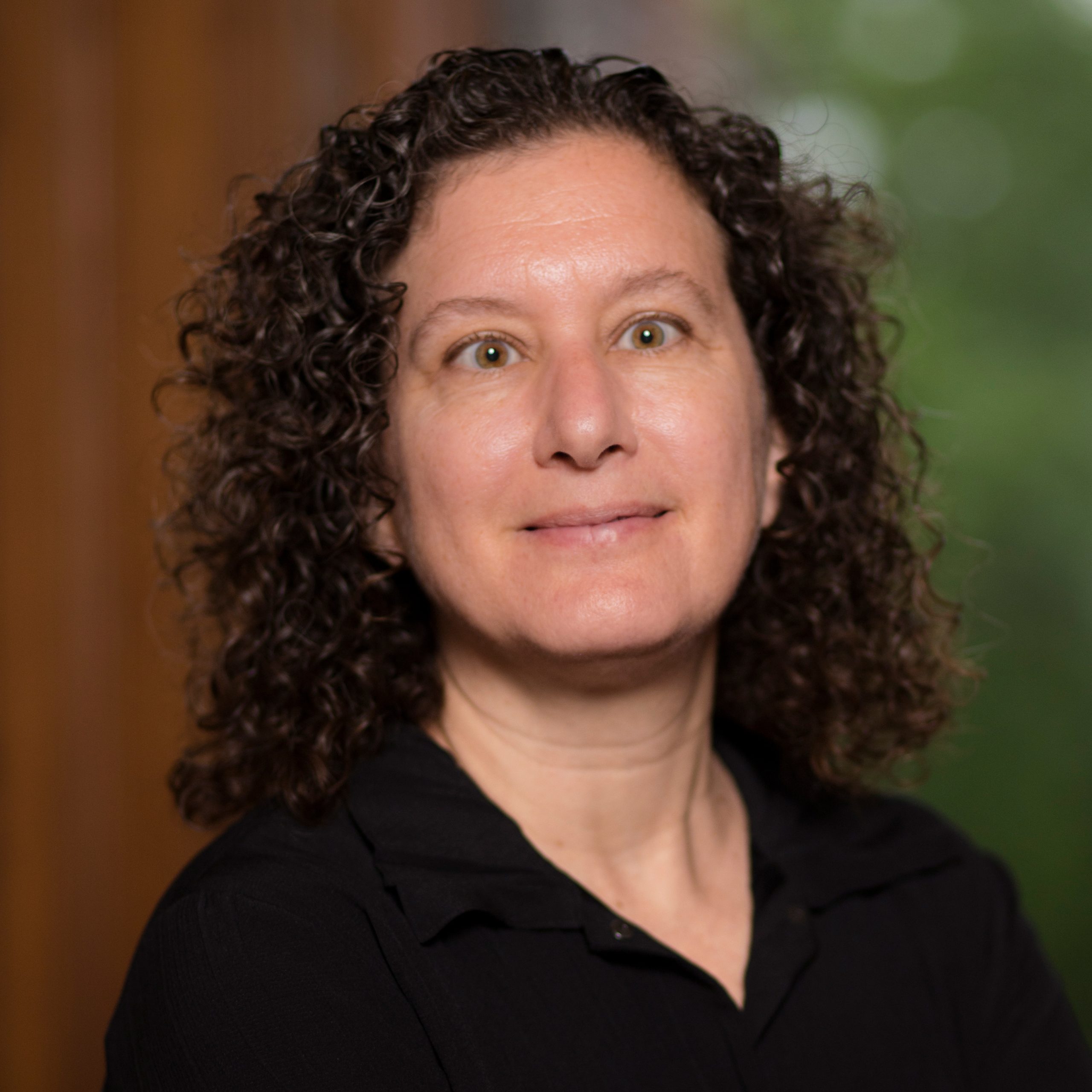 Bryna Kra is the Sarah Rebecca Roland Professor of Mathematics at Northwestern University. She earned her doctorate in mathematics from Stanford University in 1995, and held positions at the Hebrew University of Jerusalem, the Institut des Hautes Études Scientifiques, University of Michigan, The Ohio State University, and at Pennsylvania State University, before joining the faculty at Northwestern University in 2004. She was elected as an inaugural fellow of the American Mathematical Society (AMS) in 2012, as a fellow of the American Academy of Arts and Sciences in 2016, as a member of National Academy of Sciences in 2019, and as a corresponding member of Chilean Academy of Sciences in 2022. Kra was awarded the Levi L. Conant Prize of the American Mathematical Society (AMS) in 2010, she founded the Graduate Research Opportunities for Women program, which was awarded the Programs that Make a Different Award from the AMS, and from 2023-2025 she served as President of the AMS.
Kra’s work lies at the intersection of dynamics, combinatorics, and number theory. Her work in ergodic theory on multiple ergodic averages settled a long-standing open problem and uncovered the role of certain structured algebraic objects, the nilsystems, in convergence questions, recurrence problems, and number theoretic results. Her recent work has uncovered new infinite configurations in large sets of integers and she continues to study algebraic, geometric, and measurable properties of dynamical systems.