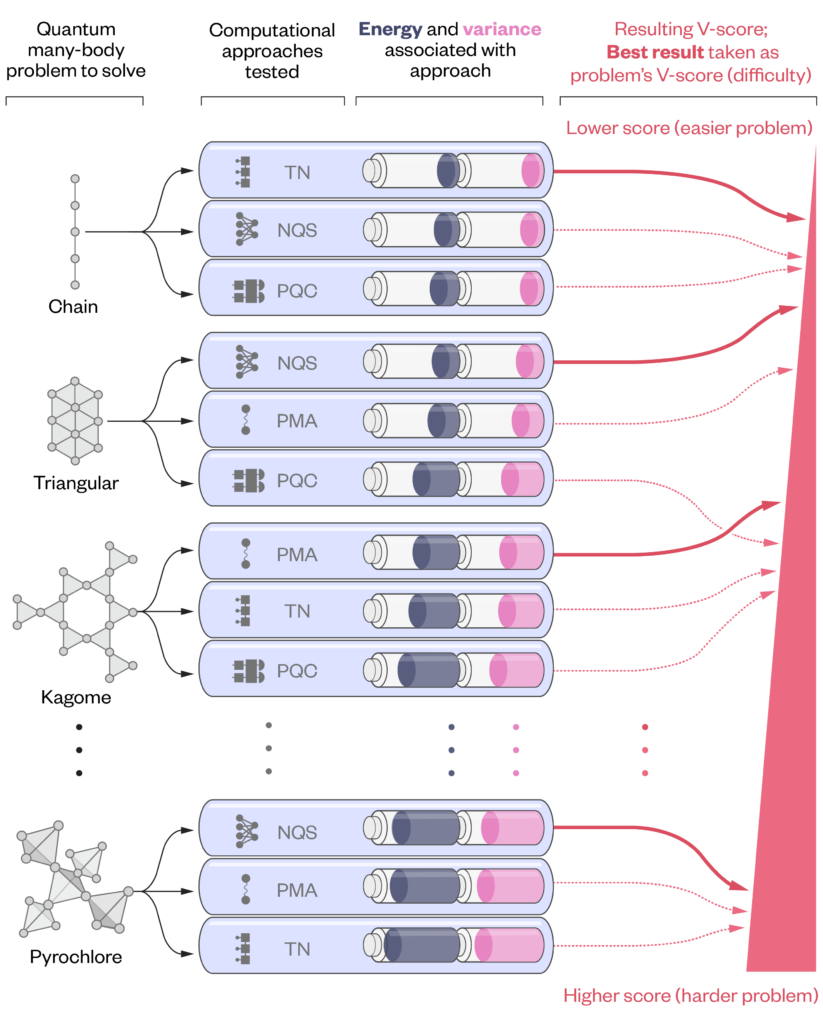
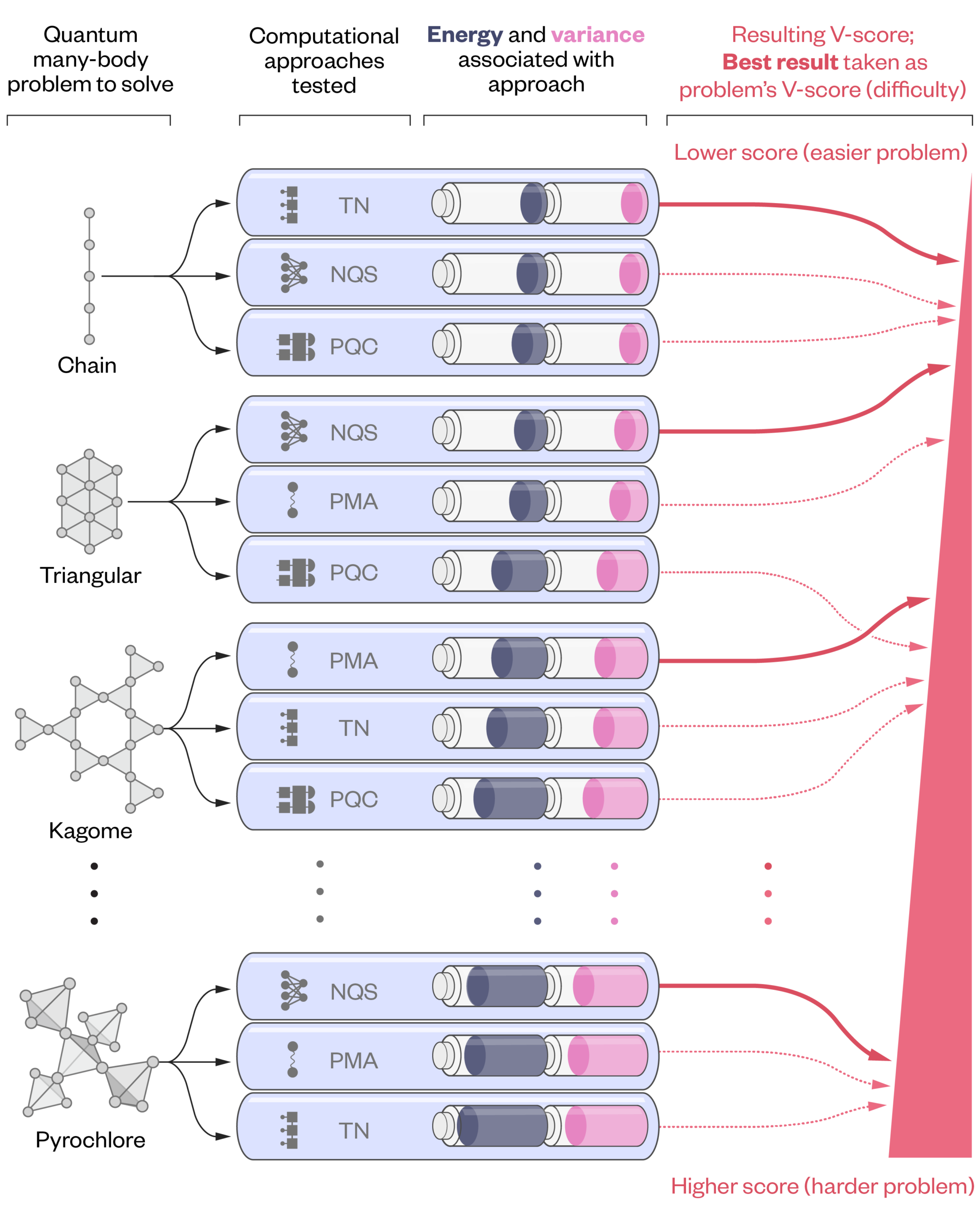
So, for one-dimensional materials like carbon nanotubes, a classical method will probably get the job done, producing lower V-scores in the process. For more complex materials such as three-dimensional crystal structures where particles have fewer predictable interactions due to their magnetic properties, a high V-score suggests an area where a quantum system could outperform.
“This does not mean [low V-score problems] are simple per se, but that we have good techniques to tackle them,” Carleo says.
A Trustworthy Toolbox
For Georges, one exciting outcome of this work is that it provides benchmarks for future demonstrations of ‘quantum advantage’ (the notion that quantum systems will always work better than a classical one) while demonstrating that implementations of classical algorithms currently outperform their quantum counterparts.
“What’s most exciting to me is that our work demonstrates that algorithms operating on classical computers still outperform the capabilities of quantum computers,” says Georges. “So, future works aiming at establishing ‘quantum advantage’ on a specific problem will have to demonstrate that it can outperform the V-score established in our paper for that problem first.”
This tool is now available to the wider scientific community to accelerate materials science research and determine how advantageous new techniques will be at solving problems. This will cut down on the time and money typically spent to make this assessment.
“Our database and codes are fully open access, and we’d like it to become a dynamic resource that is updated whenever a new technique is introduced in the literature,” Carleo says.
It will also help inform the development of these new techniques.
“For Flatiron, one exciting outcome of this work is that it provides a way to identify difficult problems that will challenge our algorithms and drive the next stages in our method development and application,” says CCQ Co-Director Andrew Millis. “The study has already identified a few of these problems, and we’re looking forward to what it will enable in the future.”