
A smiling man with short brown hair and round glasses, wearing a dark sweater over a collared shirt.

Research Staff

Andrew Millis, Ph.D.

Co-Director, Center for Computational Quantum Physics

Director, Simons Collaboration on the Many Electron Problem

Affiliations
  • Professor of Physics, Columbia University

Bio

Andrew Millis is co-director of the Center for Computational Quantum Physics at the Flatiron Institute and professor of physics at Columbia University. He currently serves as Managing Director of the Flatiron Institute. Millis received his Ph.D. in physics from the Massachusetts Institute of Technology in 1986. After that, he worked for 10 years in the theoretical physics research department at Bell Laboratories and then served on the faculty at Johns Hopkins University and Rutgers University before moving to Columbia University in 2001. He served as chair of the Columbia University physics department from 2006 to 2009. He began his association with the Simons Foundation in 2011, serving as associate director for physics in the Mathematics and Physical Sciences division before moving to the Flatiron Institute in the fall of 2017.
Millis’ research interests focus on the theoretical physics of electrons in materials, with a particular focus on collective properties such as superconductivity and magnetism. His recent work has emphasized the development and use of new numerical methods for the many-electron problem and the application of these methods to elucidate the behavior of high-temperature superconductors, oxide superlattices and materials under non-equilibrium conditions.

He is the author of more than 400 papers, is a member of the National Academy of Sciences and is a Fellow of the American Physical Society and of the American Association for the Advancement of Science. He is a member of the Advisory Committee to the Mathematics and Physical Sciences Division of the National Science Foundation and of the advisory board of the U.S. Summer School on Condensed Matter and Materials Physics (which he helped found). He received the 2017 Hamburg Prize for Theoretical Physics, and two of his recent postdoctoral fellows have received IUPAP Young Scientist awards.

Publications

Projects

By Andrew Millis

Related People

Portrait photo of Matthew Fishman

Matthew Fishman

Research Scientist, Center for Computational Quantum Physics

Portrait photo of Johannes Flick

Johannes Flick

Associate Research Scientist, Center for Computational Quantum Physics
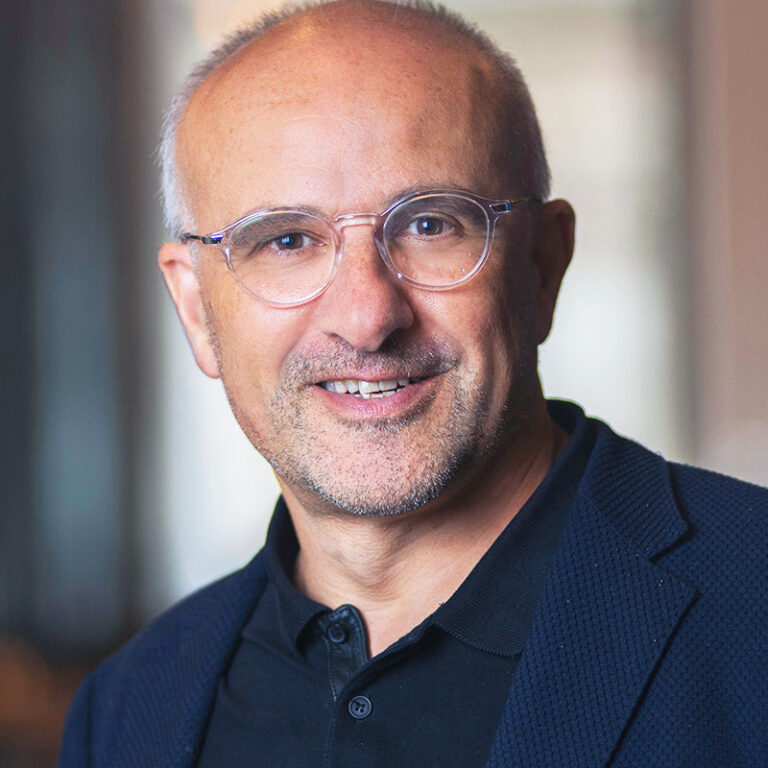
A middle-aged man with short hair and glasses wearing a dark polo shirt and blazer smiles at the camera.

Antoine Georges

Director, Center for Computational Quantum Physics

A portrait photo of Olivier Gingras.

Olivier Gingras

Associate Research Scientist, Center for Computational Quantum Physics
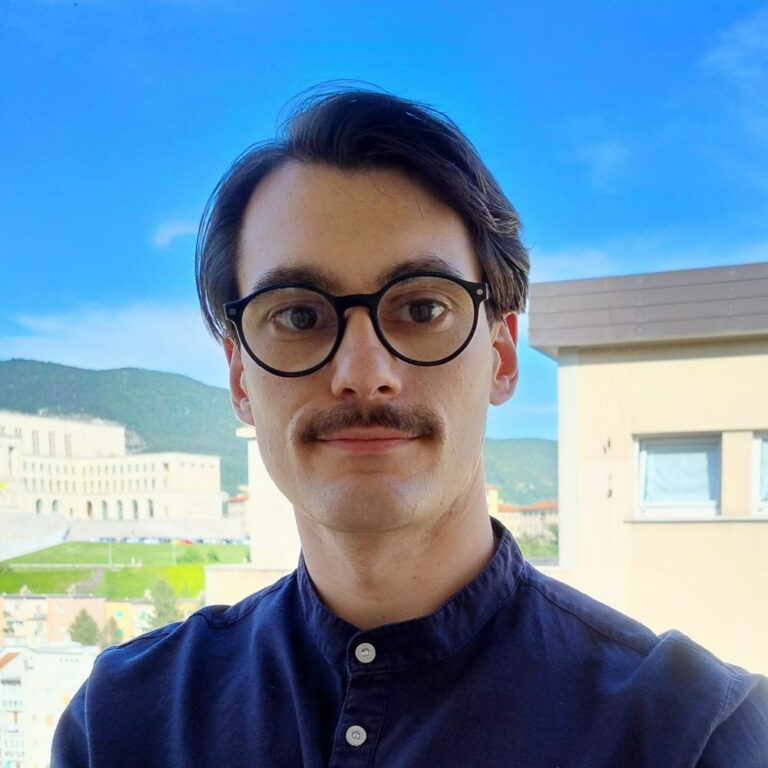
A man with dark hair, glasses, and a mustache stands outside with buildings, greenery, and mountains in the background under a clear blue sky.

Samuele Giuli

Flatiron Research Fellow, Center for Computational Quantum Physics

A person with short dark hair and glasses smiles at the camera, wearing a dark button-up shirt. The background is softly blurred.

Saúl Antonio Herrera González

Flatiron Research Fellow, Center for Computational Quantum Physics

Portrait photo of Jason Kaye

Jason Kaye

Associate Research Scientist, Centers for Computational Mathematics and Quantum Physics

A man with short brown hair and a beard smiles at the camera. He is wearing a white shirt and a blue jacket, with a blurred background behind him.

Harrison LaBollita

Flatiron Research Fellow, Center for Computational Quantum Physics

A portrait photo of Miguel Morales.

Miguel Morales

Research Scientist, Center for Computational Quantum Physics

Portrait photo of Olivier Parcollet

Olivier Parcollet

Senior Research Scientist, Center for Computational Quantum Physics

Center for Computational Quantum Physics

CCQ’s mission is to develop the concepts, theories, algorithms and codes needed to solve the quantum many-body problem and use the solutions to predict the behavior of materials and molecules of scientific and technological interest.

Learn more
A circular pattern of evenly spaced, white radial lines on a light gray background, creating a sunburst or spinning wheel effect with an empty center.