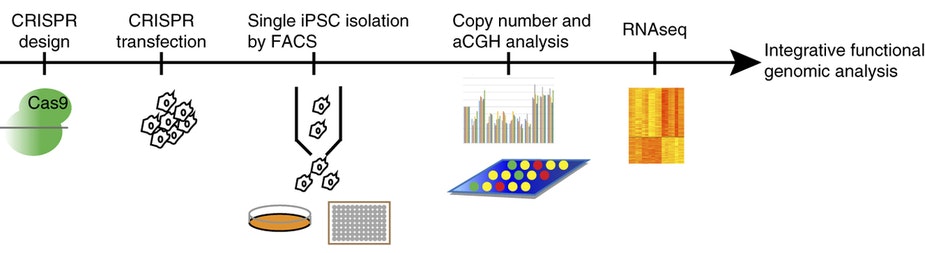
Copy number variations (CNVs) resulting from either copy loss (microdeletion) or copy gain (microduplication) of a genomic segment are among the most common causes of human congenital disorders. In the current study, SFARI Investigators James Gusella and Michael Talkowski and their colleagues present a CRISPR/CAS9 genome engineering method to generate microdeletions and microduplications in human induced pluripotent stem cells (iPSCs) that emulate the genetic architecture of human CNV disorders. They demonstrate the capability of the method using two proof-of-principle microdeletion/microduplication regions of differing sizes: 16p11.2 and 15q13.3. Of note, CNVs of both of these regions have been associated with numerous neurological and psychiatric disorders, including autism. Genome-wide analyses suggest that the method generates models with high fidelity and produces transcriptional signatures consistent with those from people with these CNVs. This method opens up new avenues for studying these common causes of human developmental disorders.

