Julianne Dalcanton Named Next Director of the Center for Computational Astrophysics
Featuring
-
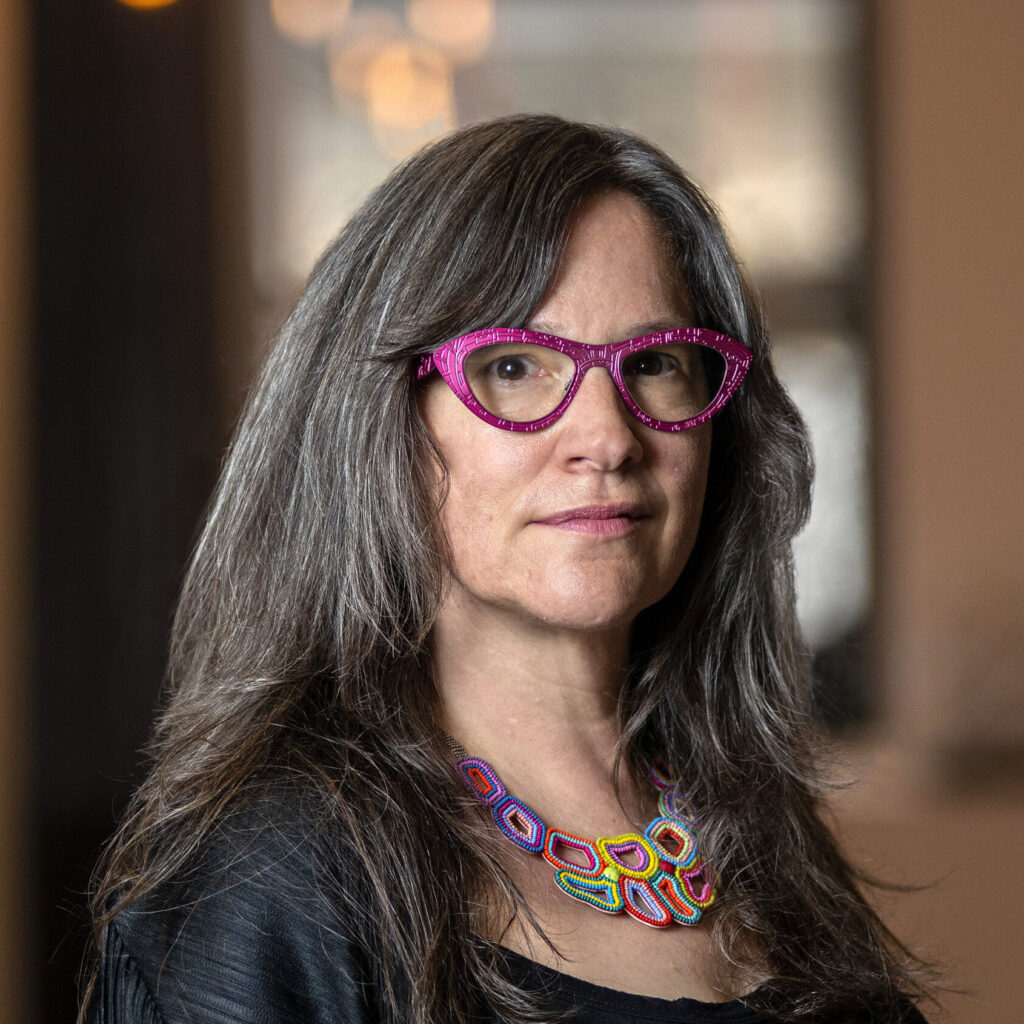
Julianne Dalcanton
Director, Center for Computational Astrophysics

Bringing people and ideas together to fund, conduct, and share transformative science.
Our grants advance knowledge and strengthen connections between science and society.
Discover the latest news, research, and updates.
We convene scientists, mathematicians, and thinkers to share ideas and explore new questions.
Founded by Jim and Marilyn Simons, we’re a private philanthropy advancing mathematics and basic science.
Work with us on the frontier of basic science research.
The Flatiron Institute is a research center that uses computational science to advance fields like physics, biology, and astronomy.
Search
Director, Center for Computational Astrophysics
The Simons Foundation is delighted to announce that astronomer Julianne Dalcanton will be the next director of the Center for Computational Astrophysics (CCA) at the foundation’s Flatiron Institute in New York City. Starting in September 2021, she will lead the center’s work creating and leveraging computational tools to tackle important questions in astrophysics.
“Julianne Dalcanton is a superb astronomer with a broad scientific vision and a track record of scientific leadership,” says Simons Foundation president David Spergel, who served as the previous director of the CCA. “We all felt that she was the right person to lead CCA as it transitions from its period of growth to reinforcing its role as an intellectual center that will stay at the forefront of computational astrophysics.”
Dalcanton says that she was drawn to the CCA because of its scientific excellence, affinity for collaborative problem-solving and its potential for shaping the field of astrophysics. “The CCA can tackle questions in ways that no other organization can,” she says. “It has already had a remarkable impact. I am eager to build upon that legacy.”
Dalcanton is currently a professor at the University of Washington in Seattle and chair of the university’s astronomy department. Her research focuses on revealing the astrophysics of stars and gas in galaxies by dissecting images captured by the Hubble Space Telescope to study millions of stars inhabiting nearby galaxies. She is the principal investigator of the Panchromatic Hubble Andromeda Treasury and previously led the ACS Nearby Galaxy Survey Treasury. Through her work, she has become one of the largest single users of the Hubble Space Telescope.
She received her B.S. in physics from the Massachusetts Institute of Technology in 1989 and her Ph.D. in astrophysical sciences from Princeton University in 1995, where Spergel served as her thesis advisor. She then worked as a Hubble Fellow at the Carnegie Observatories in Pasadena, California, before joining the University of Washington faculty in 1998.
Dalcanton has received numerous recognitions for her work, including an Alfred P. Sloan Research Fellowship, a National Science Foundation CAREER award for early-career faculty, the Orren C. Mohler Prize from the University of Michigan and the American Astronomical Society’s Beatrice M. Tinsley Prize.

